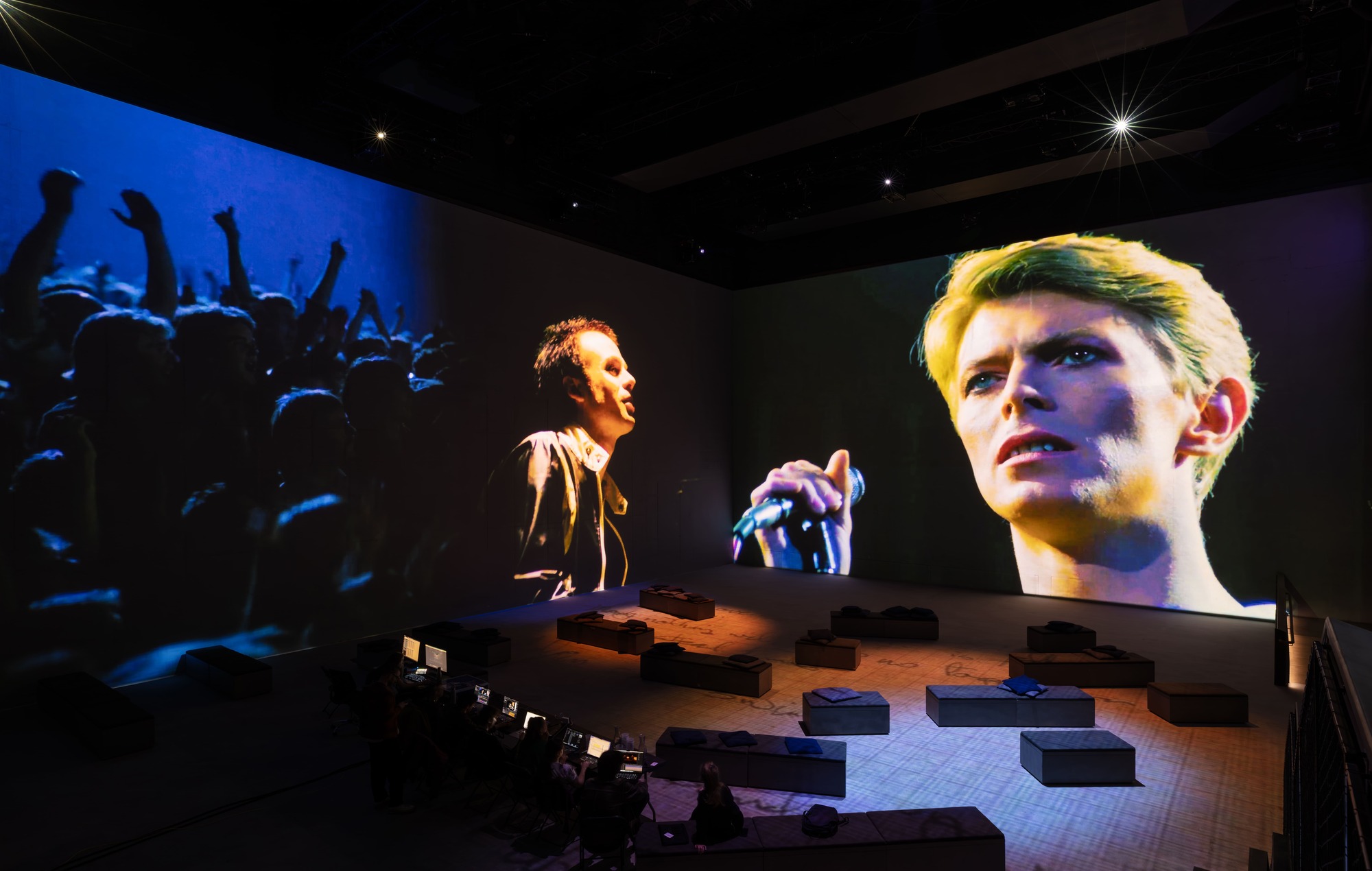
Ahead of the public opening of the new, immersive David Bowie: You’re Not Alone experience at London’s Lightroom, NME headed in for an early special preview and to chat to the team behind it.
Announced back in February, the new 360° experience is produced by Lightroom at their venue near King’s Cross and Coal Drops Yard in the capital, which has previously collaborated with the likes of David Hockney, Tom Hanks and Anna Wintour. The show is written and designed by Mark Grimmer of 59, the creative director for the V&A’s David Bowie Is exhibition, as well as Tom Wexler.
Containing a mixture of rarely seen and never-before-exhibited material selected from thousands of hours of film from the David Bowie Archive, combined with photography, drawings, lyrics, personal notes and audio recordings, with the film structured in thematic chapters in a looping presentation.
“Where we were in the suburbs, it was just this great slab of concrete with 9-5 commuterism and absolutely no future apart from this bleak, almost Orwellian world and grey apartment blocks,” says Bowie in a voiceover near the start of the experience, looking back on his childhood in South London. “There just seemed no way out. We just opted for some kind of colour and exhilaration in our lives. Many of us just grabbed whatever was available and said, ‘That’s my way out’.”
What follows is an hour-long odyssey of sound and vision, bringing Bowie’s journey and imagination to life as told through his influences as a culture vulture and how he mapped them into a world of his own on stage, through his art, and via music – capturing the zeitgeist while usually on the outskirts of mainstream culture. It vividly captures the human side of the icon, as well as showing his creative journey from Brixton to ‘Blackstar’ through the tensions as well as cultural and historical touchstones of each decade, showing an artist forever looking to future.
Naturally, the live footage (much of it either previously unseen or presented in brand new ways) sets the experience apart from other films like Brett Morgen’s Moonage Daydream, with highlights including his late ’70s period, overlooked ’90s era, and a touching moment from his last ever show in 2004.
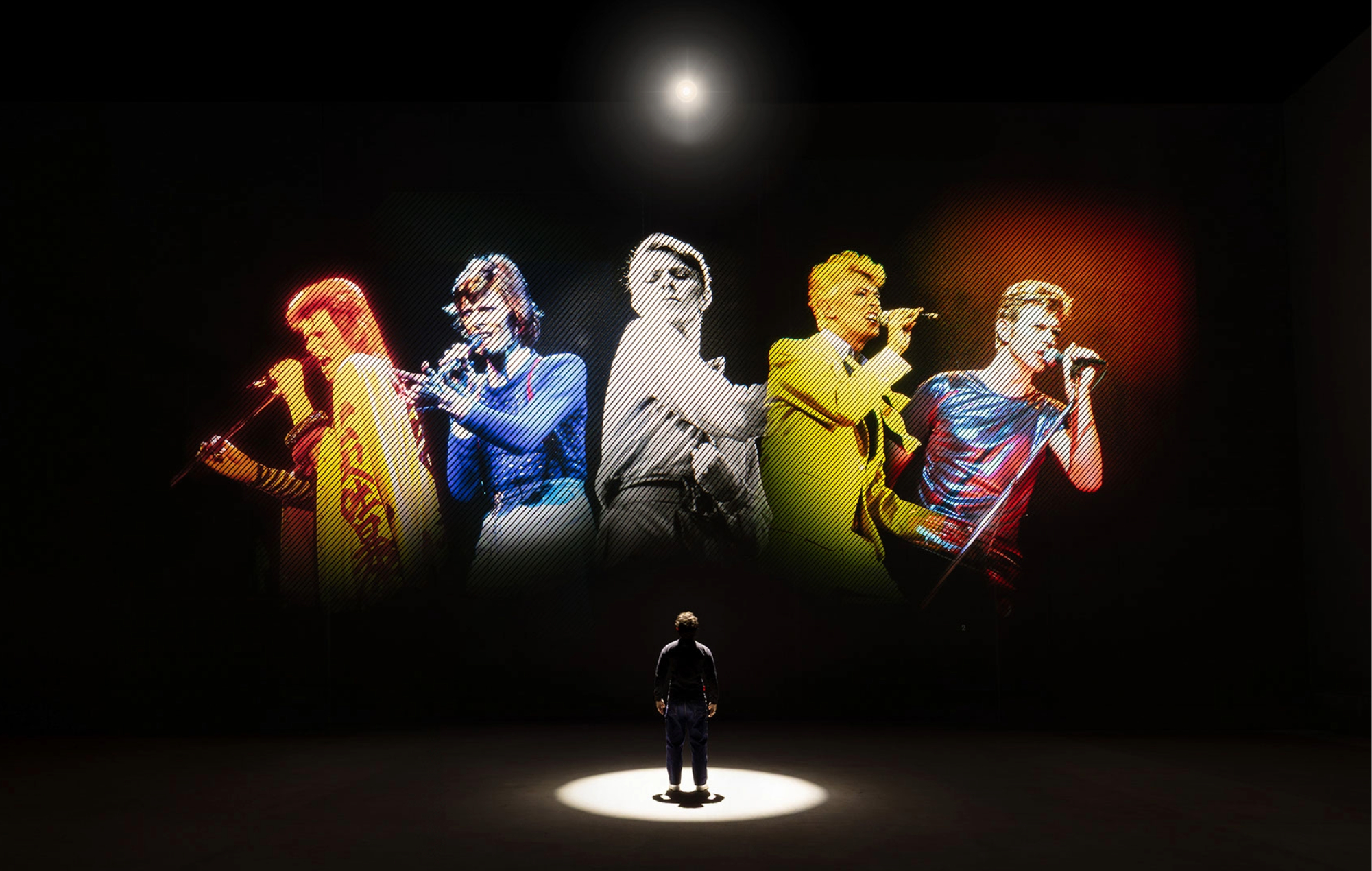
David Sabel is Executive Producer for Lightroom, the venue boasting a huge space with dazzling projections across all 11metre high walls as well as floor, elevated by stunning live music and voiceover via a spatial audio system.
“This show covers a huge range of David’s life and career and his art, and is told entirely in his own words,” Sable told NME. “We went through 500+ hours of interviews and stitched together a kind of narrative. It’s not a biopic, it’s not a chronological storytelling, it’s much more thematic.
“It has two modes: one is about his approach to his art and songwriting – which is more being inside his head as a creative and a person – then you have these major tentpole concert moments where you travel back to 1978 Earl’s Court or to the 1976 Isolar tour, which has never been seen before.”
Sabel explained how Lightroom worked very closely with the Bowie estate and archive with “incredible access to footage, photography, ephemera” to present “a truly multi-sensory multimedia environment.”
“What’s great about Bowie is he’s a very unique musician in terms of his visual universe, in terms of all the set models, the theatricality and all the things we can bring to life in quite a unique way at Lightroom,” he said.
“There’s a performance of ‘Stay’ which was rehearsal footage that we’ve reconstructed as a concert environment from 1976, on all of the performances we’ve gone back to isolated cameras and angles that have never been seen. There’s even footage from the famous D. A. Pennebaker Ziggy film, but it’s been recut and reimagined in a way that’s completely new.”
Explaining what it’s like to enter the presentation, Sabel said that the team had “tried to capture the energy and the spirit of those performances”.
“We’re not trying to do a direct recreation, we’re trying to capture something in the essence,” he said. “It comes out of David’s words on a particular topic or theme with these things that he was interested in throughout his life – whether that’s spirituality, theatricality, where he drew inspiration from. He was an absolute magpie.”
As for letting Bowie’s personality shine though the narration, Sabel said: “You get a sense of how funny he was, he’s very self-deprecating and down to earth. We often hold up Bowie as this genius and icon, and of course he was, but at the same time he was very, very human. There’s an intimacy in the narration through his words which lends a different portrait of who he was as a person and what preoccupied him.
“He talks a lot about wanting to make a mark and the search for one’s place in the universe. That’s where the title comes from: there’s a connection through art. In the concert footage you see fans throughout the decades. The fashions change, but you really can connect with that.”
He added: “There’s a sense of being at a gig, but you’re also time-travelling.”
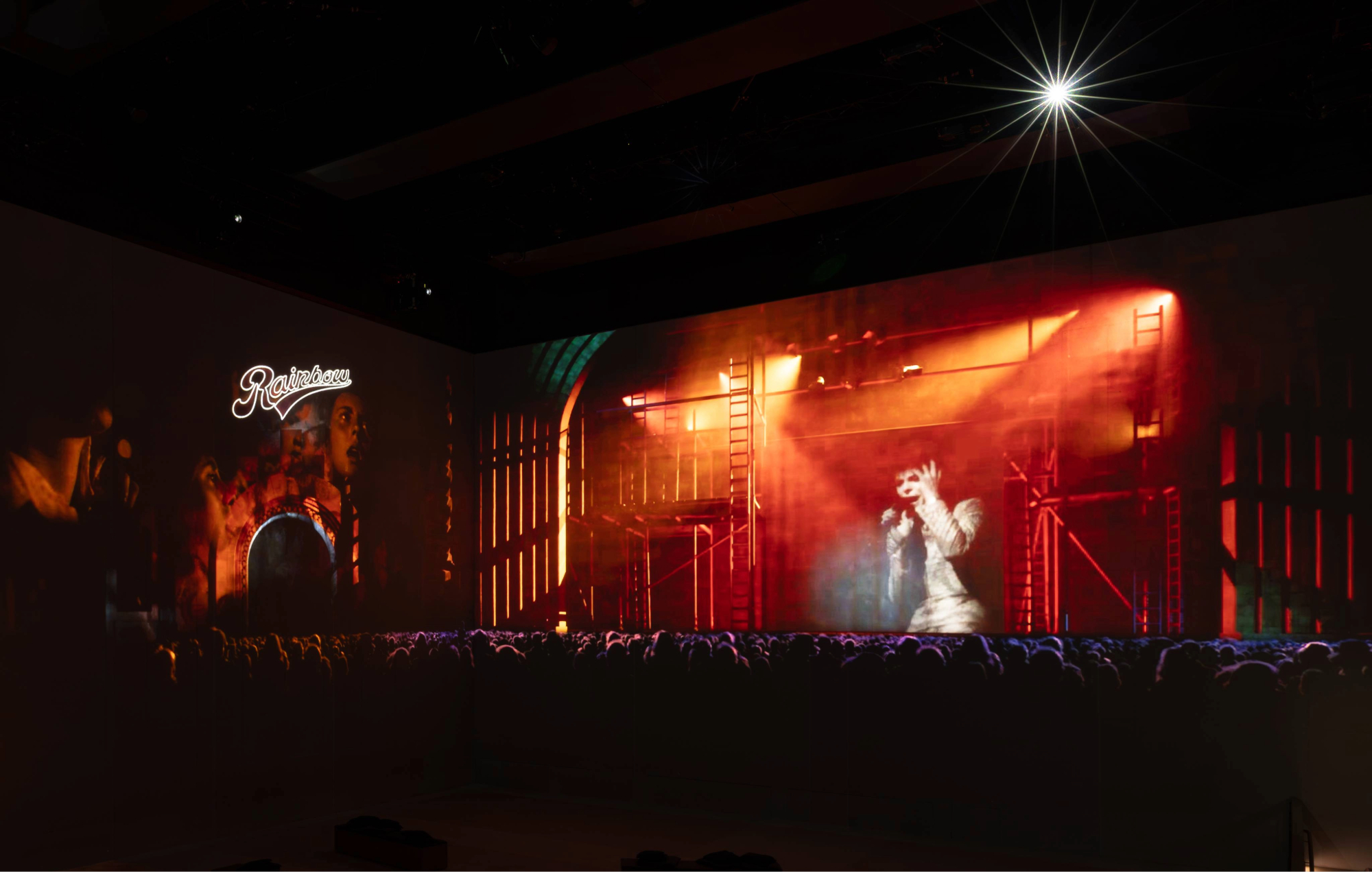
Looking to what made it into the show, Sabel said there were “tonnes” of material that they wanted to include but weren’t able to.
“We tried to be representative across the career, and we don’t shy away from him talking about his moments of going more commercial,” he revealed. “Bowie talks about failure. There’s a brilliant section where he talks about his gig at The Rainbow Theatre [in 1972] and he admits that it wasn’t successful. It’s really, genuinely imbued with his words and his perspective. We’ve tried to give the whole picture, warts and all.”
And for Bowie fanatics, could there really be that much more unseen material left to discover in years to come?
“The archive is extensive,” Sabel replied. “There are thousands of objects and so much footage and photography. As a producer, week after week I was telling the animators, ‘Let’s stop adding things’. We kept finding new things we wanted to add.”
He continued: “There’s always more stuff to be uncovered. We would find things in the archive with a little handwritten note from David. It does feel a little bit like you’re following a trail of breadcrumbs. You sense he was aware of a sense of legacy and what’s been left behind. Even with the material that’s been seen before, it’s put together in a whole new way. There’s always a process of discovery.”
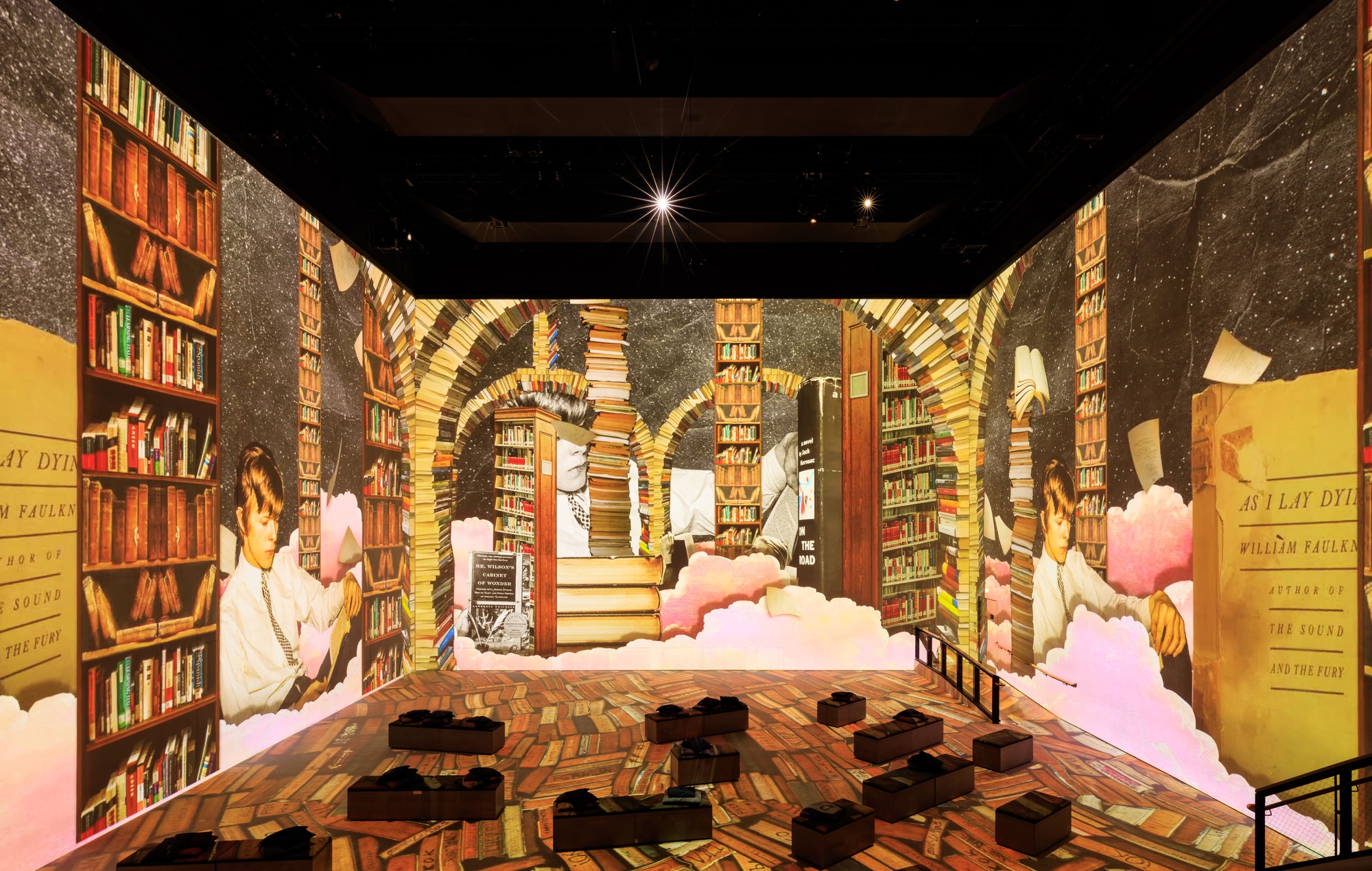
David Bowie: You’re Not Alone is open from 22 April-10 October. Tickets are on sale now via Lightroom’s website. A series of events celebrating the legend have also been announced for ‘Bowie Nights’ at Lightroom, with the likes of Anna Calvi, Adam Buxton and longtime collaborator and guitarist Carlos Alomar set to appear.
Not only that, but guitarist Earl Slick will be reuniting his classic Glastonbury 2000 for a charity performance and weekend of events at Bowie: Live On The Loch at Cameron House on the banks of Loch Lomond in Scotland on November 7 and 8. Tickets are available here.
This also comes after the recent opening of the David Bowie Centre at the V&A East Storehouse, housing over 90,000 of the icon’s possessions.
The post Inside ‘David Bowie: You’re Not Alone’ at London’s Lightroom: “There’s a sense of being at a gig, but you’re also time-travelling” appeared first on NME.