For more than two decades, IAMX, the solo project of artist Chris Corner, has occupied a singular, ineffable space within dark and alternative music, while at the same time managing to bend and penetrate genres outside the scene.
IAMX returns to Europe this summer for the Recollections Tour, with special appearances at festivals including M’era Luna, Infest, and Extramuralhas, alongside a run of headline dates across more unusual territories, including the Nordic countries, Türkiye, and others to be confirmed. Fans can find tickets to all shows on the IAMX website.
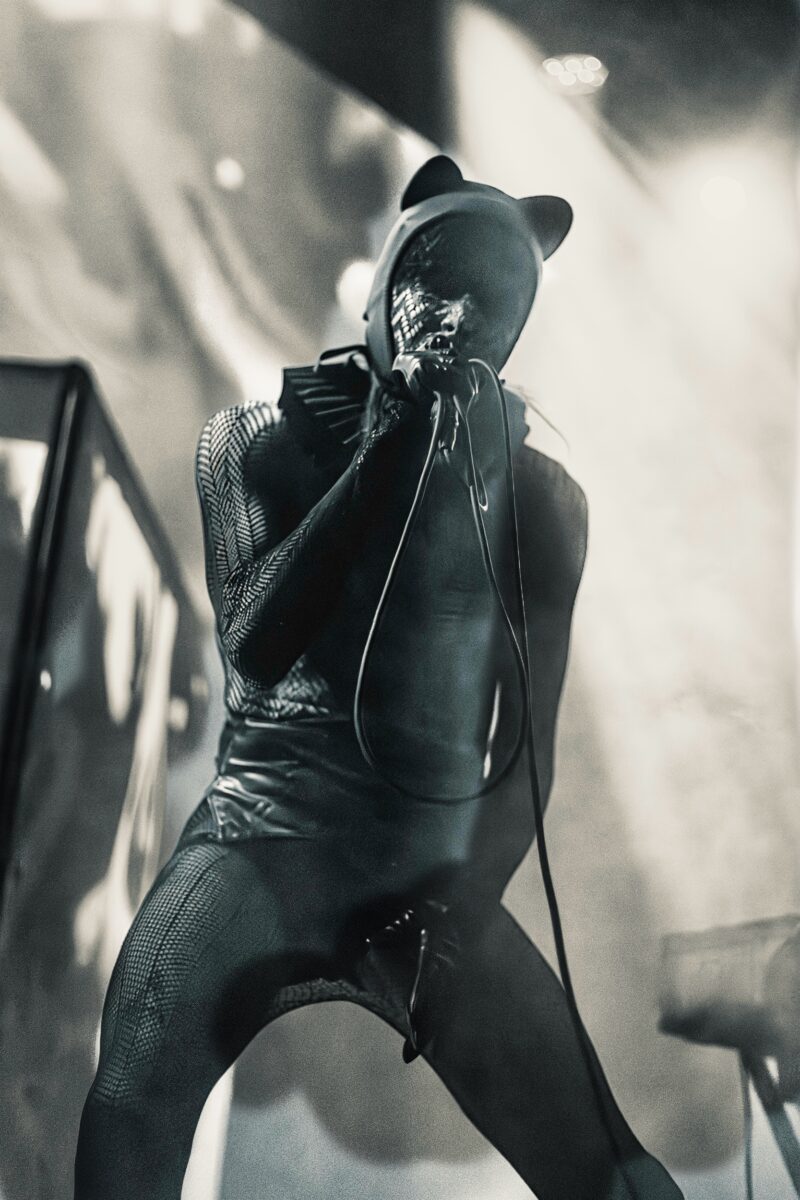
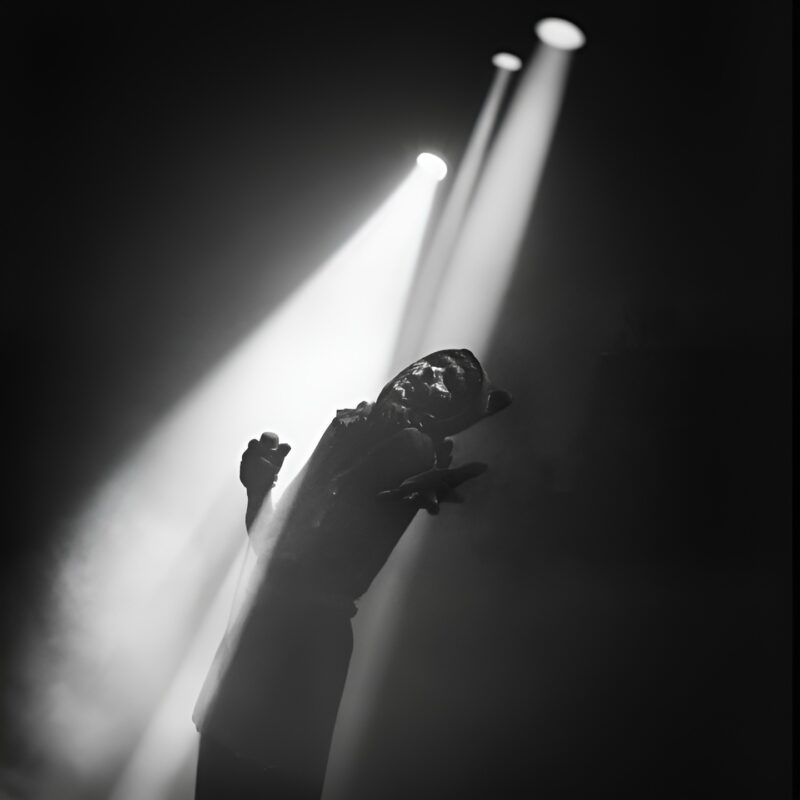
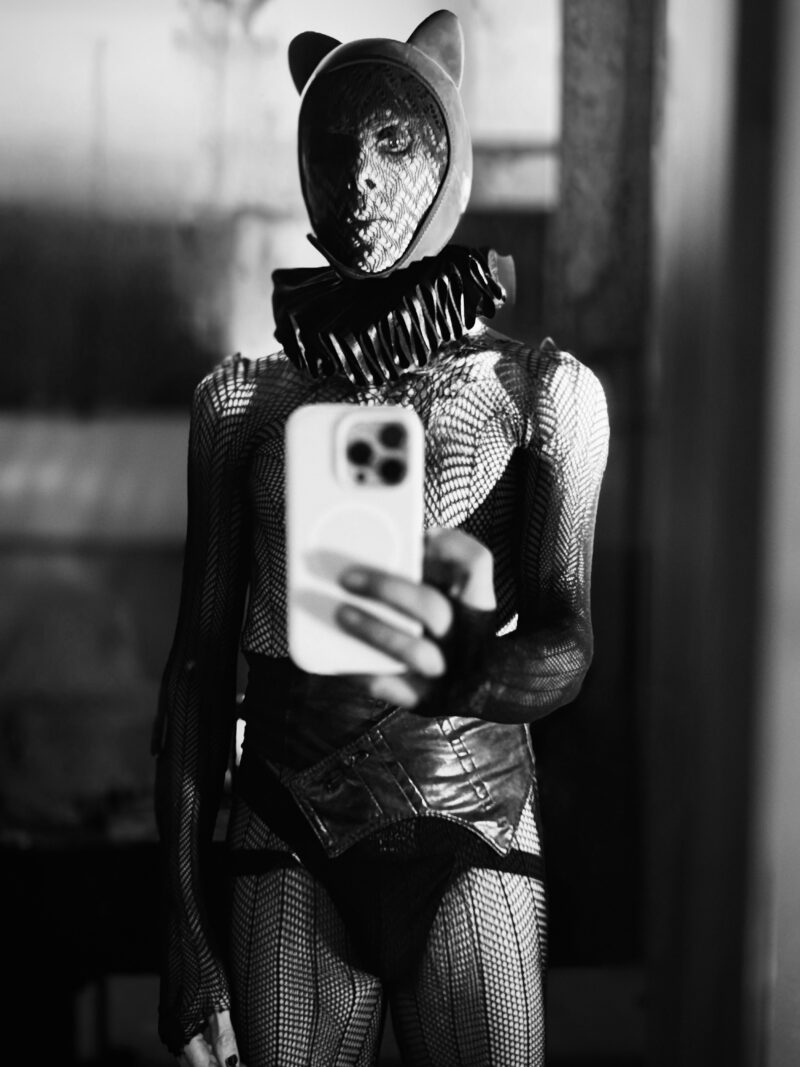
A highlight of the run is a double-night invasion of Stockholm. The band will perform their infamous, electrifying, high-octane set one night, while also offering a super unique acoustic set and mental health gathering on another. Set against a backdrop of high-art stage design and bombastic rave visuals, the main set will include revamped beloved IAMX classics not heard for years, along with heavier live versions of recent albums.
Held the evening before, the acoustic gathering offers honest conversations about mental health, neurodiversity, and sexuality, interwoven with stripped-back acoustic performances of IAMX songs.
Ahead of their first shows, Corner and IAMX live band member Gözde Düzer, known for her own fantastic, gritty hauntwave solo project Aux Animaux, turn the spotlight on one another for their own intimate conversation over a few glasses of wine. Their discussion travels from the evolution of IAMX to mental health and neurodiversity, and finding connection in an increasingly fractured world.
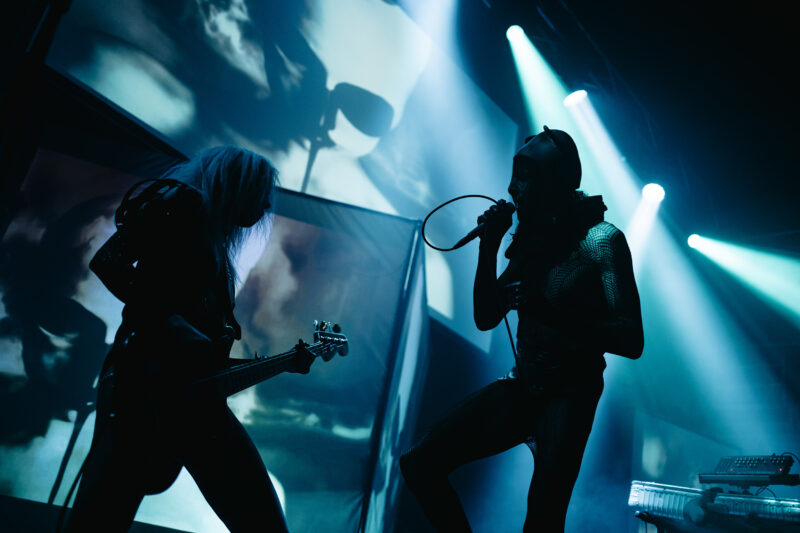
Gözde: After a period of intense focus on the Fault Lines era, we’re going to be doing this tour focused a bit more on older songs. How does it feel to move into a retrospective realm?
Chris: It feels bizarre and amazing at the same time. I felt like the Fault Lines thing dragged on, really, because a lot of personal stuff dragged on. What was happening in my personal life and those two albums seemed so intertwined with each other that they both felt like the same thing in an odd way.
Moving into this retrospective thing, I am ready to write new material, but not quite. My head is still stuck on a personal level. I’m trying to shake myself up, and I think doing this retrospective thing gives me a bit of breathing space, but also allows me to be playful with old stuff and have some fun and give people what they want, and not be too serious. Because writing is serious. If I start fully going into the writing mode right now, I think it would just probably be too intense. There’s a certain lightness to retrospective stuff that, you know, it’s done, it’s accepted, and I can play with it and have fun with it, and not worry too much about what I’m trying to say. It’s all been said, really. It’s a bit weird, but mostly it feels perfect, timing-wise.
Gözde: I think it’s also great bringing the hits to the festival shows. And also the way we play them on stage isn’t like the album version because you redo all the songs for a live performance. Everything is always being reworked in some way. One version we played in the spring might not even be the same on the stage on these summer shows, right? It’s still new and exciting.
Chris: That’s part of it. Initially, it needs to be fun and cool and interesting to me. If I take an old song, I don’t want to just live with it as it was. It’s not interesting to me anymore. It’s more like, what can I do with it now, and how can I present it in a slightly more modern way? My production techniques have changed over the years, and my priorities and my sound have developed. To take an old track, I would never just do it as it was. I mean, it still has that feeling. A song is written in a certain way, you can’t extract that completely, but it is fun for me to rework it. Otherwise, I probably wouldn’t ever listen to that thing ever again.
When I’ve written and produced and recorded and finished and completed and put it out, and been through the whole exposure therapy of putting art out, there’s a lot of pleasure. But there’s also a lot of self-doubt and questions. It’s never complete. I mean, that feeling, every artist has it, I’m absolutely certain. There is no perfect product.
Having a second chance, that’s what I like about live stuff too, is you have many chances. You can keep improving it, and you can keep getting it better–or what you think is better, of course. Everybody has, it’s very subjective. Somebody who’s super focused on the original version of “Kiss + Swallow” from the first album might be offended by adding a new snare sound or something. I’m not. And that keeps my engine running.
Gözde: That makes sense. I remember reading about Nirvana and that Kurt Cobain didn’t want to play “Smells Like Teen Spirit,” and maybe that was part of the reason why, because the album version is already super clean, and it almost doesn’t sound like that raw Nirvana sound. And then they have to play the song over and over again. But when you do something like you do, the song progresses with you, especially in a live setting, because that’s also different from the recorded version, that also keeps the song exciting for the performer too.
When we play some of the IAMX songs on stage, they almost feel a bit metal. When we go all in with live drums and the bass and all…

Chris: The live part of IAMX has really brought out that energy and harshness and rawness that sometimes I don’t quite achieve on the records, because my head isn’t there.When you’re making a record, you have all of these technical concerns. Your energy is very different. Your mood is different. You’re a bit more subdued, maybe.
The live experience – not just for the person on stage, but for the listener, the audience too – there’s an energy that’s quite difficult to recreate in the studio.
Particularly if you’re doing it yourself, like I do. You can’t always project your mind into that space, and your body, and your voice. Often it would be ideal to play the record for a whole year live and then record it, you know, like they used to do.
Gözde: I think about that a lot too. Now, when I start playing the new songs live before releasing them with Aux Animaux, I realize that it was actually much better to do so, because then, even with the vocals, you come up with other stuff you wouldn’t in the studio. There’s something liberating about performing them in a live setting and then going back to the studio with whatever emerged.
Chris: Exactly. And there’s a certain limit to what you can achieve in a certain time as well. You can live and breathe and experience things and see people’s reactions and see, “Oh, they like that. They don’t like that.” Or, “This worked. That worked. I felt good when I did that. My voice got stronger.”
There’s too many variables. You can’t express that fully in a studio environment, particularly for the music that we do. If there’s a full band bashing away for two weeks, maybe. We’re not that. But I do love the idea of the metal energy element, and that’s something that I’m flirting with bringing into the sound, for sure.
Gözde: Right! Do you mean bringing in the metal sound on the records as well?
Chris: I keep coming back to this idea that there has to be an IAMX hybrid mutant metal record. I have no idea how I’ll do it, but I’ll find a way. I think it’s gonna happen. I know it.
Gözde: I think it totally should! I was thinking about that the other day when I went to see the A Perfect Circle show, and then I asked you, “When are we gonna do that metal album?”
Chris: I know. I come back to that feeling too. It’s odd because metal is so connected with a load of dudes on stage doing this thing. Trying to extract that energy, and formulate that into a weird electronic studio environment is a challenge. It would be really interesting if I could somehow make that. I mean, a lot of industrial stuff has that energy too. It has been done in that sense. But with IAMX it’s a different beast. Let’s see what I can do.
Gözde: That’s gonna be really cool. I’m looking forward to that! By the way, going back to the highlights, “Bernadette” has exploded over the past few years to become one of the most popular IAMX songs. The single is being re-released on vinyl this summer just ahead of the tour. What do you think it is about “Bernadette” that has resonated with so many people?
Chris: Obviously because it’s a really hardcore metal tune! No, it’s the least metal IAMX song ever. Who knows? I mean, there are tracks that I’ve done with different projects–my previous band–that people gravitate to. There are IAMX songs that people gravitate to. The stuff that I like is not the stuff that others like. I don’t have the answer to any of that. I’m not a pop producer or writer. I’ve never really gone into any writing process with that in mind. I’ve always found it very fragile that when people go into, at least with the people that I’ve worked with who are obviously not pop writers, when you go into that thinking, “I’m going to write a commercial song,” you’re setting yourself up for failure. I don’t know what that is.
With “Bernadette,” the one thing that I remember when I wrote it, was that it was a very concentrated song. I spent a lot of time crafting it. The chord changes were very different to what I was doing at the time. I pushed things. It was a very songy-song. That’s all I can say. There’s a lot of genuine emotion in it. It’s quite simple. But then there are other IAMX songs that are simple too. I don’t know what the thing is there. It’s definitely a special song. It’s got a special thing. You can sing it like a simple song. It’s got a girl’s name. You know, the thing. It hits certain buttons that the human storytelling condition likes. You could sit around the campfire and talk about “Bernadette.” There’s a storyline to it. It has a bit of a narrative, I guess. I don’t know.
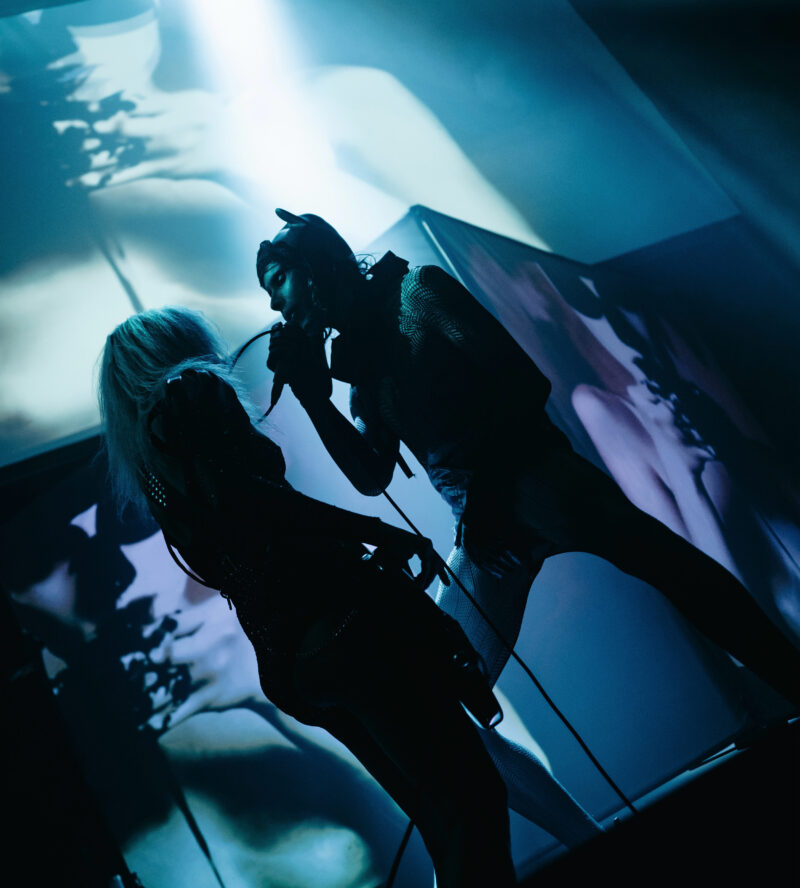
Gözde: Sometimes it’s also like you just write this song from your own perspective, in your own little world, and then you put it out there for people to do whatever they want with it. And then, I guess they relate more to some songs, for reasons unknown. The song starts to have a life of its own. It makes its own path.
Chris: It is on its own path. And it’s not just a relational path. It’s also a cultural path. Timing. Things that happened around it. You really can’t predict that. The only thing I can think of that has ever made any sense is when something has felt so intense and right to me that I just know it’s going to feel right to somebody else. That’s the only thing. And I have that with every song, of course. We all do. But some of those feelings last and some of them don’t.
Some of them are in the moment. It’s like, “Okay, the reason why that works is because the beat was really heavy, and that feels great, and I could imagine being in a club and just losing my shit.” That’s amazing. It’s a great feeling. And it might last. But that might change next year when techno comes in, or whatever.
But there’s a certain thing about a certain relational emotion that you write into a song that–I really think that if it means something true, it’s going to mean something true to somebody else.
Gözde: We’ll be hosting a mental health gathering for fans with acoustic performances in August in Stockholm. It’s been several years since IAMX had a mental health gathering before a live show, and that’s going to be the first time for me doing that mental health thing with IAMX. Can you tell me a little bit about it? What is it exactly?
Chris: It’s basically a safe space where we can all get in a room, be a certain accepted, weird, neurodiverse cult, and bring our challenges and our awe to the table and share it. Just talk. It’s like communion. It’s something that I know I need. It’s a selfish project, to be honest. I started it post-breakdown, when I’d had a few years of my own difficult mental health challenges. I found it super comforting and productive to start that and to do it, and to share the things that I had learned about myself, and about psychology, and therapy, and all of these tools that I had learned to restabilize myself. It was beautiful as well because it’s not just a dry therapeutic situation. It’s a very unique situation because you have an artist and the listener, and you can connect about life, but also about the art. You can go deeper into the art. I can learn things about myself, but also about them, how they experience me, how they experience my work. It’s really unique. At some point, I just felt like music, visuals, and the video, and everything, it just wasn’t enough. I was like, I’m in this world, and I’m human, and I’m socially awkward, and I don’t relate very well, but I’m desperate to relate even though I can’t. On a personal level, it’s been difficult. There were all these different moving parts. Then there’s this whole–there are thousands and thousands of people out there that accept and love me. I was like, “Well, how the fuck do I get to them on an intimate level?”
Not just through social media and stuff like that. How do I sit in a room and use that energy that we both would like to use? That seemed to be a good place to do it. I’ve really missed it. It stopped for a while because life happened, and things changed, and lots of transitions, and then the pandemic happened. Here we are, five years later. It’s like, “Oh my God, I need to get back and do that shit because it was amazing.” It’s selfish, but it’s also a certain duty. One of the keys to positive and healthy mental health is to look outside yourself. To connect with others. To diminish your own ego. You can go out into nature and experience nature, and that brings your ego down. What else do you do? You get to know other people. You listen to them. You talk to them. You get to know their stories.
I’m a super curious person. I love to know about others. But I need a safe environment for that because I’m also an autistic person. It’s socially sticky for me to formulate the right environment for me to do that. It’s a perfect place for me. It’s a weird corrupted social environment.
Gözde: Is it because you know that they’re people who accept you as you are? That no one is judging you?
Chris: In fact, it’s beyond that. It’s pure. It can be pure joy. We live in a secular world. Religion is dead to a certain degree in the Western world. And it should be, because indoctrination and dogmatic religion is horrific.
Gözde: I mean, I come from Turkey, so I definitely know.
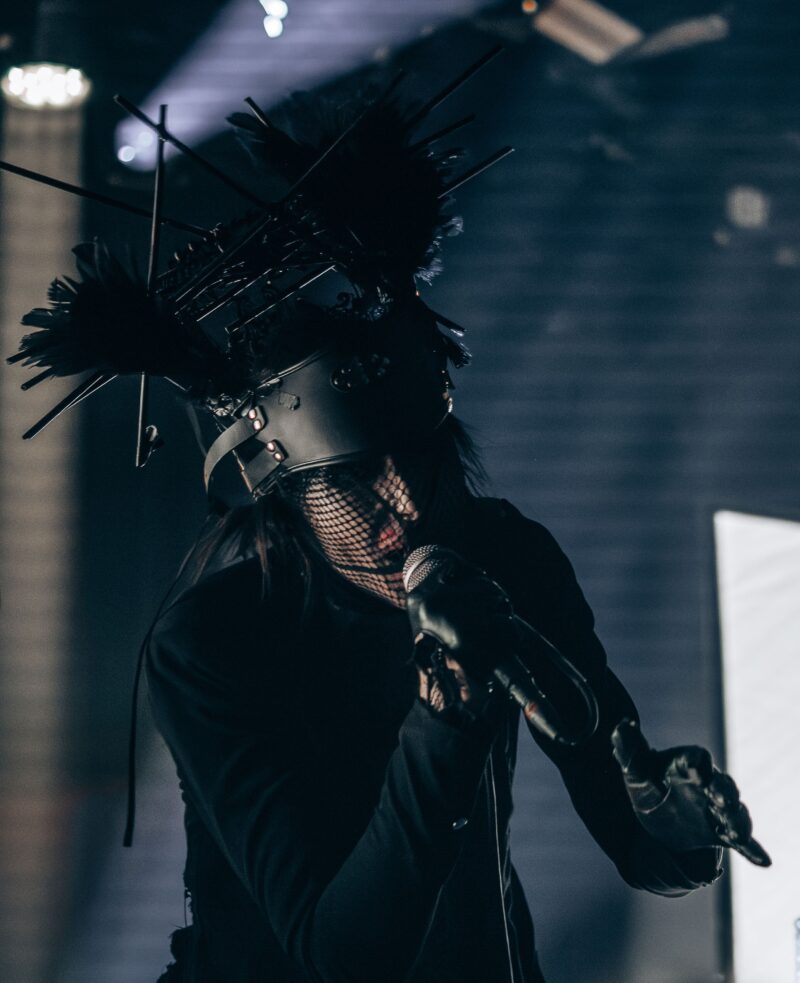
Chris: Don’t get me started on that. You know. We all know the damage that dogmatic religion has done, and does, and the ignorance it creates. But, there are certain parts of our capitalist society, our culture, that has developed into a very individualist culture where we’ve lost touch with a certain sense of community. I think there are little pockets where you can still get it. This is a certain way of getting it. Through IAMX.
Gözde: No, I totally get that. I was just thinking about the goth community. It’s similar, you know?
Chris: Absolutely.
Gözde: Since I got into the goth community, I’ve come to see they’ve been one of the sweetest, most accepting groups of people. Everyone is super nice to each other. It is a community of its own. For example, when I’m on tour and I stand by my own merch booth, you get to talk about all kinds of things with your audience. Some of them you’ve known through the years because they keep coming back.
We’re going to get into talking about Patreon in a bit, where some of these people get to start communicating with you in a different way because it’s different media that can offer a closeness social media doesn’t. At the end of the day, I guess it’s similar to the closer interactions in person. I get a little bit of that from the goth scene in Stockholm, where I live, but also when I’m out traveling, and also with my little goth gang that I have in Stockholm. It’s my chosen family, as I like to call it. It’s just part of the community. The friendship.
Chris: You’re absolutely right. It’s a super special, unique thing to the goth community. I don’t really see that anywhere else. It’s so accepting of vulnerability, oddness, and misfits. It’s full of people that don’t function well in society.
Gözde: A lot of neurodivergent people. I think all my friends are.
Chris: Exactly. Totally. We all gravitate towards that. And also the kind of music, because it’s about that stuff. I mean, that’s glorious, right? I love that. I guess this is smaller, an IAMX way of concentrating that same feeling and bringing out very specific topics, and talking specifically about people’s own experiences with neurodiversity. Advocating for openness about the whole thing. The world has got better with all of that, thankfully. It is a beautiful thing. When I started IAMX, people never talked about this stuff. Even though I’ve always put it into my music, and it’s always been there. If you look back even to the first record, you can see neurodiversity everywhere. It’s interesting to me because I wasn’t particularly aware of it myself. To be able to come full circle, and to be able to experience and share that with my people, it’s incredible.
Gözde: You talked about coming out as an autistic person, and being super open, almost vulnerable, about mental health, can you tell a bit more about that?
Chris: I can expand a little bit. I was late diagnosed with autism. I always felt something was very different about my place in the world, and it manifested in lots of mental health challenges. It was very freeing. It was very liberating being diagnosed because you can really start to understand yourself in a way that you never were able to. That’s a beautiful thing. You don’t necessarily have to judge yourself as a flawed, failed character. You know…
Gözde: There’s even some self-acceptance, right?
Chris: It really helps with self-acceptance.
Gözde: Because you can say this is the way I am, and that’s okay.
Chris: When you actually think about it, why do we even need neurodiversity for that? Because I guess we put it down to biology and the way our brains are structured.
If my brain is structured in that way, then my consciousness and my soul, or my personality, is okay. Because, I mean, what am I anyway? Who am I? What is this thing that I call I? I’m okay then. It’s a ridiculous thing because when you actually get philosophical about it, we are everything anyway. We’re not some separate little pilot behind the eyes directing this body. There’s not a little kind of I in here taking me wherever. We are the whole thing.
But there is a certain power to diagnosis. In the same way that having therapy is powerful. To understand, it’s a lifelong project. How do you truly understand the workings of your own brain? You don’t understand how your heart works, right? It just does. The brain is the most complicated thing. Why do we expect to know everything? But I think there are certain things like that that do make it a little bit smoother.
Gözde: Same thing also because society is built in a certain way.
Chris: Exactly.
Gözde: The majority of people aren’t “wired” that way, or however you want to put it.
Chris: You’re totally right. Society has a certain set of rules where, “Oh, now it can be accepted.” Because of a certain diagnosis. Because of medical expertise. That me being weird is okay in society. I think that is a really big step. It’s like racism. LGBTQ. It’s the same thing. When I got that diagnosis, it was good. It definitely helped my therapeutic journey. It explained a lot of things. It explained a lot of interpersonal issues that I thought were just moral failures that weren’t. And then being able to understand that also about my art. When I started, after the liberation of the diagnosis, understanding the things I’d written in the past. The things I’d written about, the things I’d tried to experience, the idea of me being an androgynous, pro-LGBTQ person for as long as I can remember. It all just made sense. It was quite a beautiful moment. We just expanded on it.
Gözde: I can imagine that it’s liberating in a certain way. Just understanding yourself better.
Chris: It’s a lifelong battle, right? We’re all just trying to understand why we do things, how we can improve, how we can be our best selves. How we can accept ourselves. We’re instantly preoccupied with this stuff. To take quite a big chunk out of the pressure of that by saying, “Okay, well, it’s just the way I am.” I don’t have to worry about that part of me anymore. I have to align myself with it.I have to work with it. Of course that’s not going to change. Then it’s just a practical way of working. It’s not some spiritual yearning. That’s nice. It was definitely nice for me.
Gözde: Maybe it even feels good to be able to say, “Okay, I’m like this.” That’s the way it is. Because now you know the reason. You can stop obsessing about certain things.
Chris: Exactly. “Oh, that’s just the way I am.” It’s fine. And you can say to people, “That’s just how I am.” But you have ammunition. It’s not just, “I’m just this way.” There is a certain solidity to having a diagnosis where you can say, “Well, I am this way.” It’s not just something that I can…
Gözde: It’s not something you choose.
Chris: Exactly. I can’t.
Gözde: Also as a touring musician, it is nice to have that diagnosis. Because we’re on the road all the time, every day we’re in a different place with different people. It’s liberating in a way also because you can say, “Okay, this is why I need certain things, because I’m an autistic person, and that’s the only way I can cope.”
Chris: You just hit the nail on the head. Because I spent half my life, half my career, worrying about being an asshole. About getting a reputation for being difficult, even though I knew I couldn’t reconcile the fact that I know I’m a good person. I’m trying to be respectful to the people I work with. There are certain needs that I have that just will not go away. They aren’t negotiable.
Like you’ve talked about with your misophonia. It’s not negotiable. You can’t just say, “Well, I can loosen that.” Or, “I’ll try and be a bit more like…” No, these are the needs. They have to be respected to a certain degree. They can soften, but only if you accept them, work with them, and know what they are, and others accept them too.
It’s like if somebody says, “Yes, we’ll get you the quiet room in the hotel, Chris.” I’ll go, “Thank you.” Or they say, “We tried. They didn’t have one.” Okay, you tried, it’s okay. But when it’s not accepted, when it’s, “Why do you need a quiet room?” That’s a totally different ballgame. You can’t work with that. It needs to be accepted.
Gözde: They definitely have more understanding when you put it that way. “Hey, this is the artist. He has autism, and that’s what we need.” I think they’re more understanding.
Chris: That’s absolutely the inner feeling that changed in me post-diagnosis. That’s what I wanted to say, actually. Because pre-diagnosis, it was all like, “I am difficult. Why doesn’t anybody understand me? Why can’t I just be a bit more easygoing? Why can’t I deal with being in the noisy room? It’s just people. Why can’t I deal with that? Why can’t they just understand that I need that?” There was this constant questioning.
There were so many whys. It’s all about, “Why?” And then you go, “Well, I have autism.” The “why” just dissolves. You go, “This is how it is, and we’ve got to work with it.” That sense of having to adapt to the world just falls away. It’s beautiful. You relax. I’ve actually been so much more relaxed since my diagnosis. I’ve been able to accept so much more about touring, being on the road, other people… It’s not just my own needs. I think I’ve been better to others after my diagnosis.
Gözde: That’s interesting. The thing is, touring is already difficult in itself. It’s not an easy thing. People who don’t do it have no idea how tiring it is, we never sleep, we’re on the road all the time. Maybe we don’t even get to eat. You have to go out on the road, sometimes sick, and perform. Then there’s setting everything up for hours and all that work. It’s already difficult. Then there’s the part where, on top of it, you also have to meet new people every day.
One of the things I really admire about you is that you’re really good at setting those boundaries for your own mental health and well-being. “This is what I need when I tour.” Because, for example, I told you about what happened to me a few weeks ago when I was on the road with Aux Animaux. I had to be in this green room with a bunch of people, take this shot with this person who insisted on it, and take a photo with another. But in reality, I was jet lagged and several days sleep deprived, all I needed was to be left alone. It’s just hard.
Chris: It is hard to say because you’re in an environment where not everybody feels like that. It’s a hyper-social environment, it’s super claustrophobic, it’s very intimate too. Backstage, the space in most places is very intimate. You’re close to people. You smell people. It’s just, for artists, especially neurodiverse people, your senses are just bombarded with intimacy. I’m not saying that you’re autistic, but I totally…
Gözde: You diagnosed me as autistic, actually.
Chris: I know.
Gözde: I think you’re right. Definitely on the spectrum.
Chris: You have special needs when you’re on the spectrum. Not a lot of people are okay with that, they don’t quite understand why. You’re in a position where you’ve just done this big thing. All of the energy has gone into the show. Then you just want to disappear, you want to go somewhere else. People think that every night’s a party, it’s not. It might be the party that night, but you’ve got another party the next night, and then another one. You don’t want to do it.
Gözde: See, not everyone is partying while touring either. There’s that. But I also have friends and they’re awesome at partying on tour. Not me. I don’t do that when I tour, actually. On occasion, if I have a one-off show, or if I’m playing with friends, then whatever, but mostly I want to be left alone especially before the show. If I can’t get that, that’s a huge stress moment for me.
Chris: Oh my God, yes. I totally feel you. There’s a certain sacred space before the show, right? Because you have to go inward to process what’s about to happen.
Gözde: And to save your voice.
Chris: Save the voice. Exactly. Save the voice. People are like, “Well, why don’t you just…” And you’re like, “Well, that’s the thing. You don’t have to do that. I do.”
Gözde: Damn right! Shall we get to the next question? I want to ask you about Patreon. You were a pretty early adopter of Patreon. Inspired by you, I also got into it recently. It’s an amazing way to directly communicate with the fans. You show them what’s going on behind the scenes before everyone else sees it. It also helps us as artists financially. Has it changed anything with how you relate to your people?
Chris: That was a great question. Well done. Patreon has just been a fucking lifeline for me. In a sense, I feel like IAMX could have developed it a little bit more. I feel like it’s an amazing thing that could thrive more. I want to put more energy into that. It’s a little bit like social media. I feel like Patreon is an extension of social media where I’m not…
Gözde: They get something more on Patreon.
Chris: They get something more. I want to be there. I want to engage. But social media is such a difficult part of the process for me.
Gözde: It doesn’t feel natural, right?
Chris: Not natural. Communicating is natural, creating content is natural. But this interface of going to a site, seeing something you don’t want to see, posting something, waiting for a response, there’s something so unnatural about it for me. Patreon is fucking amazing because you can throw weird, oblique stuff on there that has nothing to do with an album or an official music video. You can be playful. You can talk about stuff that has nothing to do with the main juice of the project. That’s fun. You can throw a ten-second demo of some stupid thing you’ve done, it provides content, it’s interesting, you don’t have to suffer through a social media onslaught. It’s a warmer, more intimate experience.
Gözde: Because they’re curious about you, right? As a person.
Chris: They’re paying. They’re specific. It’s closer. The whole thing is closer. For someone like me, it feels like a good space to experiment and experience my fans close up without it being a live experience or something like that. It’s probably the closest online to a feeling of safety that I get. Because social media is difficult for me in general.
Gözde: That’s true. Social media is so broad also. On Patreon, these are the people who you know care about you, they’re rooting for you. There’s something extra going on there, definitely.
Chris: Exactly. You can experiment with different formats too. You can say, “Well, I’m not good at posting this kind of content, so I’m just going to try that.” For instance, I do these voicemails. It’s just me rambling in the car, talking about life and whatever’s happening.
Gözde: I totally adopted them after you.
Chris: Oh, good. It’s good because it’s something I feel like I can do. It’s not forced. It’s natural.
Gözde: A stream of consciousness in the moment.
Chris: Exactly. I’d be driving, and my head is running, and I just want to talk. I can put it out there, and people connect with it. It’s nothing to do with the way social media works. I feel like there’s a broader, more fun way to experiment there that you don’t have in other spaces. People really support you. They do it without question. They stay with you. It’s been incredible for IAMX.
Gözde: I really love it too. Like I told you before, the other day, I was feeling so bad, I was crying and telling them why. Then I had people write to me saying,”I’m crying with you. I feel you.” We’re living in this world where nobody is happy all the time. On the contrary, we’re happy sometimes, here and there. But for the most part, it’s suffering. People can relate to that. I would never do that on Instagram, for example, put myself out there like that, lay myself bare. Patreon really does feel like a safe space for it.
Chris: It does. It feels more authentic, right? There’s a certain thing with Instagram. There’s this constructed thing that people do.
Gözde: There’s an algorithm also.
Chris: There’s all of this stuff working behind the whole thing. It got worse over the years. There’s still this thing where I think…”Okay. There’s this thing I’m doing. I’m thinking. I’m feeling this thing. What do I do? Do I post that? Is that emotional porn that I want to put out into the world that’s going to make people sad? Do I want to do that?” You’re constantly thinking, “What’s right? What’s wrong?”
Gözde: You know what? The part about making people sad, I don’t think that’s an issue. Because…
Chris: No, I know that. It’s more that, there’s a certain clickbait kind of thing. If I do something genuinely sad or authentic, do I want to put it into a space where people think it’s clickbait anyway? It feels like the space itself is toxic. Why would I put something authentic into a toxic space? That’s what feels wrong to me sometimes. I get using it for promotion and this and that. That’s my block. Whenever I think, “This is meaningful to me.” I know it connects with my fans. But still, my post is going to sit next to some AI piece of crap that’s promoting someone shaving their head.Or, some random video. You know that your moment of depth and authenticity is just going to get lost in this stream.
Gözde: I agree. But you still have to do it. As artists today we can’t just be artists who write music and perform. We have to also be content creators.You still have to do the work and be out there on social media. But I agree with you on the part that on Patreon you can share stuff that’s more intimate. It’s not about promoting. It’s about “Hey, this is right now”, and you don’t have to think about the algorithm or if this is gonna reach out, because you know the patrons are already there for it.
Chris: Exactly. And it’s not gonna end up next to a toothpaste ad or something. To me whenever I’m going, it’s genuine, but then it’s next to a disgusting thing, and then I’m shocked by that thing, and I go “is that genuine?”
Gözde: Totally! People’s attention span is so low because everyone’s doomscrolling all the time. Even if you put something genuine out there, it might not even be noticed.
Chris: Exactly. It’s a very strange feeling. I’m blocked at this end because I know people’s attention is all over the place. Why do I post something really heartfelt about my pet dying on Instagram anymore? Or do I do it on Patreon? Anyway, back to Patreon. It just feels like a nicer, safer space to do that. I really want to work it more.
Gözde: Yes. We’re going to!
Chris: I’m interested in your whole experience here. You’re getting dragged along into the IAMX world. There are many moving parts: there’s the shows, there’s you playing with us as a musician in IAMX, there’s also you playing as Aux Animaux next to it. You’re experiencing the mental health gatherings. There’s a whole roller coaster here, right? What’s going on with you? How do you feel about the whole thing?
Gözde: I love it. I love it so much. I’m so happy to be a part of it. I saw you many times live, before we even met. Sneaker Pimps was the soundtrack of my life back in the day. It’s still one of my favorite bands. Especially the last two albums.
Chris: Exactly the right thing to say. Thank you.
Gözde: It’s true, though. I just love them more because you’re singing in them, the person who actually wrote the songs, so the feeling is different. When I first got asked to play in IAMX, I did hesitate, because I was finally doing my own thing. Being my own boss. I had played with other people before, back in the day when I lived in Turkey, and the experience wasn’t great. I thought to myself, “Do I want to be in someone else’s band again when I already have something that’s going?” But then I thought, “I mean… come on. It’s IAMX. You can’t say no to that.” Thank God I didn’t. Because, we clicked right from the beginning anyway. I already knew our drummer Jon. I’m here thanks to him, actually. Then, the live experience has been phenomenal. I’m originally a bass player, it’s wonderful to get to do that again. To be in a band and not be the front person. It’s so much more fun, honestly, I enjoy it more. I’m not going to lie.
Chris: I love it. I totally understand. I totally understand the feeling. The very, very few times I’ve done that…
Gözde: Because you played drums, right?
Chris: I played drums with an ex-girlfriend’s band. I always remember it because it was so freeing even though I was shit at it.
Gözde: I’m sure you put on a hell of a performance, though.
Chris: I really bashed those fucking drums.
Gözde: I can imagine!
Chris: I was going nuts. It was great. I enjoyed that experience of somebody else’s message, and not having to carry the whole thing. I totally understand what you’re saying. But I hope that doesn’t distract you from the amazing work that you’re doing with Aux Animaux.
Gözde: No, no, no. It doesn’t. I love doing both. You know I’m working on a new album. If anything, it’s been very inspirational, it’s lovely to get to do both, actually. I get to do my own thing, but I also get to be part of this amazing project. I love everyone involved, the crew, I love being on stage with you guys. Obviously we have insane stage chemistry. I love the songs, I love the fans. Then I also have the luxury that I still get to do my own thing too. It’s just amazing.
Chris: Exactly the right thing to say. Thank you.
Gözde: This is different because I’m in two projects that I love. That’s awesome. I really love being a part of IAMX. Doing the support thing at the same time is, of course, a little bit difficult. I don’t get tired, it’s not about that.
It’s more that I have to go on stage completely sober with Aux Animaux because I can’t play the bass when I’m drunk. That’s a little bit weird because I’m the only person on stage and everyone’s looking at me.
Chris: I don’t know how you do it.
Gözde: I don’t know either. It’s tough.
Chris: I knew that would be, I mean, I think you’re doing an amazing job. I just thought psychologically that would be a bit of a tough call because not only do you have to psychologically shift from that person to a different person…
Gözde: The shift is easy. That part is easy.
Chris: It’s carrying that weight.
Gözde: I mean, it’s not that it’s difficult. It’s more that it’s a little bit awkward, you’re very aware of everything, everyone. That’s a little strange. I actually used to do the shows sober up until a year or two ago. Then at some point I realized, “Oh, I can drink a little bit and then do the show.” It’s much better because then I’m more relaxed. You know?
Chris: Just say it as it is. You need to be a bit loose to enjoy it. That’s part of the rock-and-roll part of it. Your project has that energy. That rock-and-roll energy needs that feeling. Not just for them, for you. You need to feel like…
Gözde: Definitely.
Chris: I totally understand that “being exposed” thing. There are so many layers to it. I’ve never understood those professional people who can just go on and do the show totally sober, totally straight, totally cold.
Gözde: Maybe if it’s choreographed, then they can do it. But we don’t do that. We’re just rolling with our feelings at the moment.
Chris: You’re right. That’s a really interesting angle. The fact that there is a certain focus to choreographed shows that occupies the mind. It takes you somewhere else. You’re focused on that thing. If you’re just about emotional, authentic energy in a way, it’s such a sterile environment.
Even though gigs aren’t really built for that, it still feels sterile to suddenly jump onto a fucking platform in front of one hundred, two hundred, three hundred strangers. It’s just not natural. It doesn’t matter how many times you do it, it’s never fully natural.
Gözde: That’s why it’s a little bit more difficult to do both. Because I have to be sober for IAMX. You would never know I’m sober during an IAMX show, as I probably look like I’m drunk because I have no filter then. But I am actually sober. I’m definitely more free than I even am with Aux Animaux. Maybe because I’m also a bass player, and then I’m interacting with you, another performer. Instead of standing there all alone. It’s a different thing.
Chris: You’ve got technical concerns, you’ve got lighting concerns, you’ve got everything. You’re a single person on that fucking stage. It’s a big thing to carry, it really is. Super huge respect. Keep fucking doing it.
Gözde: Well, we are going to do more of them now. We did the whole spring tour together like that. Then we’re going to do these Nordic shows together where I’m doing both Aux Animaux and IAMX with you. I think I’m also doing both at Extramuralhas and Infest, which isn’t on our poster because they’re festival shows. So we have two more shows together where I’m technically not stated as support because they’re festivals.
Chris: You’re doing your own show, right?
Gözde: I’m doing my own show on the other ones too. It’s just that those are only IAMX and Aux Animaux.
Chris: It’s going to be amazing. I think. At least.
Gözde: Then after that, I hope it’s just going to be only IAMX or only Aux Animaux for a little bit.
Chris: It’s easier for you to do that, right?
Gözde: I mean, Aux Animaux is easy. IAMX is easy and natural in any shape or form because I’m there playing the bass and interacting with you. The other one, doing both on the same night, is a little bit more tricky. Definitely.
Chris: What do you have planned for Aux Animaux? Can you describe where you’re going to be in the next… This year? Five years? Sorry.
Can you give me your five-year plan, please?
Gözde: Haha the five year plan! This is an inside joke. Conclude the question again.
Chris: No. Just, no.
Gözde: Sorry. We’re getting dragged on.
Chris: I think people will understand that. That would be funny. Tell me what you’re doing this year with Aux Animaux. I know you’ve described the shows. I think you told me you’re playing in the States too. Is that correct?
Gözde: Yes. That is actually true. I have a whole tour planned in October. I’m playing important festivals for me, like headlining Immortalis in Portland. I’m also playing Seattle with the same festival. I’m playing Substance, both in San Francisco and Los Angeles. I’ve also got Sanctum Festival, which is very important to me, in Chicago on Halloween. Then we might have a little surprise. Other than that, I’m working on an album. Together we shot a video at your ranch in Aguanga like a month ago for the upcoming single from it. I really hope to release it sometime this summer if I can finish mixing the song.§
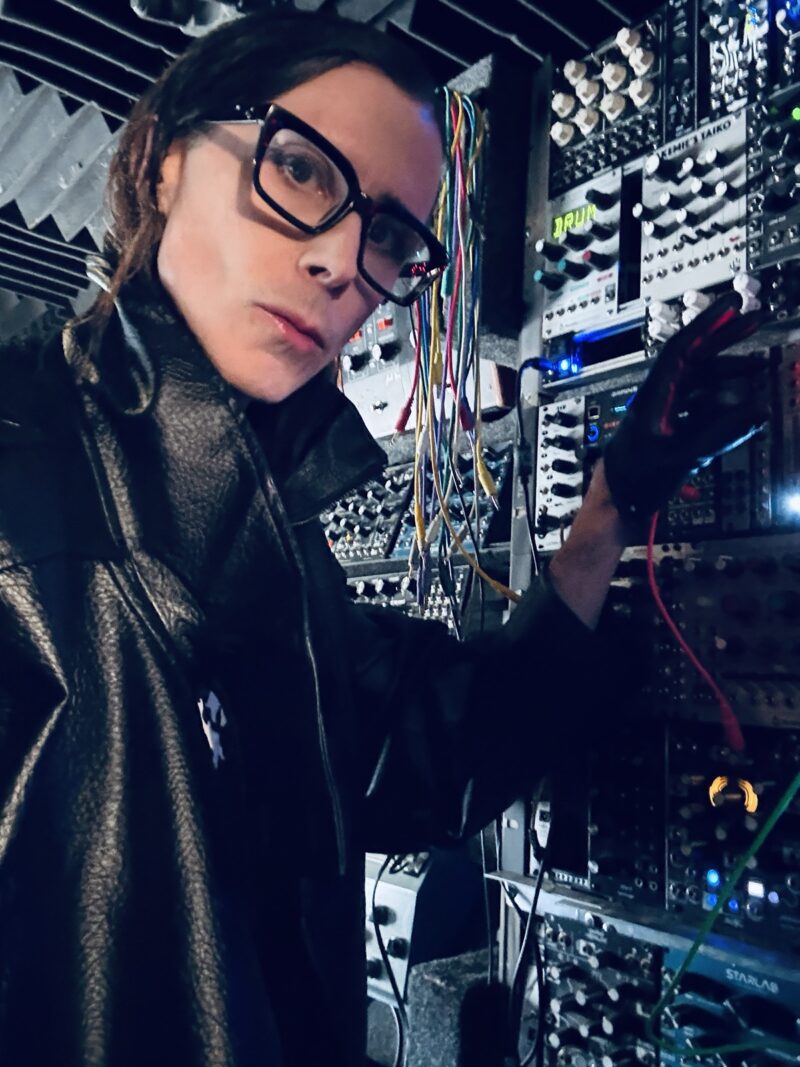
The conversation above follows up on an exchange Post-Punk.com began with Corner last August, ahead of IAMX’s 2025 Fault Lines² North American Tour. In that earlier interview, Corner spoke about IAMX’s first performance in New Orleans, the evolving role of Silent Valley Studios, HEADNOISE, autism, polyamory, AI’s pressure on artists and audiences, obsession as a creative engine, and the practical limits of mounting an independent tour. The discussion also reached the relationship between grief and “The Ocean,” the visual dimension of Corner’s work, and the deeper album tracks he would place on an IAMX starter mixtape.
IAMX opened 2026 with “Artificial Innocence” on February 20, a new single that later appeared in two forms on the UNMASK EP: the original recording and the extended “UNMASK Mix.”
Released digitally on May 22 after first being sold exclusively on the 2025 Fault Lines² European Tour, UNMASK gathers five pieces from the Fault Lines period: “Grass Before The Scythe (ArtBleedsMoney Rework),” “Artificial Innocence (UNMASK Mix),” “Radical Self Love,” “There Will Be Times When I Will Need To Hurt You,” and “Artificial Innocence.”
The same day brought IAMIXED: Reworks Fault Lines Albums 1 And 2 to digital platforms after its original physical-only appearance on the 2025 North American tour. The nine-track collection hands material from both Fault Lines albums to Mimetic Hexes, Holy Braille, Damn The Witch Siren, Nigen, Carrellee, clubdrugs, and ArtBleedsMoney, and includes IAMX’s orchestral rework of “War Of Words.”
On May 25, “The Background Noise {Orchestral Rework}” recast the Metanoia song in a strings-led arrangement. This summer, the Bernadette EP receives its first vinyl edition, collecting seven variations on the song, including its original recording, the ArtBleedsMoney rework, an acoustic rendition, the German radio edit, “Post Romanian Storm,” “Headfuck Collage,” and an instrumental version.
Those releases now feed into the Recollections Tour, which brings earlier IAMX favorites, recent material, and newly rebuilt versions into the same set.
Listen to the Bernadete EP below, and order it on vinyl here.
The Recollections Tour begins on August 9 at M’era Luna in Hildesheim before moving to Stockholm for Intimate Conversations With IAMX on August 18 and a full-band performance at Kollektivet Livet the following night. Festival appearances at Extramuralhas in Leiria and Infest in Manchester lead into September dates through Türkiye and across southern, central, and northern Europe, including a three-night Nordic stretch in Oslo, Malmö, and Helsinki. The announced schedule concludes on November 14 with IAMX’s first performance in Brazil at Madame Club in São Paulo. Drawing from more than two decades of IAMX, the shows will place revised older songs beside recent material and special reworks.
Confirmed tour dates are listed below. Tickets are available at tickets.iamxmusic.com.
IAMX 206 European Tour Dates:
Follow IAMX:
Follow aux animaux:
The post “Ghosts to Dream Of” — An Intimate Conversation Between IAMX and Aux Animaux Ahead of the Recollections Tour appeared first on Post-Punk.com.