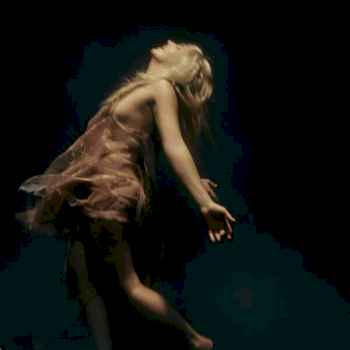
When we first heard Analog Dance’s recent single Fall Apart, the song seemed built from passion and pressure: a rigid beat marking the perimeter, bright synthesizers narrowing the available space, and Jonny Castle’s baritone holding its composure while the dancefloor threatens to bend and buckle from its seductive groove. Within Analog Dance’s second album, Mind The Fall, that steamy pressure becomes one element in a larger design. Across eleven tracks and just under forty-five minutes, the London darkwave project turns collapse, concealment, desire, and performance into sensual dark electronic pop, with guitar supplying warmth or frost at carefully chosen moments.
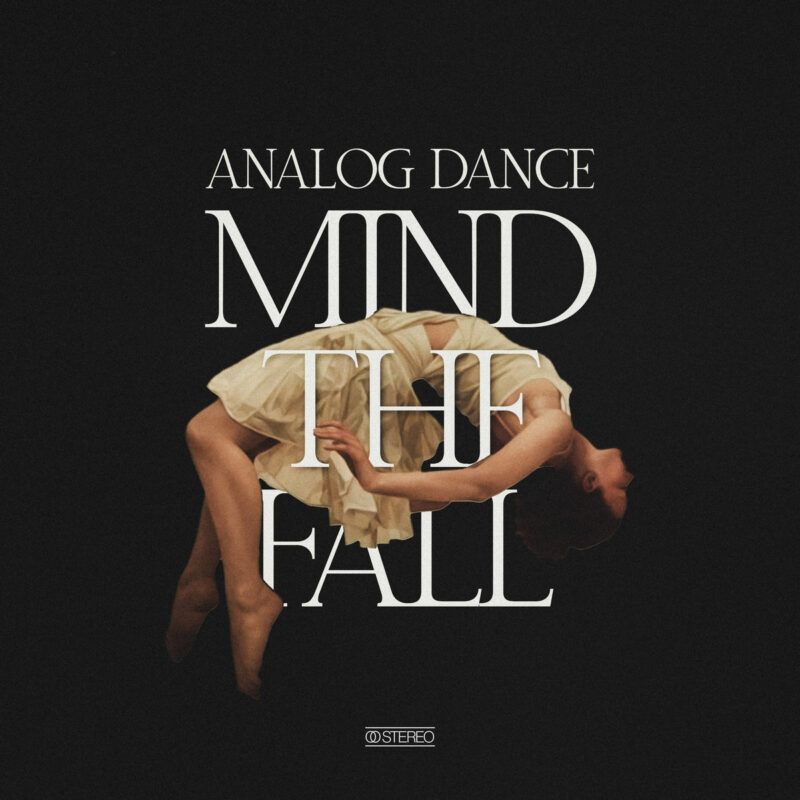
Mind The Fall, released July 22 through Poland’s Bat-Cave Productions, follows the project’s 2024 debut, Stranger Minds. Written and recorded in isolation in a wooden cabin in Argentina, the album carries the concentration that distance can bring. Its songs feel secluded and interior, while broad drum machines, elastic bass sequences, and clean guitar lines give them considerable physical force. The production is fuller and more exact than before, though the closeness of a private recording remains central to its appeal.
In a 2024 interview, Jonny described Analog Dance as an alter ego created to express emotions that words alone could not carry. He also traced the project’s name to the tactile appeal of analog equipment and the ability of synthesizers to stir feeling and movement. Mind The Fall gives that idea its clearest form yet: the machines set bodies in motion, while his voice reveals the cost of maintaining control.
The titles supply their own vocabulary. Wires and screens suggest mediation; masks and shows invoke presentation; decay, rot, and falling apart name what lies beneath. Even “A Clean Version of Hell” turns damage into something polished enough for display. These phrases create a thread across the record, and the music follows suit, pairing immaculate surfaces with uneasy motion underneath.
“Ghost on a Wire” opens with low, fluttering synthesizers that carry a faintly occult charge, followed by a broad drum-machine strike and a simple rising-and-falling guitar figure. Jonny’s baritone enters deep, lush, and close, drawing the ear toward the center of the mix. The melody is economical enough to lodge after one pass, while the production gives every layer room to register. As an opener, it introduces the album’s governing attraction: machine precision warmed by a voice carrying unmistakable appetite.
“A Clean Version of Hell” begins in metal and glass, patiently arranging hard-edged effects and cool high-register tones before a heavy ’80s drum pattern and rounded melodic bass take command. Crystalline guitar phrases hang above the rhythm as Jonny brings deep new-wave romance to the center. The title’s contradiction—hell sanitized, pain made presentable—anticipates the record’s later concern with screens, masks, and performance, while the music could easily accompany the most intimate scene in an unmade late-night thriller.
“Fall Apart” gains additional meaning from its place in the sequence. The severe elegance remains: a rigid beat draws the room, the synthesizers constrict it, and unease passes from bass to percussion to the open space around the vocal. Its supple club gait occasionally recalls Boy Harsher’s more sensual turns, though Jonny’s elongated phrasing and the clean post-punk guitar keep the song firmly within Analog Dance’s own language. Positioned between “A Clean Version of Hell” and “Behind the Screen,” the lead single becomes the album’s hinge, connecting polished catastrophe to private longing.
“Behind the Screen” fades in gradually, assembling drums, bell-like chimes, and broad, glassy pads in measured layers. The mood brings to mind a romantic scene from 2011’s Drive, with city light sliding across a windshield as a high guitar line curls upward through smoke. Jonny holds his notes longer here, allowing earnest tenderness to replace some of the album’s usual reserve. The result produces a quiet rush of serotonin, spacious and enveloping, with each element entering at precisely the right moment.

“Five-Star Mask” starts with rippling synthesizers that recall S U R V I V E scoring one of Stranger Things’ dreamier passages. A single DX7-like digital preset flashes past—before the full dance beat settles in. Drums and bass carry the weight as a supple synthwave melody continues below Jonny’s low, sultry vocal. Glinting guitar and a buoyant ascending-and-descending motif complete an intimate midtempo dance, made for two people moving together while the surrounding room recedes.
“Intimate Decay” lowers the temperature with wavering upper-register tones and a deep electronic hum, then suspends the arrangement for a breath before a rubbery bass sequence begins. Cold jolts repeat, the drums shudder, and a brief baroque figure rises and falls before Analog Dance’s favored high-register guitar enters. Jonny sustains his phrases above the accumulating layers until the texture feels nearly physical. The title’s pairing of closeness and decomposition could stand as the album’s thesis, and the track renders that friction with particular tenderness.
“Same War Within” opens on gauzy pads, pinpoint synth notes, and a heavy kick before claps and a rippling bass line steer it toward Italo disco. Guitar serves as an accent at first, leaving generous space around the low vocal. A little over a minute in, the arrangement changes its balance: a burbling figure settles below the mix, the voice drops out, and the guitar takes melodic command before the two rejoin over a cool pad. That sequence of handoffs is among the album’s smartest structural moves, creating development through control rather than grandstanding.
“Scenic Crime” eases the pace with subdued synthesizers, a measured drum pattern, and a bass backbone that keeps the song moving. A modest, immediately hummable keyboard melody appears, and the guitar soon traces its outline. The feeling is wistful, suspended somewhere between pleasure and loss, as Jonny’s smooth delivery settles over low melodic undertones and small electronic flourishes drift through the margins. Its emotional ambiguity gives the track its pull; the view is lovely, though something unresolved remains just beyond the frame.
“Beautiful Rot” opens with distorted, icy electronics, then answers them with a rapid drum barrage and a muscular dance bass line, making this one of the record’s fastest selections. A buoyant sequence and clear bell tones prepare the entrance of Jonny’s baritone and a clean, chiming guitar, while his quicker vocal phrasing swoops around the percussion. The song turns the album’s central contradiction into movement, placing elegance and deterioration in the same body. Its speed and melodic abundance make it a late-record peak.
“The Plastic Show” rides a cycling electronic sequence that remains in place while resonant chimes, low-register strings, and a cleaner guitar line accumulate around it. Jonny initially sounds more detached than he did on “Beautiful Rot,” but his delivery gathers pressure as the song proceeds. Frustration remains contained within the measured arrangement, creating the sense of somebody trying to keep up appearances while emotion presses against the surface. As the record’s clearest invocation of artificial display, it brings the album’s concern with performance into plain view.
“Selling the Show” closes the album by fading into broad pads and skittering drums, immediately establishing a cinematic new-wave atmosphere. Metallic bass enters with a melodic bounce, the pace gathers, and Jonny’s voice guides the song through several cleanly placed breaks. Familiar burbling synthesizers and a luminous guitar line return, but the final vocal passages are compressed into a distant, radio-like signal. That treatment leaves the confession mediated and receding, as though private feeling has finally been packaged for transmission.
Taken together, Mind The Fall draws openly from the memory of ’80s post-punk, darkwave, synthpop, synthwave, and film music, using those reference points as a working vocabulary. Analog Dance’s identity remains distinct: a low voice with considerable tenderness, forceful electronic drums, lucid guitar, and synthesizers that can suggest glass, smoke, metal, or silk. The album is sensual, emotionally exposed, and highly danceable, with pacing that gives desire and anxiety equal weight.
Where Stranger Minds established the dimensions of Jonny’s private world, Mind The Fall brings its architecture into sharper focus. Recurring textures connect the songs, the titles deepen one another, and “Fall Apart” now reads as the center of an album preoccupied with the effort required to remain intact. It is Analog Dance’s most cohesive release so far, a record whose immaculate finish cannot conceal the strain moving underneath.
Mind The Fall was released July 22 through Bat-Cave Productions and is available now on all streaming platforms. The physical CD edition can be ordered directly from the label, while the label’s Bandcamp offers a digital edition. Analog Dance credits Crimeframe for recording, production, mixing, and mastering, Rusty Pilgrim for artwork, and Synth Wizrd for design.
Listen to Mind the Fall below or via Spotify and order it here.
Follow Analog Dance:
The post “A Clean Version of Hell” — Analog Dance Descends Into Desire and Decay on Latest Album “Mind The Fall” appeared first on Post-Punk.com.