Veronica & the Dark Particles sound as though somebody fed a goth club into a deep-space transmitter, waited for the machine to malfunction, and discovered the malfunction had better bass than the original program. Initial Transmission, the Florida duo’s debut album, comes loaded with retro-futurist synths, rigid post-punk bass, hard electronic percussion, and Veronica Blak’s cool, velvet-toned delivery moving through the machinery with the calm of someone who has already seen the catastrophe beyond the airlock.
British composer Eniac Nine gives these eight tracks weight. The bass is thick without turning muddy, the drums land with mechanical discipline, and the synthesizers occupy a wide field that can suddenly feel enormous without losing definition. Blak sits removed from the center of the mix, suited to lyrics preoccupied with obsession, dread, distortion, paralysis, and the queasy suspicion that technology has learned more about us than we have learned about ourselves.
“Eniac Nine and I never worked together before but he brought me such a compelling collection of diverse tracks that the lyrics and melodies formed almost instantly in my head,” says Blak. “I like the unique sounds he crafts for each song like a spaceship door opening in Digital or Indian tabla inspired drums on Monster that you don’t hear in modern darkwave.”
Liquify begins with an electronic throb that feels clinical, almost chemical, its bass moving with the slow certainty of something spreading through the bloodstream. Small synthetic details hover around the beat while Blak’s voice supplies the human temperature, cool and controlled even as the arrangement grows more claustrophobic. Digital is stranger and more playful, crawling forward on a crooked, slinky rhythm that recalls Strange Boutique launched several thousand miles beyond Earth. Synthetic noises open and close around the song like mechanical doors, giving its groove the peculiar sensation of wandering through some abandoned pleasure station where the computers have kept the music running after the passengers disappeared.
Monster throws subtlety aside for speed and impact, propelled by tabla-inspired percussion, hard electronic drums, and one of the album’s biggest hooks. Blak rides above the commotion with enough authority to make the chorus feel ready for collective shouting in a packed club. Rumors lowers the temperature and gives anxiety room to multiply. Its slower movement produces a particular kind of paranoia, where every empty measure seems capable of concealing another piece of bad information. The scale feels enormous without sacrificing intimacy, turning private suspicion into something closer to societal collapse viewed through a bedroom window.
Dunes ventures much farther outside conventional darkwave coordinates. Strange synthetic tones, threatening low frequencies, and a cinematic sense of distance suggest some hostile future civilization whose architecture was designed without human comfort in mind. Lost retreats into more recognizably European coldwave territory, recalling Clan of Xymox and Lebanon Hanover through its severe bass movement and unusual pockets of echo. Voices and instruments seem displaced from one another, as though the song were being heard simultaneously from several adjoining rooms.
Then comes The Kiss, their treatment of The Cure’s 1987 classic, trimmed into a tighter form with an unexpectedly sharp pop instinct. Robert Smith’s original recording sprawls through obsession until guitar becomes nearly physical pressure; Veronica & the Dark Particles concentrate that fever into a more economical attack. The bass carries much of the psychological weight, while Blak approaches the lyric with a colder sensuality that makes its possessiveness feel calculated rather than delirious.
Closing track Rings widens everything again, bringing broad synthesizer passages and space-rock scale into the album’s final stretch. After seven songs spent probing machines, desire, fear, and psychological contamination, the record ends staring outward into an expanse too large to explain, sending its final signal into whatever might be listening.
Listen to Initial Transmission below and order the album here.
“I don’t like single sounds, I like to mix things together to intentionally create complex layers like stacking monosyths,” says Nine. “I write music almost daily, visualizing the texture of sound like a wave table. I don’t rely on samples or loops because I am compelled to craft a universe of unique elements.”
That philosophy explains why Initial Transmission works best when its surfaces collide: club music with gothic reserve, machine order with psychological unease, elegance with menace. Veronica & the Dark Particles have made a debut built for black rooms, highway drives after midnight, and the uneasy pleasure of dancing while the future looks increasingly untrustworthy.
Follow Veronica & the Dark Particles:
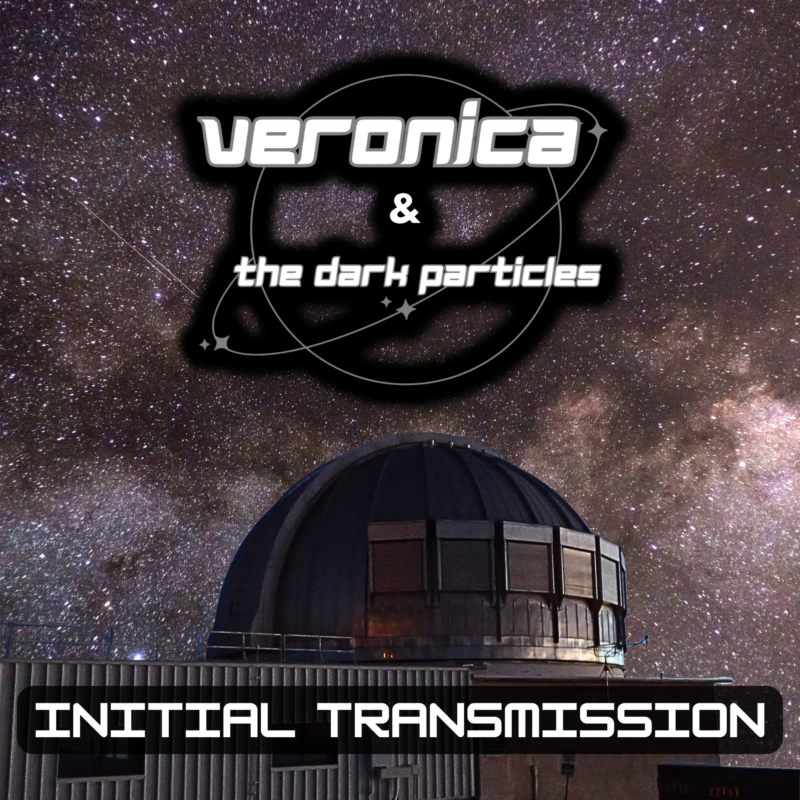
The post Darkwave Duo Veronica & the Dark Particles Make First Contact With Debut Album “Initial Transmission” appeared first on Post-Punk.com.