
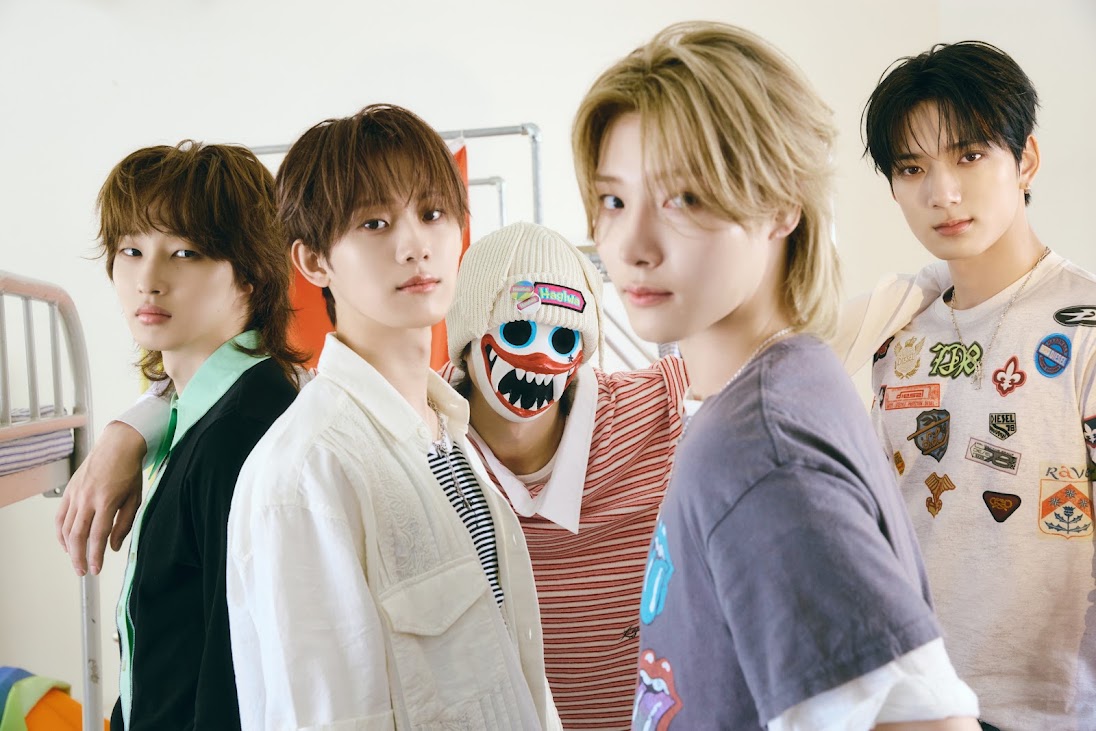
Following the success of their previous release, The First Wave, hrtz.wav returns with their second album, The Second Wave: MOMENTUM. The five-member global band, consisting of Riaan on vocals, Dane on bass, Keiten on guitar, Hagiwa on drums, and Youn Young Jun on keyboard, was formed through Mnet’s survival program STEAL HEART CLUB, with each member emerging as the top-ranked content in their respective position.
Released on September 9, The Second Wave: MOMENTUM builds upon the youthful emotions and memories explored in their debut album while showcasing the group’s growth as musicians. Across six tracks, the album moves through more than just forward motion. Much like potential energy waiting to be released, the emotions and experiences explored gradually build beneath the surface, ultimately presenting momentum as both the force that pushes people forward and the experiences that shape who they become.
Opening the album is “Mind,” a reflective track about struggling to let go of someone who remains emotionally present and explores what happens when the person who once made everything feel alive is no longer present in the narrator’s life, as the narrator continues to think about someone despite knowing there may not be closure. The song immediately establishes this sense of longing through the repeated idea that the person continues to “linger[ing] in my mind,” while the description of them as a “ghost” acknowledges the relationship exists primarily through those memories. Even though the two remain “in the same world,” they feel as though they are “lost in different times,” leaving the narrator caught between accepting that they have broken up for good and hoping they might find their way back to each other someday. This uncertainty is reinforced by the narrator’s willingness to wait for “perfect timing” and their admission that, despite knowing there may be no answer, they still foolishly hold onto hope. This is extended through the lyric, “I feel like I’m dreaming / 깨고 싶지 않아 정말이지” (I feel like I’m dreaming / I really don’t want to wake up), suggesting that remaining in the memory of this person feels easier than sensing their absence. As the opening track, “Mind” establishes the emotional foundation for the album, presenting feelings that haven’t disappeared even though the relationship itself has stopped; in the context of the album, these lingering emotions can be viewed as a form of potential energy, something quietly stored beneath the surface that has yet to be released.
Where “Mind” captures the lingering ache of being unable to let go of the past, the title track “ALIVE” shifts the album toward a brighter sound and the excitement of coming back to life through connection, with RIIZE’s SUNGCHAN joining hrtz.wav on the track and contributing rap. His rap adds another layer to the song’s energetic portrayal of awakening and connection, complementing Riian and Dane’s vocals as they explore the idea of coming back to life through feeling. The track uses light as a metaphor for awakening and rebirth, with the repeated “We come alive” and “빛으로 다시 born tonight” (Born again through the light tonight) establishing a collective feeling of rebirth and suggesting this transformation is not experienced alone. The song repeatedly emphasizes the physical experience of falling into this new feeling and soon enough, a rush of attraction comes in with “눈이 마주친 순간 / 기분은 좀 upside down” (The moment our eyes met / I felt a little upside down). With its recurring imagery of waves and light, “ALIVE” captures the moment when emotions that were once quietly stored beneath the surface finally become movement, turning longing into connection and making the narrator feel truly alive. Yet “ALIVE” is not simply a celebration of romance. The post-chorus offers one of the album’s striking lyrics: “깨진 마음조차 별처럼 떠올라 / 숨을 크게 쉬어, yeah, I'm alive” (“Even a broken heart rises like a star / Take a deep breath, yeah, I’m alive”). Rather than suggesting that pain must disappear before someone can move forward, the song suggests that even a broken heart can become something that shines.
This idea gives “ALIVE” a broader meaning, as the feeling of being alive comes from allowing yourself to feel again, even after experiencing hurt. As hrtz.wav and SUNGCHAN sing about rising together and holding onto the present moment, the song turns connection into momentum, into discovering the version of yourself that emerges when you allow yourself to be open again.
“Sunday Morning” takes a playful approach to romantic uncertainty, following a narrator who is clearly interested but struggles to understand whether their feelings are reciprocated. From the beginning, lines like “We can hit it up, 기다림은 싫어” (We can hit up, I hate waiting) establish an impatient desire to close the distance between them both, while references to other boys around the person add a layer of jealousy and insecurity. Despite attempting to appear confident, the narrator admits, “근데 너만 보면 speechless” (“But whenever I see you, I become speechless”), revealing the vulnerability underneath their flirtatious exterior. This contrast between wanting to make a bold move and becoming nervous when actually faced with the person they like captures the awkwardness of developing a new crush.
The track’s hook “I can’t wait ‘til like Sunday morning” transforms the title into a metaphor for patience and anticipation. While the narrator is willing to wait, they make it clear that their patience should not be mistaken for a lack of interest and want the other person to take their feelings seriously. “But I love whatever you are” suggests that the narrator is drawn to the person as they are rather than an idealized version of them, embracing the lighthearted approach and fun of acting on those feelings.
“Play My Guitar” shifts the focus from romance to a childhood dream that had been left behind. The track begins with the lyric “먼지 쌓인 어린 날의 꿈” (The dream from my childhood that has gathered dust), immediately establishing a storyline that the narrator had a passion for but eventually left behind, and although they pretend everything is fine, they admit that they sometimes feel suffocated. Rather than demanding immediate success, the song offers a more vulnerable perspective through “한순간 꿈이라도 좋아” (“Even if it’s only a dream for a moment, that’s okay”), showing that simply reconnecting with something that once brought them joy is meaningful in itself. “일어나 할 수 있어” (“Get up, you can do it”) becomes a personal call to action, while the repeated “Wake up, stand up” encourages the speaker to stop remaining stuck and begin moving forward again. As the narrator picks up the guitar and rediscovers the excitement of performing, “살아있는 걸 느껴” (“I feel alive”) connects back to “ALIVE,” showing another way of finding that sense of awakening. In the context of MOMENTUM, the song represents stored potential finally becoming movement, as a dream that had been staying dormant has finally been lifted again.
The same inability to move on heard in “Mind” becomes even more personal in “Thinkin’ About You,” which finds the narrator admitting that they never truly stopped thinking about someone despite attempting to convince themselves otherwise. The song’s emotional weight comes from its exploration of regret and the way the narrator believed their feelings had disappeared, only to discover that they remained beneath the surface. “Don’t wanna let you alone / But I can’t find all the words to make you stay” suggests that the narrator may have wanted to hold onto the relationship but lacked the words to do so. “돌이킬 수 없어 겁이 났어 난” (I was afraid because I couldn't turn things back) further suggests that fear and hesitation also played a role in their separation. “Thinkin’ About You” focuses heavily on pretending to have moved on, with the narrator keeping themselves busy, paying attention to their phone, and acting indifferent. Rather than simply missing the person, the past memories make the narrator miss the life they shared and wonder if things could have been different. Unlike “Mind,” which captures the initial ache of being unable to let go, “Thinkin’ About You” focuses more on the realization that moving forward is difficult when a part of you is still looking back on the past.
Closing the album, “First Daylight” brings The Second Wave: MOMENTUM full circle by returning to the beginning of a connection and the feeling of discovering someone who changes your world. Built around recurring imagery of light, fire, summer, and sunrise, the track portrays meeting someone as an awakening that changes how the narrator sees both the present and themselves. The opening line, “처음 봤던 그때 light, burning through another night” (“The light from when I first saw you, burning through another night”), immediately frames their first encounter as something bright enough to break through the darkness, and although there are still words left unsaid, their heart has begun to open, described as an “open door”. “All the broken nights are turning gold again” suggests that the past can take on new meaning without needing to be forgotten, and as the song reaches the bridge, “This is where the story starts right now,” the track becomes more meaningful, as the first daylight could be the beginning of something new. Although past painful memories cannot be erased, they are given new meaning through the present. “First Daylight” brings the album’s idea of momentum full circle, suggesting that moving forward is not about reaching a final destination, but allowing yourself to begin again while carrying everything that has shaped you along the way.
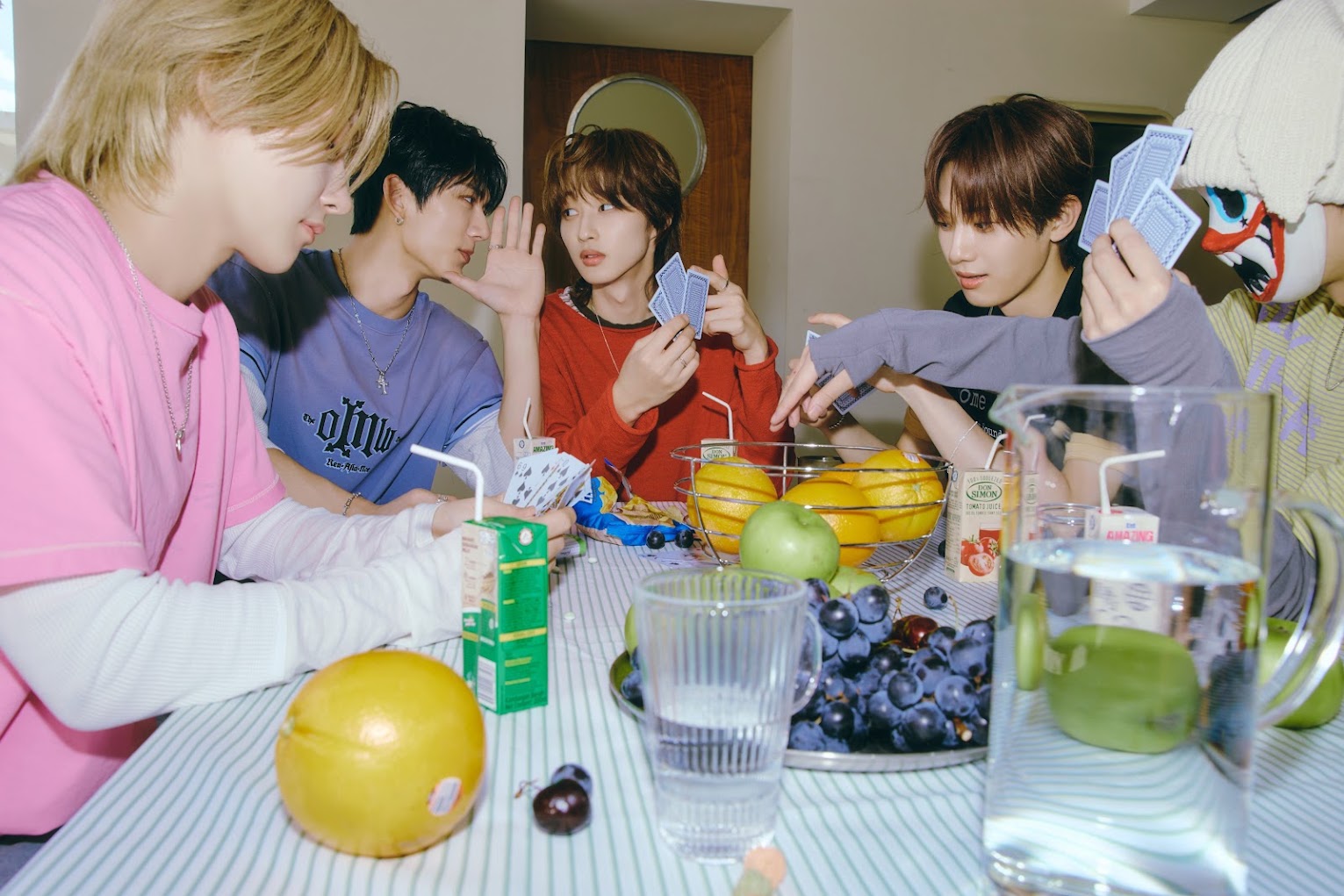
The Second Wave: MOMENTUM feels like a natural continuation of hrtz.wav’s artistry, expanding the youthful themes in their debut album while exploring what happens after the first wave of emotions begins to settle. It’s essentially an album about falling for someone, feeling alive, missing them, and eventually finding reasons to keep moving forward. The journey isn’t always linear, and sometimes moving forward means looking backward.