Hear a voice call through the trees
Leave this dying world behind
Come along and follow me
To the meadows of our minds
A good fairy tale knows that beauty can get you into trouble, and that an invitation to dance may come with terms and conditions nobody bothered to explain. For Washington, D.C.’s Faeryn Johnson, the musician behind Faded Pulse, that uneasy invitation opens onto Elysia, a second album where ethereal wave, goth, folk, and dream pop meet the romantic imagination of medieval poetry and Victorian painting. Acoustic guitars, hammered dulcimer, electric bass, and ambient synthesizers accompany water spirits, waiting maidens, and woodland gatherings whose hosts have questionable intentions.
The route here runs through the synthpop of 2025’s Submission and the more ethereal leanings of that year’s Fallen EP, with a decisive turn taken while watching Monica Richards perform with Strange Boutique in Washington. Johnson’s affection for the 1990s Projekt catalogue supplies another set of coordinates: Lycia, Love Spirals Downwards, Black Tape for a Blue Girl, and Unto Ashes sit alongside the folk of Pentangle and Donovan. There is a generous curiosity at work, the kind that can find room for both a Slowdive bassline and a William Morris poem without making either feel like an unlikely guest.
Johnson’s background in art history gives Elysia a visual life as rich as its musical references. Waterhouse’s paintings, the Arts and Crafts movement, and Art Nouveau belong to the same imaginative world as thrifted velvet, medieval dress, and an old copy of Tennyson found in an antique shop. Beneath the finery lie practical questions about courage, community, and how to remain attentive to the living world. This gathering of fairies may be perilous, but the hope is that listeners return from it with a renewed appetite for their own lives.
We spoke with Johnson about the records that opened those doors, the literature and paintings behind Elysia, and the enduring possibilities of ethereal music, from a hammered dulcimer to a dream performance among the art and architecture of the Cloisters.
Before Faded Pulse, what first opened the door to the Gothic imagination for you? Was there a particular record, book, painting, or encounter that made you feel you had found somewhere you belonged?
Faded Pulse: I started getting into the gothic scene when I was around 14 years old, and at that time my most essential record was The Cure’s Pornography. I loved the dense, almost psychedelic sound of the album. I’ve probably overplayed that record way too much at that age. Yet it really cemented my love for atmosphere and dense sound design. Robert Smith’s honest and vulnerable lyricism made me feel so seen and got me through so much.
Between Submission, Fallen, and Elysia, your music has moved further into folk and ethereal wave. What was happening in your life and listening habits that encouraged that change, and what could you express through these arrangements that you hadn’t explored before?
Faded Pulse: When I first started “Submission” around 2022, I was very much into the New Wave and Synthpop sounds of the 80s, and that really shows on that album, although my listening has always been more eclectic.
One big influence on Elysia was psych and folk of the 60s and 70s, particularly bands like Pentangle; their album Solomon’s Seal was super influential on me, especially songs like “Willy O’Winsbury”. Donovan was another big influence; you can really hear it on songs like “Will Thy Heart Be True,” where I go for a more folky, ballad-type song.
I have always had a huge love for the 90’s ethereal scene. The moment I knew I wanted to move sonically towards that was when I saw Strange Boutique live at the Black Cat in D.C. in 2025. Seeing Monica Richards on stage and hearing the music live was really a light-bulb moment for me.
Ethereal allows me to experiment more with unusual instrumentation and also lets the music take people to another world. Although I enjoyed making synth pop, here I can play with classical, folk, ambient, and even more rock-oriented structures. It’s so much more playful and freeing.
I feel like Faded Pulse would have been a perfect fit for Projekt Festival, especially the 1997 edition. How were you first introduced to the label and its artists, and was there a particular band or record that sparked your affinity for that strain of ethereal music?
Faded Pulse: Projekt has a special place in my heart and is probably one of my favorite labels ever. My essential four artists from the record label are Black Tape, Lycia, Love Spirals, and Unto Ashes. Black Tape for a Blue Girl’s “Remnants of a Deeper Purity” is one of my all-time favs; it is a masterpiece in its own right in sound design and atmosphere, and it’s both deeply haunting and romantic.
I feel like Love Spirals Downwards Idylls is glaringly obvious as one of the influences on Elysia, and I feel it is their most essential record. It’s hard for me to choose a Lycia album because they’re my favorite band on the label, but if I had to choose, it would be “A Day in the Stark Corner”. It’s equal parts dreamy, cold, and bleak.
Unto Ashes serves everything I look for in a band: medieval instruments and sounds, folk and darkwave synths. I feel like their album “Empty into white” is so sonically rich and put together, sinister yet dreamy.
I’m not sure how I even stumbled on the label, which feels fitting, like it came to me almost in a dream; it is the most influential group of artists for me.
There’s something about Elysia that feels entirely at home in the pages of Propaganda or Carpe Noctem. What feels special to you about the Gothic culture of the ’90s, and how have you encountered that period through its music, magazines, photography, and fashion?
Faded Pulse: Funnily enough, I own an issue of Propaganda, No. 22, and I wanna say it’s from 1994-1996. I have very fond memories of reading Propaganda magazines in high school on the Internet Archive. I am a historian at heart and love to learn everything I can about culture, music, and fashions of any time period I study.
The 90’s, to me, feel somehow criminally underrated, even though it was when the gothic scene was at its peak and fully found itself and diversified into many different interests. I feel the worship of the 80s has caused people to overlook how creative the scene was in the 90s. Even now, somehow darkwave from the 90s is still more experimental and fresh than the very 80s-oriented sounds we get today.
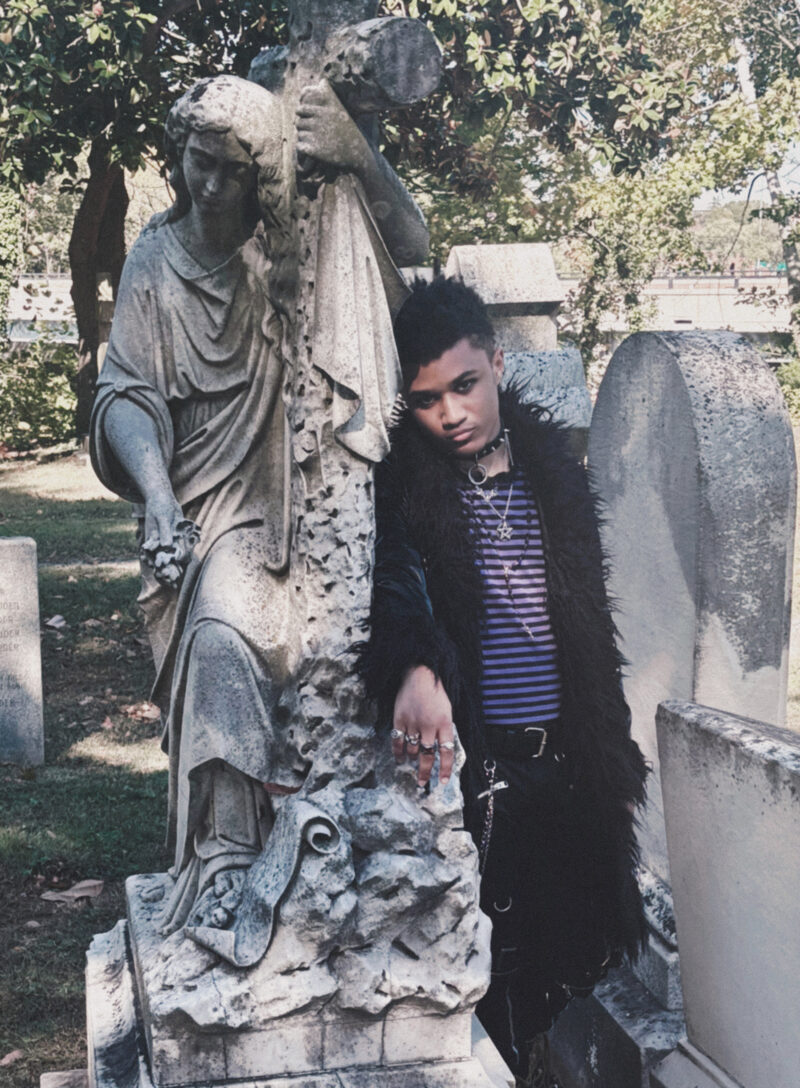
As for the fashion, I would study a lot of the pictures on Pinterest from magazines, club shoots, or people’s personal uploads, and when I went thrifting, I would look for similar items. PVC, Satins, Silks, and Velvet are all mainstays in my closet thanks to the 90s, haha.
“Meadow of My Mind” and “Upon the Heavens” feel like a bridge between Cocteau Twins and the more romantic corners of the Projekt catalogue. How do you approach the relationship between voice and guitar in these songs, especially when both seem capable of carrying the melody or dissolving into one another?
Faded Pulse: Much like the bands before me, I kind of treat the voice as just another instrument. When recording a lot of these songs, I wanted the guitar and voice to mesh well. In meadow of my mind, the voice and guitar switch throughout the song, giving them space to drive the song along without clashing.
In “Meadow of My Mind,” you sing, “Leave this dying world behind,” yet you’ve described Elysia as something beyond escapism. What does that inner refuge make possible for you, and what do you hope listeners bring back from it into their everyday lives?
Faded Pulse: To me, “Meadow of my Mind” is about the love of nature, to put it plainly. When listeners “Leave the realm of Elysia,” I want people to bring that sort of magic into their everyday lives. Whether that be getting involved in their local communities, making art, or reading poetry. Whatever it is that makes you feel connected to the world around you.
“Upon the Heavens” uses the language of prayer, reaching toward a divine presence and asking to be heard and healed. What is your relationship with that devotional language, and how did you arrive at the kind of sacred experience you wanted the song to convey?
Faded Pulse: To me, music is very spiritual, and I definitely wanted Upon the Heavens to emulate that in some way. It’s not a song devoted to a particular deity or religion, but it is about reaching out and feeling something greater. I feel this all the time through music, when I listen to a song that just makes me float away or feel high on euphoria. I mean, historically speaking, music is how people connect to the otherworld and is used in ritual, even though it is now far removed from its sacred roots. Music still feels deeply spiritual and otherworldly, and I think that’s truly what the song conveys.
“Lamia’s Kiss” brings to mind Dead Can Dance’s exploration of musical traditions beyond rock, with an experimental quality that feels ancient and unfamiliar at once. Which specific traditions, recordings, or instruments informed it, and how did you develop its musical character?
Faded Pulse: The sounds of the Middle East and the Mediterranean very much inspire Lamia’s kiss. A lot of the bands I liked, like Lovespirals, DCD, and Rajna, had eastern influence in their music, so it kinda bled into my consciousness. Rather than writing cliched lyrics about her as a figure, I wanted the song to emulate what it would feel like to be caught in her hypnotic gaze, to be pulled in. Instrumentally, I wanted the Dulcimer to be the lead on the song, which I feel really harnesses that archaic, almost ancient vibe that I wanted the song to have.
I also grew up in Asia for a short time. I do think it had a musical effect on me, and it seems only natural that an experience like that would creep into my music in some way.
What first drew you to Lamia as a figure? Did you come to her through mythology, Keats’s poem, a painting, or another interpretation, and what interests you about the meeting of beauty, desire, and danger in her story?
Faded Pulse: It’s a little bit of all of that. Keats’s poem is definitely an inspo, as is Waterhouse’s iconic painting. I am also a Lilith and Hecate Devotee; the lamia is associated with both, so it’s almost devotional. I also love serpentine imagery and symbolism, as well as the figure of the femme fatale, so it is essentially a collage of many different ideas and feelings.
“Fair Lady in Gold” has a baroque richness and a medieval atmosphere, particularly in the bright, struck-string sound that suggests a hammered dulcimer. How did you build that arrangement, and who—or what—is the lady at its center?
Faded Pulse: For “Fair Lady in Gold,” I knew I wanted to have a few instrumental tracks on the album. The main instruments here are my Dusty Strings hammered dulcimer and my Korg Minilogue for ambient synths. There is no single song as an influence; rather, months and weeks of studying and listening to music from the Renaissance and medieval period that shaped this song.
When I first started writing “The Lady in Gold,” I was envisioning Cordelia from King Lear in a painting by Edwin Austin Abbey. Although her gown is yellow, it is not even close to gold, haha. However, a woman with a golden pooling Bliaut gown was what I was envisioning when creating the song, so the name kinda stuck.
“Summerland” seems to occupy a meeting place between Dead Can Dance and Cocteau Twins, while its lyrics describe being drawn into a fairy gathering. How welcoming did you want that invitation to feel, and how much uncertainty or danger belongs within its beauty?
Faded Pulse: Summerland is definitely a song where I wanted the listener to be taken away by the fae, where it’s both exhilarating and panic-inducing. To be led away and dancing with beings who look human, yet there is something quite off about them, and strange things happen around them. I wanted to evoke the same feelings I had reading Irish fairy tales, where the stories of the fae are both wondrous and terrifying in equal measure. I think it’s a great metaphor for nature itself. Beautiful yet dangerous.
“Undine” recalls the dreamier side of 4AD, alongside Faith and the Muse and Lycia, but its bassline and guitar flourishes also make ethereal wave’s goth and post-punk origins audible. How conscious are you of that connection when writing, and what does the bass allow you to do beneath such expansive arrangements?
Faded Pulse: The bassline for Undine was heavily inspired by the bassline in Slowdive’s “Ballad of Sister Sue.” I knew I wanted this waltzy song where the bass carried much of the song’s sway. To me, the bass here is the most important; it just wouldn’t sound the same with a synth bass. It really gives the song that romantic rhythm I feel it needed.
The words to “Undine” address the water-born figure directly, questioning her lover’s constancy and encouraging her to voice her feelings. Whose voice did you imagine addressing her, and what did you want your interpretation to reveal about her beyond the familiar tragedy?
Faded Pulse: With Undine, I knew I really wanted to do a melancholic song about a siren, where the song itself is almost like a lament, where it feels like a spell is being cast onto the listener. The voice that carries the song is part third-person narrator and part Undine’s voice. The Chorus is nonsensical and is a made-up language, but it is Undine casting her spell, hoping and praying to keep Huldbrand’s love. The third-person voice beckons Undine to own her sadness and heartbreak to sing what’s in her heart and drown in her tears, tragically ending the knight’s life, but also having the strength to embrace her own emotions of love and betrayal.
“Will Thy Heart Be True?” has the feel of an ethereal folk ballad, with its knight, waiting maiden, and tests of courage. Which Arthurian or medieval texts informed the song, and what does the question of remaining true mean to you personally?
Faded Pulse: I think the concept of knight and maiden came to me through William Morris’s poem “Two Red Roses Across the Moon.” Although I’ve been a fan of Morris for a few years, I first heard of it when I visited the American Arts and Crafts Museum and saw a mural depicting the maiden from the poem waiting for her knight, who was off at war.
Although I love the stereotypical depiction of the medieval romance trope, the song really isn’t solely about that. It is about staying strong during dark times and finding the courage to go on, which I feel is extremely relevant. Now, the question “Will Thy Heart be True?” is really asking, “Do you have the strength to keep fighting the good fight?” even when it seems hopeless.
Your influences include Romantic literature, medieval poetry, and Victorian fairy tales. Which writers have most shaped your imagination—Keats, Christina Rossetti, William Morris, or perhaps someone less immediately expected? Could you take us through one passage or story that found its way into Elysia?
Faded Pulse: One of my biggest influences was Alfred Lord Tennyson’s Idylls of the King, a book I thrifted in an antique shop. It features a poetic retelling of Arthurian legends, and although none of its stories made it into Elysia, I knew I wanted Elysia to evoke the feeling of magic, mystery, and romance that the book gave me. Poems like Coleridge’s Christabel and Keats’s La Belle Dame sans Merci were hugely influential as well. Keats’s story of the Faery woman leading the gullible knight astray was definitely an inspo for Summerland.
Your art-history background brings the Pre-Raphaelites, Art Nouveau, and the Arts and Crafts movement into the album’s conception. Is there a particular work by an artist such as Burne-Jones, Waterhouse, or Mucha that you could place beside one of these songs and explain the connection?
Faded Pulse: Rather than a single painting, artwork, or artist, Elysia sounds like the movements as a whole and what they were trying to achieve. To me, I want people to look at any art from any of those movements and instantly think of a song from Elysia. But if I had to choose an image to associate with the album, I would choose Waterhouse’s Ophelia, as it was one of the few paintings that made me think, “I want to make music that emulates how this painting feels.”
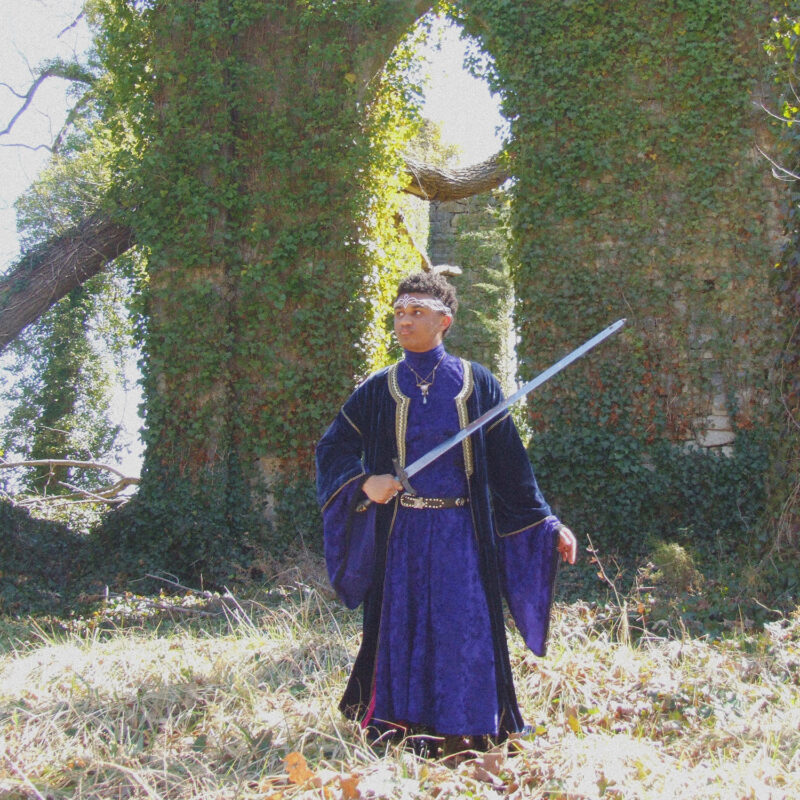
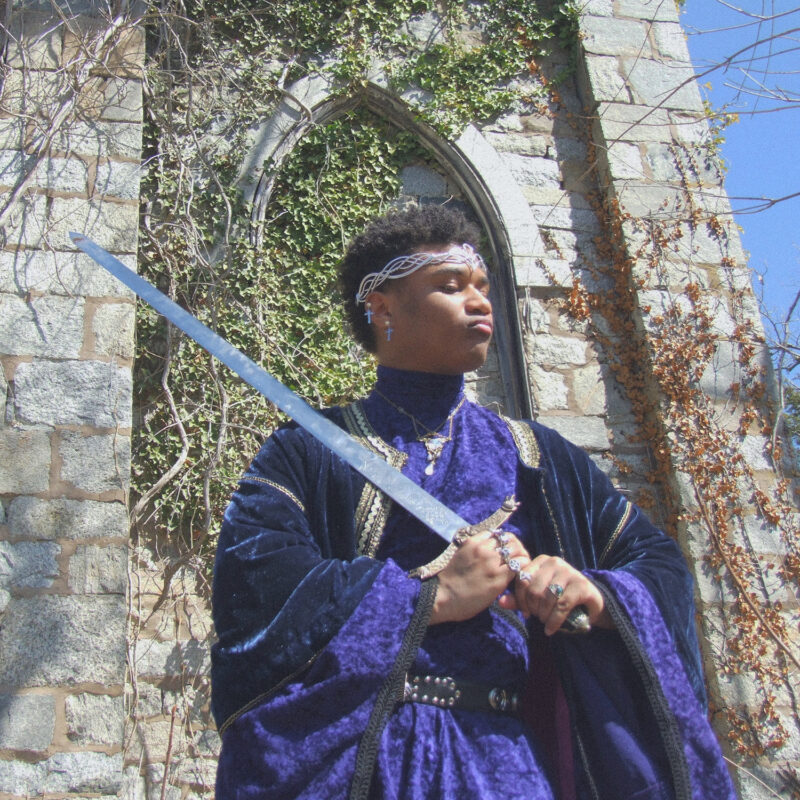
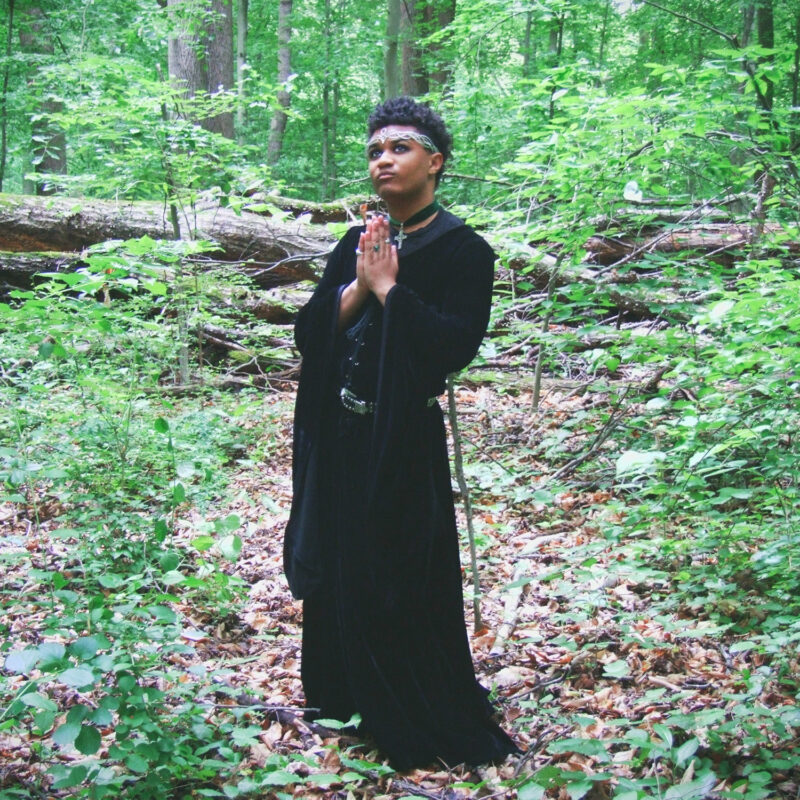
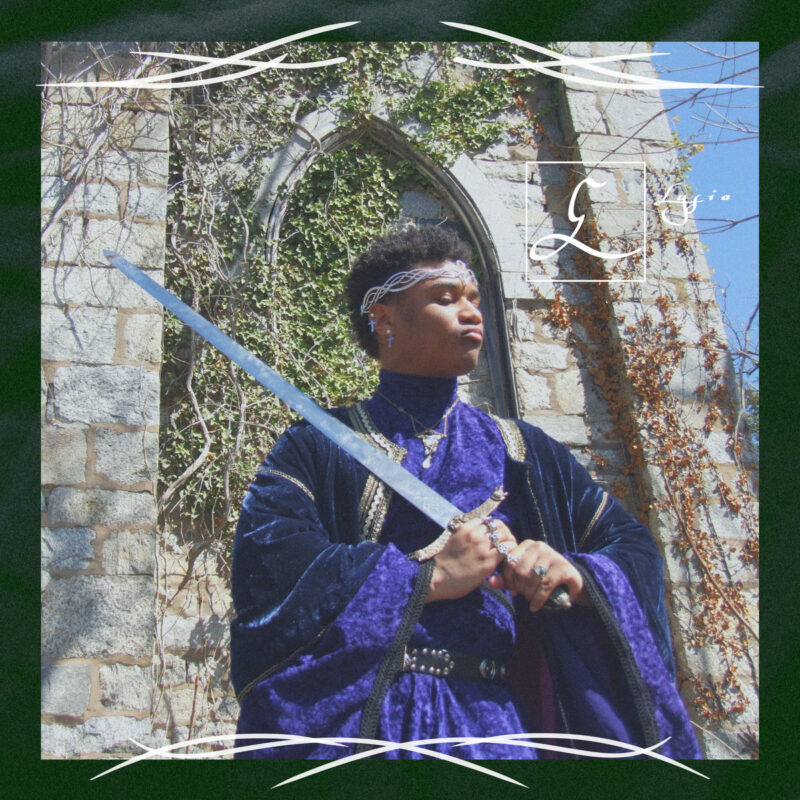
Your photographs feature flowing robes, a circlet, a sword, woodland, and Gothic architecture. Which historical garments, designers, films, or figures inform your sense of dress, and how much of that appearance comes from making or adapting things yourself?
Faded Pulse: A lot of Elysia’s costumes are based on a combination of different things. For me, it was studying fashion history throughout the Middle Ages, a lot of the Medieval revival clothing coming out of the goth scene in the 90s, and of course, fantasy films like The Lord of the Rings (Particularly the elves).
Photographs of Lisa Hammer and Monica Richards in the 90s and 00s were also influential on me. To me, Lisa is a modern Pre-Raphaelite fashion icon, and I definitely wanted to emulate that for Elysia. A lot of the wardrobe for the photos was thrifted or modified to achieve that vibe.
What do you think made ethereal wave such a natural home for medieval romance, folklore, and mystery? Within your own music, what do those older forms of imagination allow you to say about love, longing, or belonging in the present?
Faded Pulse: I think there’s something very classic about medieval folklore and stories. They feel very timeless with their usage of romance, bravery, and fighting for something you think is worth fighting for. They capture what it means to be human and to be alive.
I think Medieval and Ethereal are so drawn to each other because they both have a sense of whimsy and otherworldliness. I think this element of fantasy is so unique to Ethereal outside of the other core genres of the gothic scene. With ethereal, I can weave stories and ambiance that fully immerse the listener into the world I want to create, and I think that’s why fairytales and ethereal go so well together; it’s a perfect mesh of storytelling and sonic immersion.
An enduring part of the Gothic imagination is its embrace of mystery and the wonders of nature. Do you feel that connection is more important than ever in this age of AI, and what role can music play in keeping that sense of wonder alive?
Faded Pulse: I think music is more important now than ever in the age of AI. It requires you to engage no matter what, to let go, sit down, and spend your time listening, to feel something. I think music is intrinsically human, and I feel that when people go out to clubs or venues for shows and connect with those around them, it really helps them disconnect from the haze of being online all the time and brings them into the present. There is something magical about watching people perform and bring something out of you. That is something that AI could never replace.
If you could present Elysia in a setting entirely of your choosing, what would a Faded Pulse performance look and feel like? How would the space, clothing, and instrumentation help bring listeners into these songs, and what would you want them to feel when they stepped outside again?
Faded Pulse: I think two of my dream performance locations would be a medieval ruin or within the Met Cloisters Museum in New York. I feel like being surrounded by actual medieval art and architecture would really set the ambiance.
One thing I’ve heard of is that bands in the 90s would have incense burning on stage. I don’t know how true that is, and of course, venues would never allow that now, but I think something like frankincense or sandalwood would be my chosen scent, and I feel like playing with multiple senses would really elevate the performance.
For dress, I think it would be cool to have a lot of the new-agey medieval revival looks from the nineties that were popular in the scene, and, of course, I would encourage everyone to participate in dressing up if they so choose.
For me, I want the audience to feel like they entered another realm, dreamy and untethered, and when they leave, feeling like they had a spiritual awakening.§
For all its mythic tales of knights, faeries, and enchanted waters, Elysia is an album that keeps returning to the ordinary work of being present: listening closely, making something, finding courage, and spending time with other people. Johnson’s ideal audience might gather in velvet beneath medieval arches, but the invitation extends well beyond that imagined evening. There is room for wonder in a borrowed book, a local show, or an afternoon among the trees, and Faded Pulse offers plenty of reasons to make room for it.
Faded Pulse’s Elysia is out now. Listen to the album below and order here.
Follow Faded Pulse
The post “Leave This Dying World Behind” — Faded Pulse Finds Solace in the Past on Ethereal Goth Album “Elysia” appeared first on Post-Punk.com.