 |
| Photo Cr. SM ENTERTAINMENT // Dennis DaSilva |
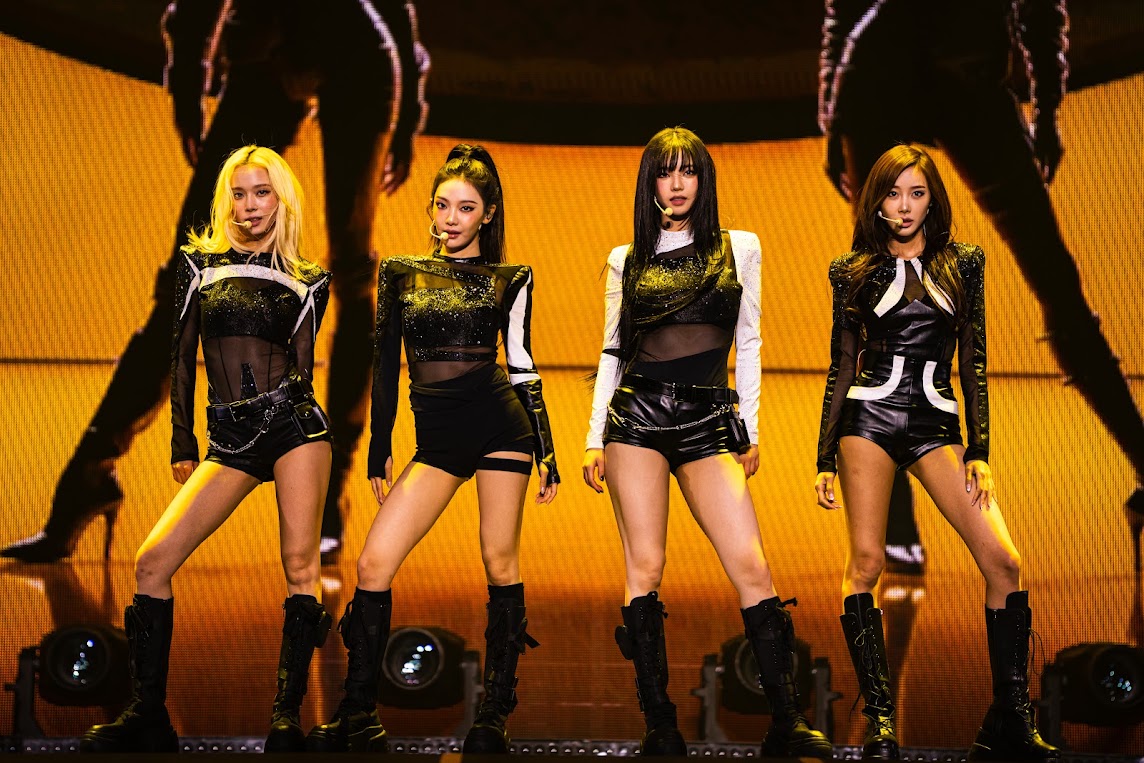
There's a reason aespa's world-building has always felt more ambitious than your average concept, and their recent stop in New York for the SYNK : COMPLæXITY 2026-27 Live Tour proved it translates powerfully to the stage. From the moment the lights dropped, the show committed fully to a cinematic, dystopian atmosphere — all flickering VCR static, glitching LED walls, and digital visuals that made the arena feel less like a concert venue and more like the inside of a malfunctioning machine. Rather than treating each song as a standalone moment, the group used seamless transitions to stitch the whole night into one continuous narrative, reinforcing the sense that this was less a set list and more a story unfolding in real time.
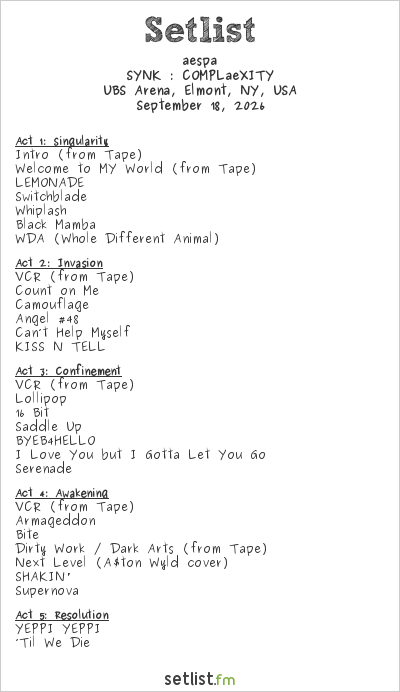
The choice to open with "Welcome to My World" set the tone immediately. It's hard to imagine a better mission statement for the night — dark, aggressive, and pulsing with heavy electronic production, it functioned almost like a portal, pulling the audience into aespa's universe before a single verse of the "actual" show had even begun. The choreography matched that intensity beat for beat, high-energy and sharp, making clear early on that this wouldn't be a low-stakes affair.
Act 1: Coming Out Swinging
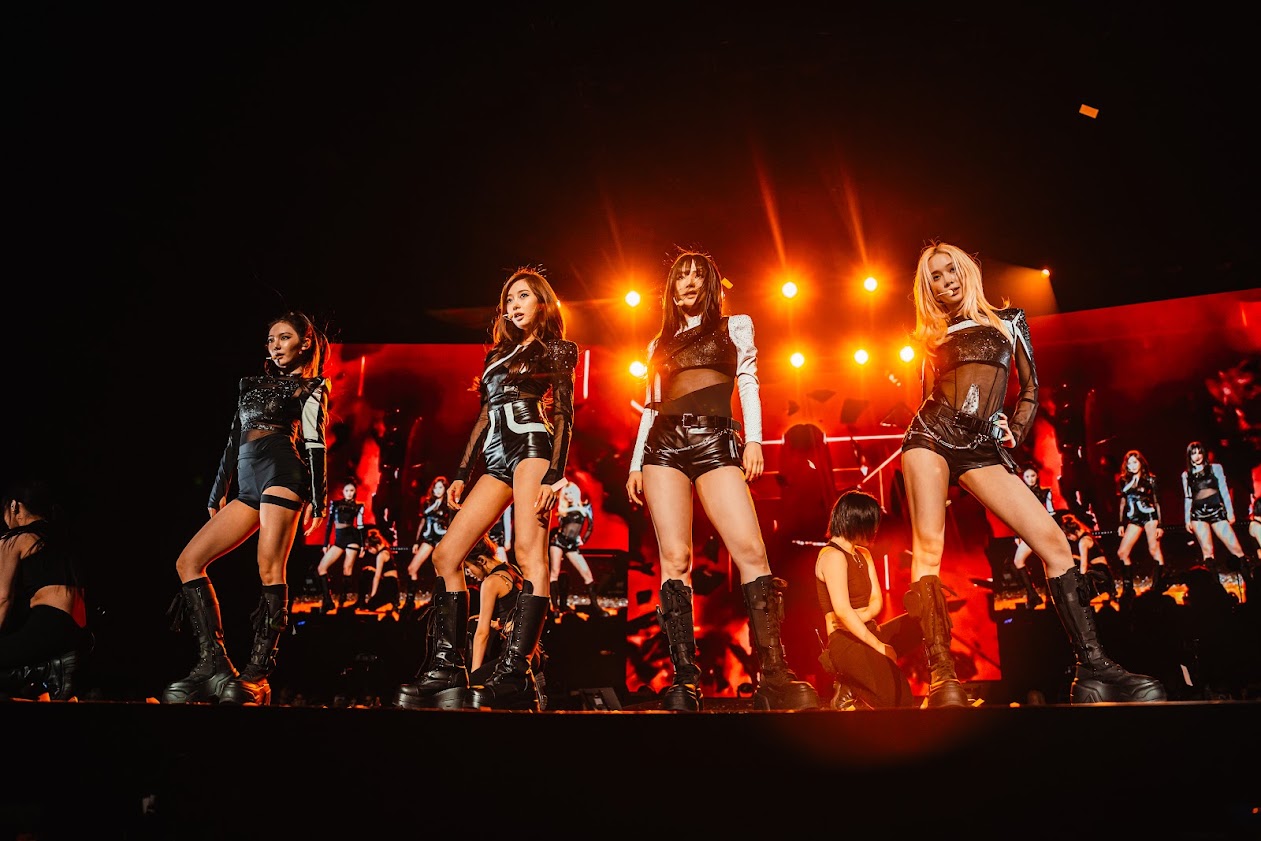
The group wasted no time building momentum, opening the first act with their newest title track, "Lemonade," before rolling straight into "Switchblade." The pacing here was relentless — no lulls, no breathers — and by the time fan-favorite "Whiplash" hit, the crowd was fully locked in. Closing the act with "Black Mamba," their debut single, felt like a deliberate nod to where it all started, bridging aespa's origins with their current era without breaking stride.
Just as the energy threatened to plateau, the show pivoted. Act 2 stripped things back to let the members' vocals take center stage, beginning with a genuinely striking moment: Karina alone at a piano, performing "Count on Me" solo before the other three members gradually joined her. It was a quiet, intimate beat in an otherwise maximalist show, and it worked precisely because of that contrast. The act built back up from there with a run of more upbeat songs, easing the audience back toward higher energy.
 |
| Photo Cr. SM ENTERTAINMENT // Dennis DaSilva |
The third act gave each member — and pairing — room to showcase individual identity, and the range on display was impressive. Giselle and Ningning's "Lollipop" leaned into a soft R&B groove, while Karina's "16 Bit" went in a more cinematic, electronic-R&B direction, with lyrics grappling with the loss of identity — a theme that felt right at home in the show's dystopian framing. Winter's "Saddle Up" flipped the mood entirely, all confidence and assertive energy, built for performance. Giselle returned with "BYEB4HELLO," a more emotional, relationship-driven number about the difficulty of letting go, while Ningning's ballad "I Love You But I Gotta Let You Go" gave her the clearest showcase of the night for her vocals. The act closed with Karina and Winter teaming up on "Serenade," snapping back into an electronic, dance-driven feel to set up the final act.
Act 4: Full Circle
The final act brought the group back together for a run of powerhouse performances, reasserting aespa as a unit after the solo showcases. A standout moment came via the dancers, who took an interlude to perform to "Dirty Work" and "Dark Arts" — a nice touch that gave the choreography team their own spotlight within the larger show. From there, the energy shifted one last time toward something more playful, closing the night with "Supernova" and "Yeppi Yeppi." After a show that spent so much time in dark, high-concept territory, ending on something lighter felt like a well-earned release, sending the crowd out on a high.
Final Thoughts
What made this show work wasn't just the individual performances — though there were plenty of highlights — but the way the whole night was constructed as a single arc. The VCR-and-LED aesthetic, the through-composed transitions, the deliberate movement between aggression, vulnerability, individuality, and unity: it all added up to a concert that felt genuinely directed, rather than just sequenced.
Review by Thomas Ma @thomasma__