
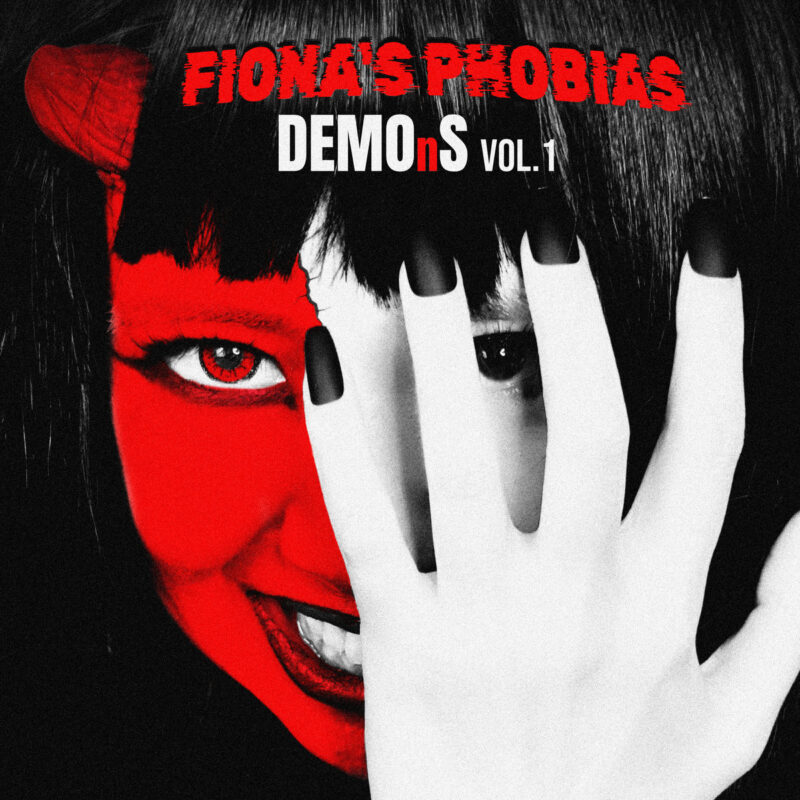
Somewhere between the panic attack and the curtain call, Fiona’s Phobias have found a rather entertaining place to set up shop. Their six-track EP DEMOnS Vol. 1 dresses burnout, self-disgust, and impossible attachments in gothic metal, pop punk, and dark cabaret, with enough theatrical excess to suggest that the orchestra pit has opened directly into hell. The jokes have teeth, the guitars favor elaborate flourishes, and the people inside these songs keep discovering that their favorite distractions have become further reasons to worry.
Formed in 2022, the project pairs the deliberately elusive Nikki L with vocalist Krisanna Marie, whose background includes Hatesex, Penis Flytrap, and burlesque fire Go-Go performance. Their own comparison of the working relationship to The Phantom of the Opera seems appropriate for music so fond of trapdoors and dramatic entrances. Marie’s ability to move from a knowing, almost conversational delivery into operatic gestures gives these elaborate arrangements a useful center: someone has to keep an eye on the audience while the scenery catches fire.
Euphoria is Tragic starts with a chugging guitar figure planted between punk and metal, while Marie brings a retro rock directness to its catalogue of procrastination and depleted pleasure. Around the minute mark, the arrangement grows dense with baroque embellishment; a wiry solo takes on something of an electric violin’s bite. The bright momentum makes an effective companion to lyrics about getting bored with your own bad habits. “I feel my powers wane; a witch without her magic” supplies the perfect image for that particular exhaustion, when yesterday’s magnificent escape becomes today’s inability to answer an email.
The theatrical scale expands on Play It Cool, which sets an almost lounge-like opening vocal against metal accents before breaking into a gallop. There is something of Malice Mizer’s baroque grandeur in the meeting of ornate arrangements and vocal melodrama, with the forward motion suggesting the carriage from Castlevania: Rondo of Blood racing toward Dracula’s front door. Beneath the spectacle lies a grimly familiar instruction: take your pill, eat your food, behave, and convince everyone that nothing is wrong. As Marie’s singing becomes more operatic, the pressure to appear composed turns increasingly sinister, eventually spilling into the song’s bloodied escape fantasy.
Imaginary Sins brings piano, nimble bass, and busy drums into a crooked little cabaret before the heavier ornamentation takes over. Guitar flourishes answer the rhythm’s clipped figures, and goblin-like responses jostle Marie’s lead, as though every unwanted thought has secured a speaking part. Its funniest lyric finds the bodily absurdity inside a familiar wish: “Wishin’ I was pretty on the inside – But there’s just guts.” Jealousy, appetite, and self-absorption populate this ballroom of dancing demons, while the music’s constant activity makes obsession feel exhausting even at its most playful.
The cover of Bang Bang, offered as an ode to Kill Bill, fits neatly among these accounts of love going horribly wrong. A Phantom-style organ opening and old-school metal guitar melody send the song toward the grand, charging territory of Bonnie Tyler’s Holding Out for a Hero. Its childhood games and adult abandonment acquire the dimensions of a stage tragedy, complete with an ornate guitar solo. Placed between the EP’s psychological grotesques, the familiar tune becomes another example of affection leaving somebody flat on the floor.
Whispers and giallo-like synth tones introduce She Loves To Kiss That Doll, before sweeping guitars open the room around Marie’s voice. An operatic interlude, edged with chimes, suspends the heavier movement as she sings of attachment to a figure whose beauty depends on a terrible act of denial. Stuffing, cold hands, and the replacement of blood with a handsome face turn romantic idealization into physical horror. The return of the metal arrangement gives that revelation force, while the lyric’s eventual admission that he has long been dead makes the tenderness more disturbing than any decorative cobweb could manage.
Closing track Bittersweet Darling begins with chilly piano and the worn texture of an old recording, then carries that melodic idea into a broad sweep of gothic guitar. Progressive tempo changes unsettle a romance conducted through black-and-white television images, broken mirrors, and the comfort of a boxed-up illusion. Its lover remains available because the screen can keep performing; the person watching has surrendered something harder to recover. By the final turn toward the knife and the closing credits, the song has brought the EP’s appetite for spectacle into uncomfortable proximity with self-destruction.
Across DEMOnS Vol. 1, the sheer amount of decoration can crowd the stage, but Marie’s shifts in delivery and the songs’ sharply drawn situations keep the excess purposeful. Fiona’s Phobias are especially effective when a grotesque image exposes an ordinary humiliation: craving attention while avoiding people, mistaking possession for love, or spending all your energy on the thing that leaves you empty. They have given those contradictions a lavish production, and the casting department appears to have found plenty of monsters willing to sing.
DEMOnS Vol. 1 is out now, released October 2 via Misophoniac Rabbit. Listen below and find the EP on Bandcamp and Spotify.
Follow Fiona’s Phobias:
The post Fiona’s Phobias Turns Burnout and Obsession Into a Gothic Rock Opera on “DEMOnS Vol. 1” appeared first on Post-Punk.com.