…O sun, that healest all distempered vision, thou dost content me so, when thou resolvest,
that doubting pleases me no less than knowing! -Dante Alighieri, Divine Comedy
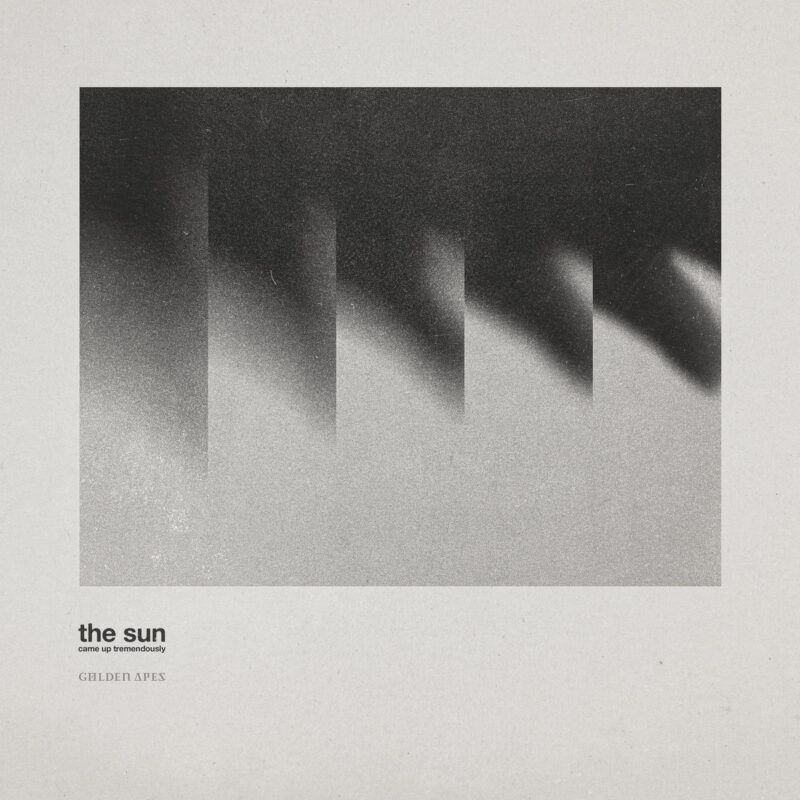
Golden Apes have spent more than twenty years making music for people who think a bass guitar should sound slightly dangerous, a baritone ought to carry bad news with dignity, and every decent chorus deserves at least one guitar line large enough to knock over the furniture. On The Sun Came Up Tremendously, the Berlin band sounds completely at home with that assignment. Ten songs move between post-punk, dark wave, gothic rock, dreampop, and bruised alternative rock, yet the record never feels like a display cabinet of influences. Golden Apes know this country too well for tourism. They have lived here.
There is plenty of history in these songs, of course. You can hear The Cure in the open space around certain guitar lines, Chameleons in the upward sweep of others, Cocteau Twins in the gauzier passages, and the severe romantic machinery of Clan of Xymox when the keyboards begin closing in. White Lies, Interpol, Lowlife, and The Horrors, drift through the bloodline. Yet Golden Apes have reached the point where influence is less a matter of borrowing than instinct. Twenty-plus years will do that to a band. Eventually your record collection gets absorbed into your nervous system.
The Sun Came Up Tremendously follows 2024’s Our Ashes at the End of the Day as the second installment in a planned trilogy, with material written across 2024 and 2025 and recorded at Thommy Hein Studios in Berlin between late 2025 and early 2026. Thommy Hein also contributes guitar, joining vocalist and keyboardist Peer Lebrecht, guitarists Maximilian Hennig and Stephan Schoenfeld, bassist Christian Lebrecht, and drummer Salomon Bosse. The production favors size without polishing away the pressure inside these songs. Basslines keep pushing forward, drums give the record a stern physical gait, and the guitars are allowed to bloom, bruise, and occasionally swallow the room.
Farewell begins with a plaintive guitar that sounds as if it’s emerging from a dream, and an open space that immediately calls The Chameleons to mind, though The Horrors’ later grandeur also shows in the way the arrangement keeps adding height. It is a lovely opening, sad without collapsing into self-pity, and expansive without turning into marble-statue rock. Peer Lebrecht sings as though he has already accepted whatever the song is grieving, which somehow makes the ache sharper. By the time the rhythm section settles in, the track feels less like a goodbye than the long walk away from one.
The Light (Inside Us) comes on harder. The guitars widen, Christian Lebrecht’s bass digs in, and the verses carry a conversational quality before the chorus breaks open into a shoegaze-heavy rush. The seduction of scale takes center stage: the chorus is huge enough to make a ceiling seem temporarily optional, yet the band keeps enough dirt in the guitars to prevent grandeur from becoming ceremony. This is music reaching for the upper rows while keeping both boots on the club floor.
Milk and Poison turns inward and drops the temperature. Its opening feels like ripples on water with dream-pop textures, though the song soon settles into an anthemic ballad buoyed by these currents, sailing on broad synth pads, acoustic accents, surging guitars, and Peer’s low, expressive voice. He has one of those voices that can make a grocery list sound vaguely incriminating, and Golden Apes wisely avoid burying it beneath unnecessary decoration. The arrangement gives him room, then closes around him in slow degrees.
Resistance is where the record’s architecture comes into sharpest focus. A resonant guitar figure opens the track, answered by a low keyboard tone, as hi-hats hiss at the edges and the bass builds steady pressure. The arrangement grows heavier until the guitars reach the emotional scale of mid-eighties gothic rock. Peer remains composed as the band swells around him, and that restraint gives the song its authority. Near the center, a clean, melodic guitar solo arrives with almost startling simplicity, offering a brief clearing before the vocal returns with greater weight. No pyrotechnics are needed; the song already knows where its gravity lies. At intervals, the drums break into splashes and the rhythm pulls back, leaving more air around Peer’s euphoric delivery. The measured bass, sober guitar tone, and baritone gravity recall Scottish cult band Lowlife, while the surrounding textures remain recognizably Golden Apes.
Helion heads toward the same terrain as Clan of Xymox and The Chameleons, with traces of Joy Division in its resigned vocals and the stern drive of its rhythm section. An emotional barrage of drums and surging guitars carries the song forward, giving its sense of exhaustion an almost overwhelming physical force. There is something perversely satisfying about how controlled it remains amid all that turbulence. Plenty of bands mistake gloom for permission to wallow; Golden Apes keep pushing through it. It is the sort of song you want to hear live, feel in your chest, and carry with you on the walk home after everybody else has disappeared.
Where the River Ran slows the pace and brings Peer’s baritone into Nick Cave territory. The drums begin with a plodding military tattoo, giving the song a processional character, while guitar and synth gradually stretch outward until the arrangement takes on a shoegaze breadth. The transition works because the band allows it to happen patiently. What begins in discipline ends in something far less contained.
Evelyn (One Day) opens with a long sigh, which is about as efficient a piece of scene-setting as anybody could ask for. The resemblance to Lowlife grows even stronger here, recalling the Scottish band at their most wistful, thoughtful, and romantic. Dream-pop synth textures surround Peer’s voice, while dramatic splashes of guitar and percussion accent the song’s tender emotion, not unlike The Cure’s “Push.” Once again, Golden Apes take the form of a ballad and keep expanding it until the walls seem to move outward. The song swells like the ocean, its quieter passages gathering strength before euphoric surges of guitar and drums break across the arrangement. Their fondness for large choruses could become ridiculous in less experienced hands, but the rhythm section keeps the drama tethered to muscle.
Radiation opens with a steady drumbeat and dirgeful tones before Peer’s rich, deep baritone bellows with unusual force, almost thunderous without losing definition. The chiming guitars and rhythm section pull back to give him room, though the melodic bassline remains palpable, felt in the heart and bones. With the song’s titular refrain, a surge of guitars seems to radiate toward the fingertips, giving its emotional release a physical reach. The drums then quicken in anticipation, and the guitars sweep in sustained arcs before the refrain returns, each repetition gathering strength from the space the band leaves around the voice.
City Walls slows everything again, returning to the Cave-like gravity heard earlier. The drums drag with deliberate weight while a manic hi-hat keeps scratching at the surface, and eerie female backing vocals add an uneasy human presence around Peer’s lead. The song feels boxed in by design. Space exists, but none of it seems comfortable. Every instrument appears to occupy its own corner while the room keeps shrinking.
Then comes Dreams (Gone By), opening with strange industrial textures before a weighty rhythm section and eerie synth tones take control, recalling London After Midnight’s Kiss. The percussion has real physical heft, but the gloom gradually recedes as the song opens into the brighter dream-pop romance of Modern English and Lowlife. Golden Apes carry that change with the emotional swell established throughout the album, letting the arrangement expand without losing the force of its darker beginnings. A brief pause for a wistful guitar chime offers some breathing room before the gothic dance rhythm returns, subtly brighter now, and the song surges again.
As a closer, it gives the album one last change in texture, moving from industrial unease toward romantic release while retaining the emotional weight of the previous nine tracks. By this point, the record has passed through goth, post-punk, dreampop, dark wave, and broad alternative rock without sounding indecisive.
Golden Apes can write a severe club track, a huge guitar chorus, a graveyard ballad, or a slow piece that sounds built for stained glass and bad decisions, and somehow Peer Lebrecht’s voice keeps the record unified. His baritone carries longing, isolation, regret, and the occasional flash of release without turning every lyric into a public execution. There is drama here, plenty of it, but the band understands proportion. Even at their biggest, they leave enough space for the songs to breathe.
The Sun Came Up Tremendously is also the work of a band with very little interest in pretending they discovered any of these styles yesterday. Golden Apes’ long touring history, including appearances at Wave-Gotik-Treffen, Castle Party, and Murder of Crows, plus stages shared with The Chameleons, Pink Turns Blue, And Also the Trees, She Past Away, Whispering Sons, TRAITRS, Then Comes Silence, and others, has given them the practical education that comes from watching songs survive outside the studio.
The title may promise sunrise, though nobody should expect birds chirping outside a kitchen window. Golden Apes prefer their light complicated, filtered through regret, desire, bad choices, and the stubborn suspicion that survival can occasionally be worth the inconvenience of a journey through hell and back. The only way to reach dawn, after all, is through the night.
The Sun Came Up Tremendously is out now through Icy Cold Records. Listen to the album below and order here.
Catch the band live on the following dates:
Follow Golden Apes:
The post Berlin Post-Punk Outfit Golden Apes Climb From the Depths Toward the Light on “The Sun Came Up Tremendously” appeared first on Post-Punk.com.