 |
| Photo courtesy of Mathilde |
Seoul stories are back! This time I spoke to Mathilde, a in-house lawyer at a patent law firm, as well as an honorary reporter. She’s someone who isn't afraid to take an opportunity, say yes to a side quest, and repeat her positive affirmation of “delulu is the solulu.”
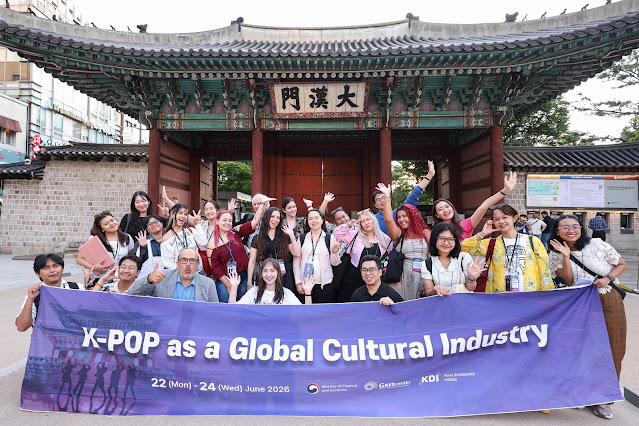
Like myself, Mathilde was also part of the KDI Global as a K-pop Industry Program in Seoul this summer, a short but jam-packed programme giving us tools to learn about the globalisation of K-pop.
Her Seoul story has taken her from France to living in Seoul. While she doesn’t sugarcoat the version of Seoul we see often on social media, those sparkly 10-second reels of metro sounds, Olive Young, soju, and K-pop. Don't get me wrong, I love those too, but of course there is this thing called reality. As Mathilde puts it, "You don’t 'adapt' to Korea. " Korea crushes your soul, then sells you the rebuilding kit – no refunds.” Does that sound brutal, yes? But it’s honest.
We all know that moving to another country on its own is tough enough. But doing so within a society shaped by intense competition and perfection adds another layer. Yet it pushes her to be her best self and, in a way, may have encouraged her delulu a little more… to outstanding results. Maybe that is what draws many of us to Seoul, it’s a place that entrances the brave, the bold, and the audacious. We talk about the KDI programme, sidequesting, being a (proud) fan girl, and the reality of living as a foreigner in Seoul.
Let’s start with the KDI program we both participated in. Where did you first see the KDI program advertised? And what initially caught your attention that this would be something you would want to take part in?
Mathilde: I came across a LinkedIn post about the event and immediately thought, “This is for me”. I love K-pop and my professional experience as an intellectual property counsel gives me two very different perspectives on the industry: the fangirl perspective and the legal one.
Until then, I felt like I had a bit of a blind spot when it came to the rest of the industry, particularly the business side, which is obviously a huge part of K-pop and the broader Hallyu phenomenon.I didn’t apply to the program thinking I would know everything after three days. I wanted to build a foundation, have a roadmap for my future research on the industry, and, most importantly, network. For me, learning from other people’s experiences is incredibly valuable.
Although it was just three days, we had a jam packed schedule. What day stuck out for you in particular and the one you found took the most insights from?
Mathilde: There wasn’t one particular day that stood out to me. What really stayed with me was the people. Of course, there were the presentations and the visits, and the SM Entertainment visit was definitely a “WOW” moment, but for me, it was really about the people I met.
I actually mentioned this to the organizers: I thought the participant selection was particularly relevant. We came from so many different countries and had such different professional backgrounds and careers.
 | |
|
Three days were clearly not enough. But we continued talking and exchanging ideas afterwards, and I think I learned just as much from conversations with the other participants as I did from the industry professionals’ presentations.
How did you feel you could apply this to your own job or future endeavours? Did it give you the tools/knowledge you were hoping to gain?
Mathilde: I actually left the program with even more questions than I arrived with!
For me, those three days were never about learning everything there is to know about the industry. They were about building a foundation, opening up new areas of reflection, and, above all, creating new things to learn about.
The presentations and conversations gave me a lot of topics to think about, and I’m increasingly applying those ideas to my everyday work, particularly in the articles I write.
I am, and I think I will always be, learning. I write articles to share what I am learning myself.
You proudly post content on being a BTS fan (ARMY) as a fellow ARMY. I'm interested in how you navigate the professional world as a fan as I have felt reluctant to not be taken seriously as a fangirl. Yet if anything you wear it like a badge what are your thoughts on fangirls now in the media world?
Mathilde: I think I have two very different perspectives on this, depending on whether I think about my life in France or my life in Korea.
In France, until 2023, K-pop and K-dramas were known, but they were still often perceived as something mainly for teenagers. I was never ashamed of liking them, but I didn’t necessarily advertise it because the reactions I got could be quite dismissive. I lost count of how many times I heard, “Oh, you listen to that? Like my 12-year-old niece”. Well, your niece has good taste! But K-pop fans are not all teenagers. Some of us are 30, have university degrees, professional careers, management positions, and so on.
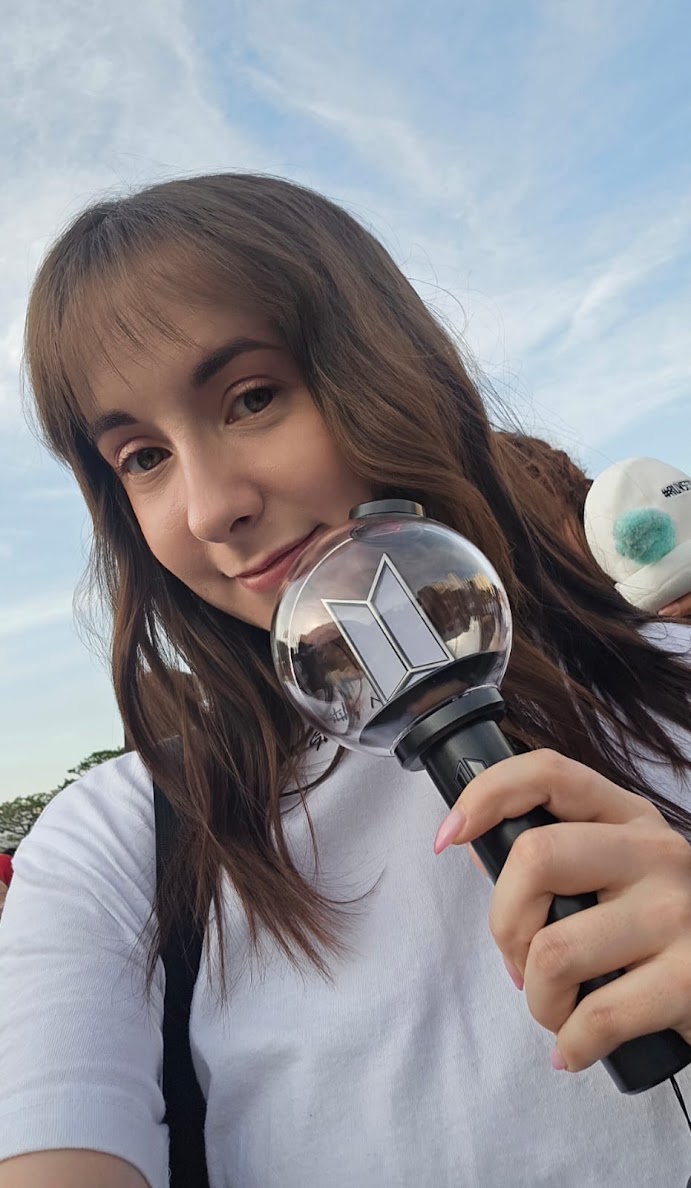
Because my interests were sometimes dismissed, I wasn’t ashamed of being a fan, but I also wasn’t quite at the stage of having a photocard attached to my handbag. In Korea, it was completely different. I expected similar reactions, but that wasn’t the case at all. My office is covered in K-pop photos and merchandise. I’m the only one doing it, but nobody judges me for it. Quite the opposite. Every Korean person I’ve met has been happy that I love K-pop.
 |
| Photo courtesy of Mathilde |
My bosses have absolutely no problem telling people: “She came to Korea for Jungkook, and we kept her”. But does that mean nobody judges me? Not at all. Unsurprisingly, the people who sometimes judge me are other foreigners.
I’ve been told many times, “Oh no, I don’t like K-pop. I don’t know anything about it. I didn’t come to Korea for that”. Okay, wear your pride however you want! Korea has invested a lot in Hallyu and in spreading Korean culture around the world. So why judge people who discovered Korea through that culture?
Speaking of BTS, how did you first get into the rabbit hole many of us live in?
Mathilde: I think every ARMY has their own story, and each one is unique, although they are often connected to a difficult period in their lives.
I actually loved my job in France, but I felt like I was going in circles. So I took a month off and went to Thailand. Why Thailand? It was the furthest and cheapest destination I could find (thank you, Skyscanner).So I landed in Thailand for a month, alone, in my first Asian country, without any real plan.
And where does BTS fit into all of this? Well, my hotel was opposite a huge shopping mall that played the same three advertisements on giant screens day and night. One of them was a Samsung ad, and I saw these guys on it. ALL DAY I was seeing them. Not gonna lie, it was driving me crazy at first.
Then I started seeing the same faces on clothing store windows, then on electronics, and eventually I thought, “Wait. WHO are these guys?” So I looked them up, opened YouTube, clicked on my first video… and that’s how I fell down the rabbit hole I’m still in today!
View this post on Instagram
Many people who live in Seoul, or have found their life centred around the country discovered it by K-pop or K-Dramas. What caught your initial interest?
Mathilde: I could have just stuck to listening to BTS, but I don’t know, I was fascinated by this completely new culture that I knew almost nothing about. I started watching K-dramas. And since spending a month alone in Thailand is a long time, I even downloaded Duolingo and started learning the Korean alphabet.
When I went back to France, I decided to change everything. I quit my job, moved to Paris, and started taking Korean classes at the King Sejong Institute. I also started meeting other K-pop fans. Even people I had known for ten years and had no idea were fans!
I think Korea had an extremely well-thought-out expansion strategy. It didn’t just export its music. It exported an entire culture: films, series, food, skincare, and so much more. It essentially puts everything at the heart of Korean culture on a silver platter for the rest of the world.
Just a few decades ago, Korea was still seen as a developing country that many people struggled to even place on a map. Today, millions of people around the world can sing “Arirang” in stadiums.
There is something in Korean culture for almost everyone. Korea is not just K-pop. You just have to scratch the surface.
You wear many hats from IP legal specialist to reporter for TTLnews. What keeps you not only motivated but wanting to keep learning about the ever evolving world of the South Korean landscape both in tech and culture?
Mathilde: Even before Korea, I have always loved learning. Leaving university was actually difficult for me. If I could, I would probably spend my entire life learning, exploring and trying to understand things.
That has continued ever since.
I moved to a country I had mostly known through the lens of K-pop and K-dramas, but behind that is real life. I never had any disillusionment because I was very aware that Korea wasn’t a K-drama. Just like Paris has very little to do with “Emily in Paris”!
I could have moved here and simply “lived”. But I work with Koreans, so I had to learn. I ask my colleagues a lot of questions like, “Okay, but why do you do things this way?”
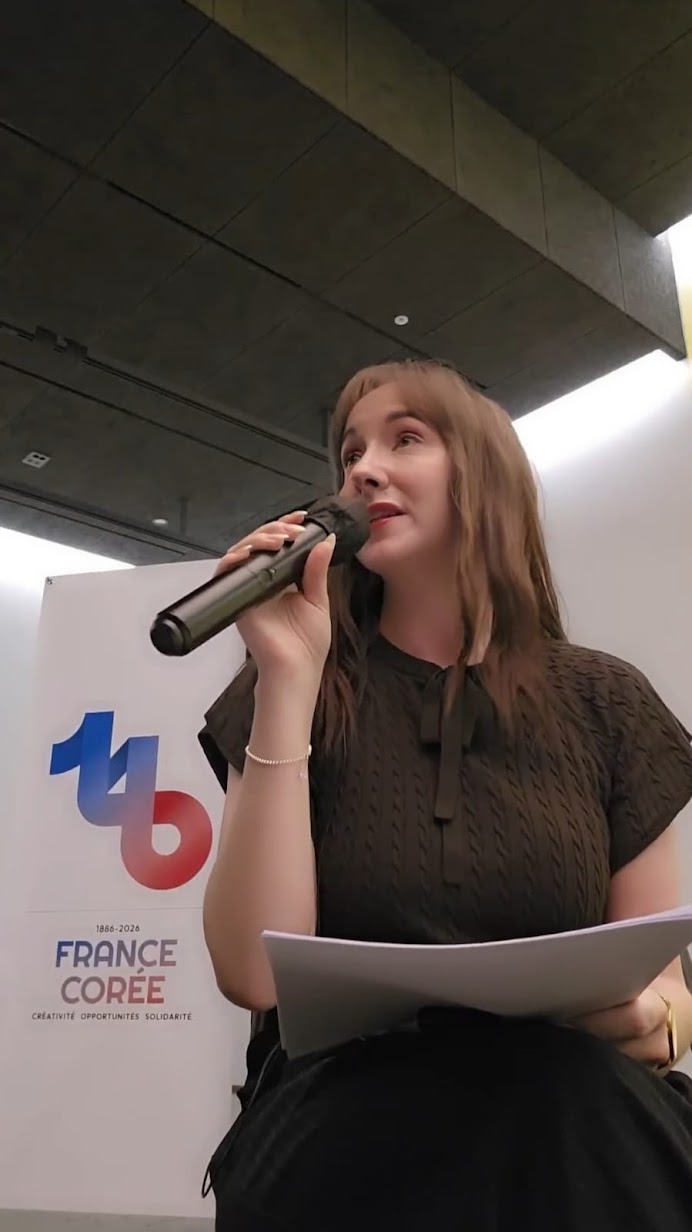
That also affects the way I work with my clients. I work in research, technology and international cooperation, so I have had to understand the country’s policies and systems.
 |
| Photo courtesy of Mathilde |
I’ve noticed several times that Korean research policy can be quite different from what I was used to in Europe. In Europe, research results are often widely published, whereas in Korea, I find that researchers and institutions tend to place much more emphasis on patenting.
That led me to study Korean history more closely as well. Like every country, Korea’s history has shaped the way the country functions today and, consequently, the way people think.
So learning is also a necessity. I need to understand the culture I work in. That doesn’t mean I agree with everything about it. There are aspects of Korean society that I don’t particularly like or agree with, but this is the country I live and work in, so I respect it and try to navigate it as best I can.
Having moderated conferences on AI and music copyright what is the general consensus to AI within the music industry? As it can be quite a touchy subject for some. What do you set out to educate or perhaps distigmatise on the topic?
Mathilde: The consensus is that there is no consensus! It’s a debate I find incredibly interesting. I love music, I love technology, so this topic is basically perfect for me.
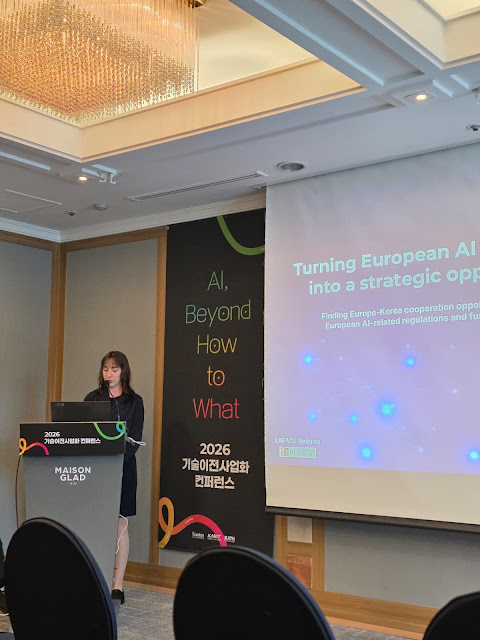
It is being discussed so much right now because we can’t seem to stop the development of AI, although the question is whether we should even try to stop it. At the same time, the law is struggling to keep up because it is extremely difficult to legislate around something that evolves so quickly and operates internationally.
Every country has its own approach, both when it comes to the legal framework it wants to establish and to AI development itself. As a European living in Korea, I am particularly interested in comparing European and Korean approaches to AI and innovation, because the perspectives can be quite different.
 |
| Photo courtesy of Mathilde |
I love talking about this topic because it affects everyone, not just lawyers or AI specialists. Music fans and K-pop fans are among the very consumers at the heart of this debate.
So I try to talk about AI through things people already understand, such as deepfakes involving BTS, for example, and to make the topic as accessible as possible. I want fans to be interested in these issues because AI is already having a major impact on the music industry.
We are not going to stop AI. It is already present at almost every layer of the music industry’s value chain. What we need to decide now is what kind of music industry we want to build around AI.
And for that, I would love for fans to be part of the conversation and to develop their own informed opinions. That’s what I try to do: share what I learn and make these topics accessible rather than intimidating or boring.
As an honorary reporter what firstly made you apply to become a writer and continue way into your third year?
Mathilde: I saw the opportunity as a chance to discover more of the country I was living in.
I live in Korea. No, it’s not a K-drama, so I get up in the morning, spend an hour on the subway, work, spend another hour on the subway, and go home exhausted. Routine happens in every country. Becoming an Honorary Reporter was an opportunity to force myself to get out of the house more and take a greater interest in Korean culture.
I continued into my third year because the program has genuinely benefited both my personal life and my career. Some of the conferences I moderate today came directly from articles I published through the program.
And then there are the people!
During one of the trips organized for Honorary Reporters, I met a girl who was also an ARMY. She wanted to go to a concert but had never bought a concert ticket in Korea. Me? I’m a professional.
 |
| Photo courtesy of Mathilde |
I helped her get her ticket. One year later, I was at her wedding. That’s the thing about opportunities. You never know where they will lead. She has become one of my rocks here in Korea, and I would never have met her without the Honorary Reporter program.
And then there is everything else. Being an Honorary Reporter opens doors.
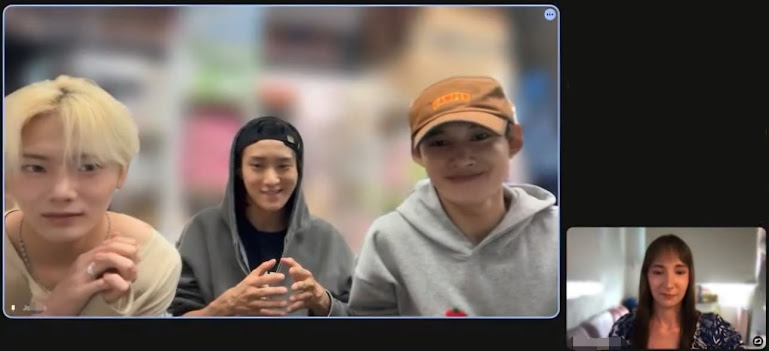
I had the opportunity to ask questions to the Minister of Employment and Labor about the situation of international students in Korea. I have interviewed a K-pop group more than three times. I have hosted a live online event in front of hundreds of viewers.
There have been so many opportunities, and that is why I genuinely cherish this program.
Your social media is a great mix of fangirl and professional especially as someone who has moved from France to Seoul you give lots of helpful content. What made you want to take the leap to not just visiting but then uprooting and living there?
Mathilde: I think it comes down to my belief that things don’t happen by accident. I had always wanted to live abroad, although my childhood dream was London. Then Korea entered my life in 2021, at a turning point when I felt like I needed a change.
I went to Korea for two weeks to test the waters. I knew it wasn’t a K-drama, but I wanted to see the real country for myself. After two weeks, I went back to France, applied for a Working Holiday visa and resigned from my job. Because… why not?
I had nothing to lose. I was going to spend a year there, come back, and that would be it.
People often say, “But you have to be brave”. Yes. But people sometimes forget that being brave doesn’t mean you aren’t scared. Every major decision I have made in my life has scared me. I don’t always feel qualified or confident.
 |
| Photo courtesy of Mathilde |
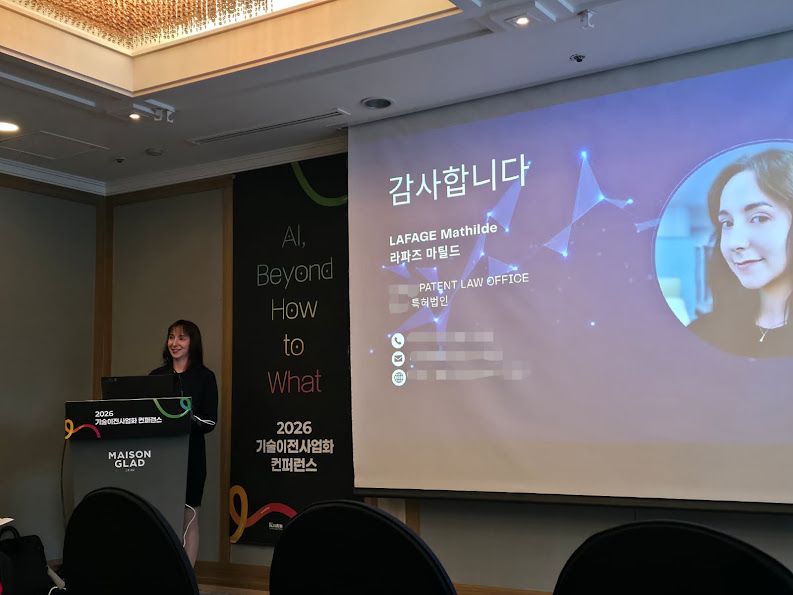
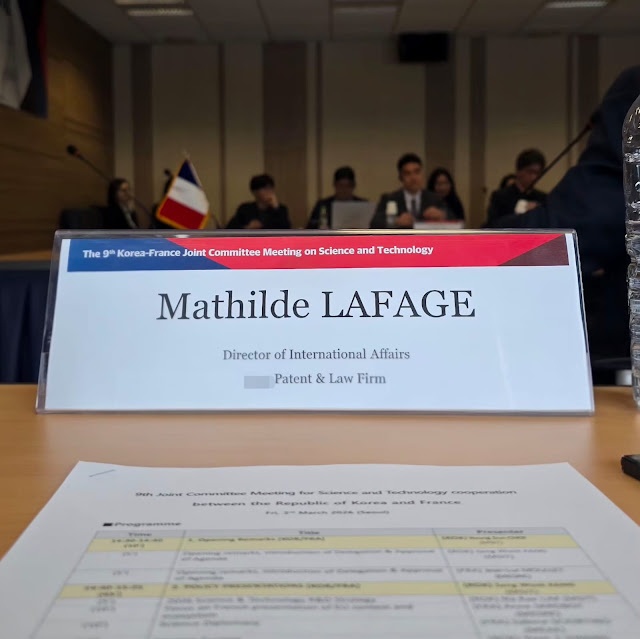
Do you think I felt confident when, after only six months in Korea, I was asked to get on stage and give a presentation about my work in front of 600 Korean researchers, lawyers and academics? I was the only foreigner in the room. I didn’t speak the language. I did it. I was shaking, but I did it.
And I have spoken at that conference every year since. I think I just have this mentality of: “There’s a cliff? Maybe there’s something cool at the bottom. Let’s jump. The cliff probably wasn't there by accident.”
That’s basically how I approach life.
I’m interested in your What I Wish I Knew Before Moving to Korea tips series, especially the point about: “You don’t “adapt” to Korea. Korea crushes your soul, then sells you the rebuilding kit, no refunds.” I think that is a point most don’t know unless they have a friend who lives in the country. What are your thoughts on what you wish people knew on the reality of living in South Korea?
Mathilde: I think moving to any country is a challenge, and depending on where you come from, you will face different levels of difficulty.
I am one of the lucky ones. As a European, visa processes are generally more straightforward for me, and having a Master’s degree in law obviously gives me more professional opportunities.
But even so, I find everyday life here exhausting.
Not work. I am incredibly lucky to work for a Korean company that genuinely cares about its employees and treats them well. I am the only foreigner, so it’s clearly not because there are other foreigners around me. I just have an amazing boss.
Outside of work, however, life in Korea can be exhausting because almost every administrative process requires extra effort when you are a foreigner. Very few things are available in English, and very few administrative staff, even at the immigration office, speak English.
On top of that, Korea has only been welcoming large numbers of foreigners relatively recently, so even Koreans themselves are sometimes unaware that certain systems don’t work the same way for us.
You want to create a bank account through an app? Not if your name is more than 30 characters long. You want to book a flight to Jeju? Sure, except the system only allows ten characters for your first name, so you have to go to the counter before your flight and have someone manually write your full name on the ticket. You want a Weverse Card so you can buy your BTS merch faster on the app? Nope. Only Korean nationals can get one.
Every little administrative task can require extra effort because even the systems themselves are gradually revealing that they were not designed with foreigners in mind.
So yes, I think “You don’t adapt to Korea. Korea crushes your soul, then sells you the rebuilding kit, no refunds” is actually pretty accurate.
You arrive and try to adapt because that’s what you’re supposed to do. But eventually you realize that it’s impossible to fully adapt when the systems themselves aren’t designed for you. You constantly have to go through different processes.
Eventually, you become exhausted and resigned. You learn to expect that something is going to go wrong. You just don’t know where in the process it’s going to happen.
So you end up with little pieces of everything. Pieces of you that absolutely love this country, and other pieces that absolutely hate those mentally exhausting moments.
Eventually, you have to rebuild a new version of yourself out of all those pieces. It’s a bit like an IKEA piece of furniture. It’s slightly unstable, but it holds together.
If you have good friends around you and people who can help, you manage. Without that support, many people eventually return to their home countries, simply worn down by the difficulties.
But is it worth it? Yes.I think even people who eventually return home rarely regret the experience. They just feel that they spent the amount of time they needed to spend here, and now they want something else.
To you, what is your relationship with Seoul to this day? What is your Seoul story?
Mathilde: It really depends on the period I’m going through. It depends on the weather, which is my nemesis in Korea, but also, and perhaps more importantly, on the difficulties I’m facing at the time.
When I simultaneously have problems with my bank, my health insurance, my phone plan, and so on, I crack and complain a lot.
Because yes, I am grateful for the life I have here. But being an immigrant doesn’t mean you aren’t allowed to complain, despite what some people seem to think when they casually say, “If you don’t like it, just go home”.
Other periods are completely different. I’m incredibly happy, everything is going well, I see my friends, work is going smoothly, I go out, I go to concerts…
I think, just like anywhere else, our relationship with our current life changes depending on our circumstances. But perhaps living abroad amplifies those emotions.
 |
| Photo courtesy of Mathilde |
Right now? I’m exhausted, but for all the right reasons.
Lately Korea has given me an incredible number of opportunities, both personally and professionally, and I have the questionable habit of saying yes to all of them. So I’m extremely busy and barely sleeping.
But I’m happy.
I’m surrounded by good people, and your support network is essential when you live abroad. You don’t need 20 friends. Five or six people who are genuinely there for you every day can be enough. We share many of the same struggles as foreigners, so every now and then we meet over a beer and spend a few hours complaining about life together!
Finally, having done so many things, what goals do you hope to achieve or set for yourself? Do you put a lot of pressure on yourself to tick them off your list?
Mathilde: This question actually made me realize how much my perspective has changed.
For a long time, whenever people asked me about my dreams or goals, I would say, “Well… I don’t really have any anymore”.
I didn’t have one huge goal I was chasing. I live in a country I love, I have a job I love, colleagues and a boss I adore, amazing friends, and I’ve seen BTS in concert THREE TIMES! I finally got proof that they actually exist in real life!
So, ultimately, I was just happy. I wasn’t really chasing anything anymore, except perhaps becoming bilingual…
But over the past few months, I think this life that I consider almost perfect has finally become my routine. And I am incredibly grateful for that.
So now I’m starting to explore new horizons again. I would like to become more involved in the music industry. That was actually one of the main reasons I applied to the KDI program.
In a way, I think it would also be a little bit of revenge for all the jokes and dismissive comments I received in France about my love of K-pop. Look what my “teenage obsession” led to. I’ve met music industry professionals. I’ve met and interviewed ministers. I’ve been invited to concerts. I’ve interviewed K-pop groups.
View this post on Instagram
Sometimes, I even have a hard time realizing everything I have managed to do here.I don’t know whether I put enormous pressure on myself, but I do work a lot outside my regular job toward these goals.
At the same time, it is a privilege to realize that my life is becoming something I never would have imagined possible. I don’t think I am always the best example, but I try my best to motivate people.
Whatever your goal, your dream or simply something you want to try: go for it.
What do you have to lose? Like, seriously. What are you actually going to lose? Take the risk.
At worst, you go back to where you started. I’m very much the type of person who tries first and figures it out afterwards.
Just like with the KDI program! At first, I hesitated to apply. Why? It was a three-day program, and I was supposed to moderate a conference for the French Embassy on the afternoon of the first day.
I thought missing half a day out of three would automatically disqualify me.
But I emailed the organizers anyway and asked. They told me to apply and that we would see what happened during the selection process.
In the end, I was selected, and the selection email actually said that my application was among the strongest.
I tried, and I succeeded. And today? I’m continuing to make my way into the music industry.
None of this would have happened without my personal mantra:
Delulu is the solulu.
Who knows? Maybe we can meet again in a few years. I’ll FINALLY be bilingual, and maybe I’ll even have interviewed BTS by then. I would love to hear their perspective on the future of the music industry.
Delulu is the solulu. ;)
Follow Mathilde