
Society has become remarkably efficient at manufacturing dissatisfaction. We are encouraged to acquire more, accomplish more, improve ourselves, and cultivate identities attractive enough to survive the judgment of strangers. Every waking hour presents another opportunity for advancement, provided we can overlook the rather inconvenient question of where all this advancement is taking us. Somewhere between the pursuit of happiness and the administrative business of maintaining a life, freedom begins to resemble an obligation. We have acquired unprecedented means of controlling our surroundings while remaining spectacularly susceptible to the forces governing our desires.
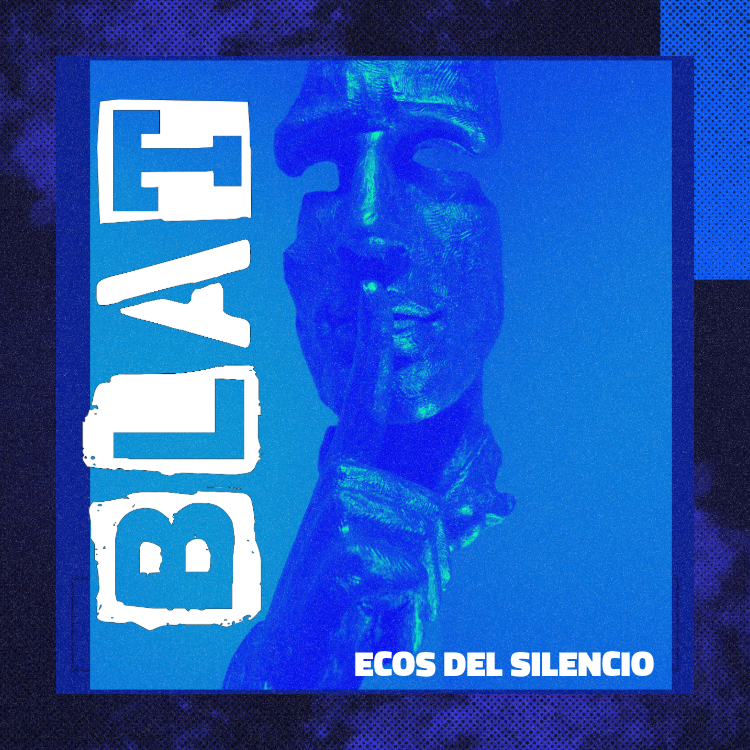
For BLAT, an indie Spanish-language post-punk and coldwave project led by Lith Alvedo and Søren Lūcius, this contradiction provides fertile ground for their debut full-length album, Ecos del Silencio (Echoes of Silence). Across twelve songs, the duo investigates the pressures of contemporary existence, from consumer culture and social conformity to romantic obsession, psychological distress, and the peculiar exhaustion of trying to remain oneself in a society that continually recommends becoming somebody else.
Drawing from the austere romanticism of Molchat Doma, the rhythmic severity of She Past Away, the gothic sensibilities of Twin Tribes, and the emotionally charged Mexican alternative rock tradition associated with Caifanes, BLAT build their songs around substantial basslines, pedal-treated guitars, and the mechanical insistence of drum machines. Their arrangements make room for sinister surf melodies, shoegaze diffusion, bluesy solos, and the melodic directness of mid-’80s alternative rock. Repetition provides a firm foundation, allowing relatively economical instrumental parts to accommodate considerable emotional upheaval.
At the center of BLAT lies the contrast between its two principal voices. Søren Lūcius moves from brooding declamation to tender, impassioned singing, while Lith Alvedo introduces a colder, more ethereal presence, sometimes softened by reverb and a youthful romantic yearning. Their vocal hooks lend an immediate, communal appeal to songs examining the peculiar human habit of constructing elaborate prisons and then complaining about the accommodations.
“Ecos del Silencio was born the moment we chose to stop living up to the world’s expectations and instead stand by our true internal philosophy,” the duo explain, describing an attempt to connect through the darkest corners of human experience.
Opening track Cadenas (Chains) launches with a thick, melodic bassline and propulsive drums, establishing the backbone of its atmospheric coldwave arrangement. Lith’s lead vocal confronts routine, modern isolation, and the consumerist bargain: time and autonomy surrendered for possessions that provide remarkably little satisfaction. A zigzagging smear of guitar cuts across the rhythm, its catchy phrases making each economical appearance count. The poppy, mid-’80s post-punk character brings to mind the March Violets in Some Kind of Wonderful, with guitars that readily break into a rock ’n’ roll charge. Broad, easily sung vocal lines carry the romantic feeling of Spanish-language post-punk, giving the song’s discontent an inviting melody.
Ominous electric guitar strumming introduces Dictadura (Dictatorship), which relocates authoritarianism inside the human mind, where inherited convictions become unquestionable laws. The drum figure suggests a slow ska or reggae rhythm, with a little of surf music’s rolling motion, while the restrained gothic guitars maintain an uneasy relationship with the arrangement. Dry, pessimistic verses swell into a more forceful chorus, and a peculiar buzzing tone, possibly a synth, adds a retro-prog tinge. That underlying discord suits the unpleasant revelation that one’s most fiercely defended beliefs may have become instruments of oppression.
Dark surf guitar and a deep rhythmic groove shape Ficción (Fiction). Lith takes the lead in a sharp critique of virtual appearances and digital noise, examining the performance of identity in a culture increasingly preoccupied with how it looks. The vocals move with greater emotional smoothness than on the preceding track, and a bluesy guitar solo opens out midway through the song. Its melodic ease accompanies a less comfortable proposition: ambition becoming an exercise in self-erasure, while time gradually dismantles the public persona its subject struggles to maintain.
Puedes Ser (You Can Be) settles between alternative rock and shoegaze, its deep bass supporting guitars spread through delay and other pedal treatments. A particularly catchy male vocal melody gives the song a familiar pop instinct, suggesting later Ramones refracted through late-’80s alternative rock and gauzy guitar effects. That accessibility carries a pointed examination of the cruelty directed toward people experiencing psychological distress, particularly when every attempt at self-defense invites further condemnation.
Repeated attacks from guitar and bass, reinforced by the drums, open Desvanecer (Fade Away) before a reverb-rich female vocal introduces a tinge of youthful romance. The guitar melody spirals through an alternative-pop arrangement, giving the song the wistful feeling of an affection remembered at a distance. This romantic quality lends a strange tenderness to its account of physical deterioration, sensory disconnection, and the uncertain boundary between transcendence and death.
A sinister strain of ’60s surf guitar ushers in Maldita Realidad (Damned Reality), followed by Søren’s deep, brooding lead vocal, which draws on the emotional weight of Spanish-language alternative rock and post-punk. The bass has a physical depth, with guitars carrying what sounds like a light coating of flange positioned behind it. Retro horn-like synths add another color before the chorus expands into a full Spanish-language singalong. Its raw attack, danceable momentum, and expansive chorus make it the record’s energetic centerpiece. Søren portrays romantic obsession as an elaborate negotiation with evidence that has already delivered its verdict; reality, unfortunately, has never been particularly accommodating to wishful thinking.
Pisotear (Trample) begins with wistful guitar strumming and a male vocal delivered with the intimacy of a ballad. Around forty seconds in, the intensity rises, then recedes, giving the arrangement a push and pull that deepens its emotional uncertainty. Its examination of humiliation and cruelty within a destructive relationship finds room for solidarity, introducing the possibility of resistance through the recognition of shared pain.
The mid-’80s post-punk and alternative-rock structure of Lucha (Struggle) is apparent from the outset, with guitar chords, bass, and steady drums forming a driving march beneath Søren’s lead vocal, sung in a slightly higher register. There is tenderness in the delivery, along with a sorrowful passion that gives this account of internal survival and perseverance an intimate scale. A guitar solo with lingering sustain contributes to the song’s slight Chameleons feel. Shared adversity, BLAT acknowledge, rarely produces identical experiences or guarantees success, though the melody gives that determination an affecting lift.
An icy punk guitar riff opens Me Aterra (It Terrifies Me), suggesting the Stooges’ I Wanna Be Your Dog brought into contact with Christian Death. Eerie synths lend the atmosphere a haunted-house chill before a female vocal enters with a dark affect. The pronounced deathrock character gives musical form to the song’s anxiety, where desire and fear become mutually obstructive forces and even the prospect of pursuing something wanted can provoke alarm.
A few ringing guitar chords and shuffling drums establish the dark opening of Pestes (Plagues), the rhythm repeatedly punctuating the same uneasy thought. A catchy post-punk guitar figure soon takes hold, its recurring shape and the vocal melody recalling the Ramones’ Pet Sematary. That persistent refrain gives a memorable form to the song’s vision of psychological corruption as an infestation requiring a thorough internal reckoning.
Fluir (Flow) opens with a dirty, melodic rock ’n’ roll riff and a male vocal steeped in dark bravado. Organ elements and icy minor chords appear throughout, while the singing periodically surges with passion. As the lyrics consider surrendering control as a possible route to liberation, the arrangement gives that uncertain proposition a strutting confidence. Acceptance remains an uncomfortable prospect, delivered here with considerable conviction.
Closing track Sin Destino (Without a Destination) begins with a repeating guitar melody whose dark, chiming resonance persists as further layers enter the mix. That opening figure fades, yielding to a higher, fuzzy guitar riff with an immediately catchy melody. Within the closing duet, a dark male vocal rises toward expansive, singalong heights before the guitar refrain returns. The song brings the album’s narrative to a close in an atmospheric limbo, with romantic loss supplying its unresolved tension. Hope stubbornly contests a separation that has already occurred, its recurring melody giving that attachment a persistent musical form.
Listen below:
There is an appealing irony in an album called Echoes of Silence being so concerned with the consequences of remaining quiet. Beneath the machinery of modern existence, Lith and Søren suggest, personal freedom begins with recognizing one’s own voice, even when the world has spent a lifetime teaching us to ignore it.
Follow BLAT:
The post Post-Punk Duo BLAT Confront Modern Discontent on Spanish-Language Debut Album “Ecos del Silencio” appeared first on Post-Punk.com.