 |
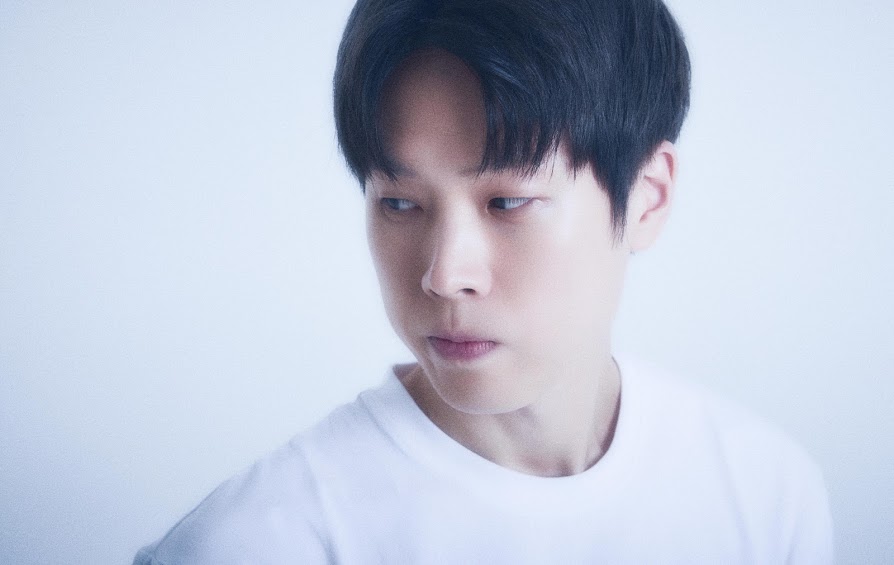
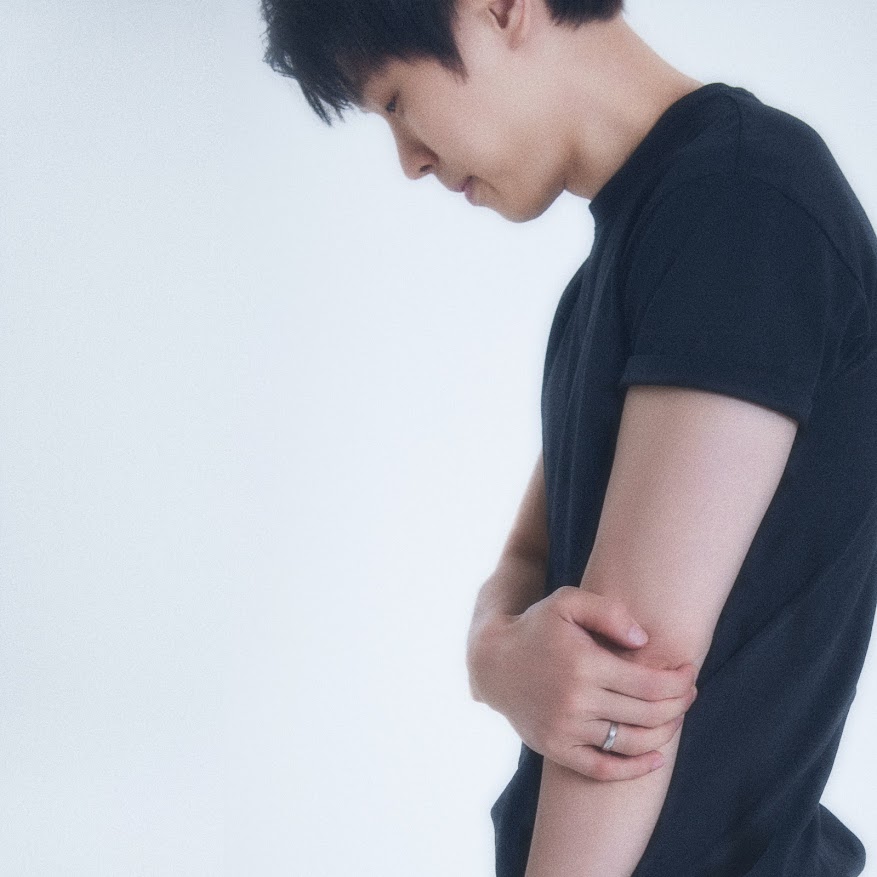
| Photo Curtesy of JINexx |
JINex, a South Korean producer who moves freely between hip-hop, R&B, soul, and funk. He began with the goal of becoming a font designer, but after leaving that job he turned to music and built his career step by step. Since taking the name JINex in 2021, he has collaborated with a wide range of R&B and soul artists, won a songwriting audition in 2022 that led to a collaboration with Mad Clown, and released his first full-length album, Butterfly, in November 2023. The album’s nostalgic 1990s feel also earned it a vinyl edition, which was presented as a special release at the 2024 Seoul Record Fair.
Today, he returns with a new EP, Fairy Tale. Drawing on the emotional sensibility of Korean R&B ballads from the 1990s and 2000s, it tells six separate love stories from different moments in time: falling in love, promising forever, relationships that are hard to let go of, and the memories left behind after loss. Where his 2025 album, ETERNAL, followed one continuous story of love, loss, and healing, this new EP reads like a storybook of individual chapters, each told in a different voice. The title refers to a love so precious it once felt almost too beautiful to be real, one that stays in the heart long after it has passed.
We spoke with JINex to talk about the stories behind Fairy Tale.
Congratulations on the release of your new EP. You describe “Fairy tale” as six different love stories rather than one continuous narrative. What made you want to explore love through separate moments and perspectives this time, especially after the more connected story of “ETERNAL”?
JINex: As a producer, I’ve always had a desire to express my own narratives and tell my own stories through music. I used to feel that, unlike singer-songwriters, producers weren’t necessarily in a position to put their personal stories at the forefront.
With my previous album, ETERNAL, however, I found a way to fulfill that desire through my own approach as a producer. So, with Fairy Tale, I wanted to take a slightly lighter approach and focus on the genre I love: R&B ballads, rather than placing my own story at the center.
Instead of building a personal narrative, I chose to explore the universal theme of love through the voices of six featured artists, each bringing their own perspective. As a result, the album became a collection of different moments of love, expressed through the unique voices and interpretations of the artists involved, rather than a story centered on my own experiences.
The album draws heavily from the emotional sensibility of Korean R&B ballads from the 1990s and 2000s. What specifically attracts you to the music of that era?
JINex: I was born in 1990, so I naturally grew up listening to music from the 1990s and 2000s. I feel that the memories and music of that era are deeply embedded in my musical DNA, and they continue to be an important source of inspiration for the music I make today.
The sounds and emotional sensibilities of that era take me back to a time when I was younger and perhaps more innocent, while also awakening a certain sense of longing and nostalgia. I think that combination of nostalgia and emotional resonance is what attracts me to that music the most.
The EP brings together MRSHLL, JUE, Lil Summer, 이제, Slowly, and JINBO the SuperFreak. What made each artist the right voice for the particular story they tell?
JINex: As a producer, I focused on shaping the overall picture of the album.
MRSHLL and JUE are artists I’ve worked with before, so we already had a familiar creative chemistry. I felt they could help anchor the album and give it a strong foundation. I also wanted to bring in a fresh perspective through Slowly, an emerging artist.
On the other hand, working with JINBO the SuperFreak, a defining figure in the Korean R&B scene, was a way for me to strengthen the album’s musical roots. With 이제, whose music draws on folk and acoustic styles, I wanted to expand beyond the conventional language of R&B.
Finally, collaborating with Lil Summer, who is based in Japan, allowed me to broaden the album’s musical scope beyond Korea. Throughout the process, I was thinking about how artists from different backgrounds could come together to create a diverse yet cohesive picture within a single album.
The six artists have very different vocal colors and musical backgrounds. Were you already imagining a specific artist for each story?
I think this connects closely to the previous question about the artists involved in the album.
As a producer, I find it especially appealing that every musician comes from a different musical background. I place a lot of importance on a vocalist’s tone and emotional sensibility because I believe the same melody can convey completely different feelings and atmospheres depending on who sings it.
My usual approach is to select a few tracks that I think would suit a particular artist and present them with those options. From there, we work together to find the direction that feels right for both the artist and the song.
Rather than trying to fit an artist into a predetermined image of a song, I’m more interested in discovering what new possibilities might emerge when their unique qualities meet the music.
Did any of the songs change significantly once the vocalists recorded their parts? Which song surprised you the most once it was completed?
“Last Night,” the third track, originally had a completely different beat from the version you hear now. I ended up rebuilding the entire track to bring the vocals further to the forefront. It was the first time I had tried this approach as a producer, and I learned a lot from the process.
The song that surprised me the most was “4ever,” the opening track. Toward the end of the second verse, there’s a moment when the vocals reach an incredible peak. It gives me goosebumps every time I hear it, and I find that moment genuinely exhilarating. Even after the song was completed, the impact of that part remained just as powerful for me.
Because you handled so much of the production yourself, did working alone give you more creative freedom, or did it also make the process more challenging?
I think it depends on the situation. Working alone gives me the creative freedom to fully pursue my own ideas and direction. It also allows me to maintain a consistent sound and atmosphere throughout an album, which is a big advantage.
On the other hand, when I spend too much time working alone, my perspective can become narrow. I sometimes find myself going in circles or overlooking better possibilities. In those moments, I think it’s important to exchange ideas with other musicians and collaborators so I can discover perspectives I might not have considered on my own.
With Fairy Tale, I particularly wanted to take a more stripped-back approach to the arrangements and give myself more freedom within my own creative process. Rather than filling every part of the music with layers, I focused on allowing the vocals, melodies, and emotions of each song to come through naturally. In that sense, making this album was also an opportunity for me to explore a more relaxed and intuitive way of creating music.
“Last Night” brings Japanese, English, and Korean together in one song. What interested you about allowing multiple languages to coexist within the same story rather than choosing one language as the primary voice?
I thought it could be a way to express the collaborative nature of bringing together musicians from Korea and Japan through the music itself.
Lil Summer actually wanted to write some Korean lyrics herself and use them as a distinctive point in the song. I felt that this was also a gesture of respect toward me as her collaborator, and I really appreciated that.
Rather than making one language the primary voice, I found it appealing to let the different languages coexist naturally while retaining their own individual character. In that sense, the coexistence of multiple languages became part of the song’s identity, reflecting the collaboration between Korean and Japanese musicians.
One of the most interesting ideas behind Fairy tale is the connection between the two meanings of “동화”: 童話, meaning fairy tale, and 同化, meaning assimilation. When did you realize that this double meaning could represent the album?
To be honest, the idea came to me at the very last stage, when all the songs were finished and I was putting together the release materials.
Looking back, I realized that the six musicians had influenced one another and come together to form a single body of work within my album. I found it fascinating that this process could be described through the Korean word donghwa (同化), meaning “assimilation.”
Of course, I think I was influenced by them as well. If I take that idea a step further, the person I am today is also a reflection of all the people I’ve met and spent time with throughout my life. Their influence has become part of who I am.
Thinking about it that way made me realize that the title Fairy Tale carries a meaning that extends beyond the album itself. It also says something about me and how I’ve been shaped by the people around me.
That’s an interesting question, and perhaps a difficult one to answer. Thank you for asking it.
I think making music and creating art are, in a way, ongoing processes of discovering ourselves.
One thing I came to realize while making this album is that the person I am today has been shaped by the many people I’ve met and the experiences I’ve shared with them. Working with these six musicians, I was not only taking in their voices and musical identities, but also discovering how much they had influenced me, both musically and personally. I found that realization really fascinating.
In that sense, Fairy Tale is not only an album containing six different love stories. It is also a reflection of how I continue to be shaped through meeting other people, exchanging influences, and growing alongside them.
What is one thing you hope someone takes away from listening to this album?
It feels like so much of what we encounter today is presented and consumed at a rapid pace, and trends change just as quickly. In a world like that, I want to express my own pace and values through my music.
I feel the same way about this album. Rather than focusing on fast-paced songs, Fairy Tale is built around slower tempos, allowing its emotions and narratives to unfold gradually.
If listeners can connect with the sincerity and emotional depth of the love portrayed in this album, while also experiencing a sense of nostalgia for the music of that era, I would be more than happy.