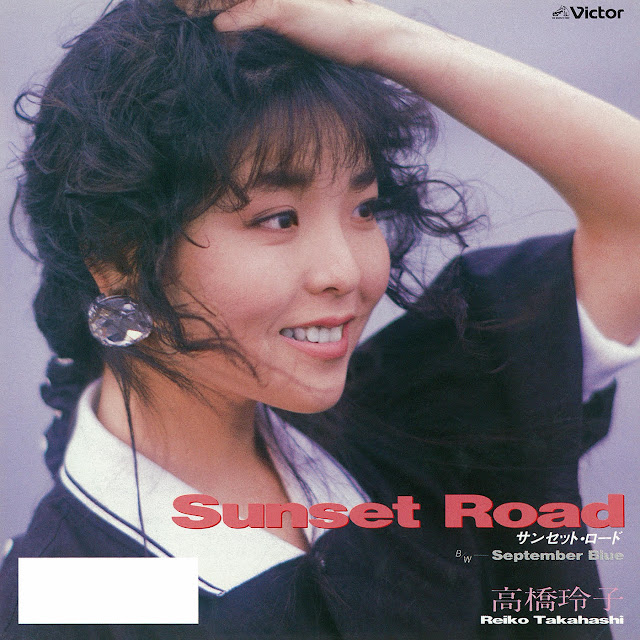
“It’s as though my musical journey has come full circle, except this time the world came looking for me.” Just over 40 years ago Japanese singer-songwriter Reiko Takahashi released “Sunset Road”, and that very city pop recording back in 1987 has suddenly found itself in a resurgence. The reignited interest has been put down to DJ Notoya, who included “Sunset Road” in his 2018 compilation vinyl LP, Tokyo 1980s Victor Edition – Boogie, Funk & Modern Soul from Japan.
Without a doubt, Asian music today is known globally thanks in part to the rise of social media, YouTube, and streaming platforms. That city pop sound has got younger generations hooked in by the sounds and storytelling of the track. Not only that, but also the sheer determination and inspiring story of Reiko as an artist.
Heading to America to pursue her career outside of Japan, she reveals she went in with no solid plan. Perhaps proof that being bold is the only way to make it work. As she explains herself, “Did I have a perfect plan? Absolutely not. But I had determination, a willingness to work incredibly hard, and the courage to approach people who might otherwise never have heard my music.” This ethic still remains today and is something she believes “Matters just as much today as it did back then.”
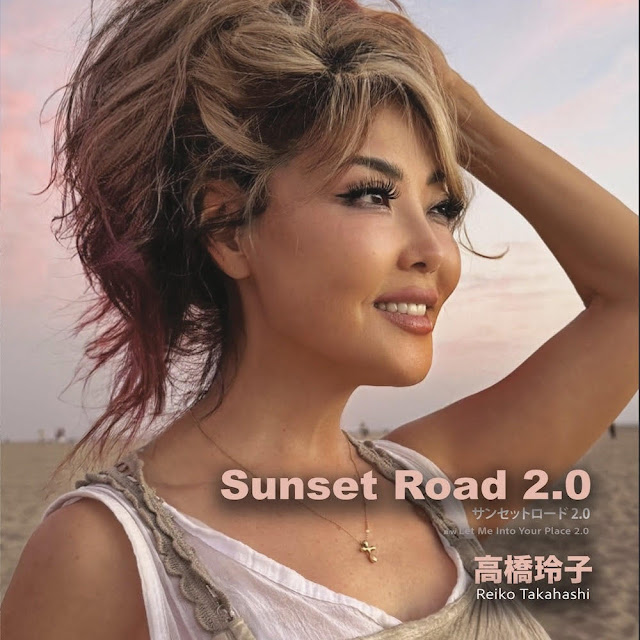
Last month, Reiko celebrated her reimagined recording of “Sunset Road 2.0” with a sold-out vinyl release party at Hello Stranger in Little Tokyo. Reiko’s story is a fantastic look into just how life is unpredictable, and also hard work will also pay off. We discuss the resurgence in the track, nostalgia, and the rise in Asian music globally today.
You’ve just released a reimagined recording of your viral hit with “Sunset Road". 2.0” after 40 years. What made you want to revisit that era of your life?
Reiko: Yes! I was completely shocked to discover that “Sunset Road” was experiencing a major resurgence when I spotted my own song on a friend’s City Pop playlist on Spotify, and she had no idea it was me!
After reintroducing myself to the world, I was overwhelmed by the heartfelt requests from fans around the globe to release a new 2026 version, which is “Sunset Road 2.0". How could I possibly resist?
 |
| Photo Credit: Courtesy of Reiko Takahashi |
Do you find people react to hits like this as it’s a form of nostalgia for those who remember the original release back in 1987?
Reiko Absolutely! A lot of people do, but I also love reading comments from younger generations who weren’t even born when the song was originally released in 1987, yet absolutely love it!
That’s the magic of City Pop! It’s timeless, infectious, and has this magnetic quality that instantly makes you feel good. Great music transcends generations, and I think City Pop is a perfect example of that.
Were you surprised when you realised that people were creating YouTube videos and doing deep dives, referring to you as the ‘biggest city pop mystery'? “What happened to Reiko Takahashi?” You must feel like an enigma now with this resurfacing.
Reiko: I was absolutely stunned! I had no idea I had become such a mystery. So I contacted my original record label, Victor Entertainment, in Japan, and they told me they had actually been trying to find me since 2018, when DJ Notoya included “Sunset Road” on his City Pop compilation vinyl LP Tokyo 1980s Victor’s Edition, which became a major catalyst for the song’s resurgence.
The reason they couldn’t find me was that I had changed the spelling of my name from “Reiko” to “Rayko” for my music career after moving to the U.S.!
Who knew that one little spelling change could turn me into a City Pop mystery?
What do you credit to these videos for firing up a resurgence? Was it down to a specific moment?
Reiko: I believe DJ Notoya played a huge role in reigniting interest in “Sunset Road” when he included it in his 2018 compilation vinyl LP, Tokyo 1980s Victor Edition – Boogie, Funk & Modern Soul from Japan.
From there, I think the magic of social media took over! YouTube, Spotify, and passionate City Pop fans around the world helped introduce the song to an entirely new generation.
What amazes me most is how a song I recorded nearly 40 years ago could find a whole new life without me even knowing about it! It’s such a beautiful reminder that music truly has no expiration date.
What has surprised you the most about its rediscovery with younger fans, not just by their reaction but perhaps by reflecting on yourself and the artist you are today compared to back in the 80s?
Reiko: What surprises me most is how deeply younger generations connect with Sunset Road! I receive so many heartfelt messages from fans telling me how “Sunset Road” helped them through difficult times, especially heartbreak and breakups. Knowing that something I created so long ago can still bring comfort and happiness to people today is incredibly moving.
Looking back at the young Reiko in the ’80s, I see a girl who was passionate, ambitious, and full of dreams but who still had so much to discover about herself and the world.
View this post on Instagram
Today, after decades of experiences as a musician, composer, producer, and simply as a human being, I’ve grown and evolved in ways that young Reiko could never have imagined. What’s fascinating is that while my musical abilities and perspectives have expanded tremendously, my love and passion for music haven’t changed one bit.
In a way, rediscovering “Sunset Road” has allowed me to reconnect with that younger version of myself while introducing the world to the artist I’ve become. And I think that’s the most beautiful part of this whole journey.
The beginning of your career is incredibly inspirational but shows your determination to be seen and heard within the industry. What was your dream? when you were younger? Where did it begin, and how does it feel to be telling your story 40 years on?
Reiko: My dream was always to make music that would reach people around the world. Growing up in Tokyo, I had this burning passion for music and an almost irrational determination to make it my life.
After beginning my professional recording career in Japan, and soon after releasing “Sunset Road", I made the decision to pursue my musical dreams in America.
Upon arrival I recorded demo cassettes in a tiny studio in Huntington Beach, California, and then walked around Sunset Boulevard, Melrose Avenue, piers, and college campuses carrying TWO backpacks full of those tapes, trying to get my music into anyone who’s willing to listen!
There were no social media platforms, no streaming services, and certainly no shortcuts. Just my music, my determination, and a whole lot of walking!
Decades later, to be telling this story while watching “Sunset Road” reaches an entirely new generation, and of course, the long-term listeners feel almost surreal. It’s as though my musical journey has come full circle, except this time the world came looking for me.
As a child, where did your love for music begin, and was it down to a particular artist that made you think being a musician as a career could really be a reality?
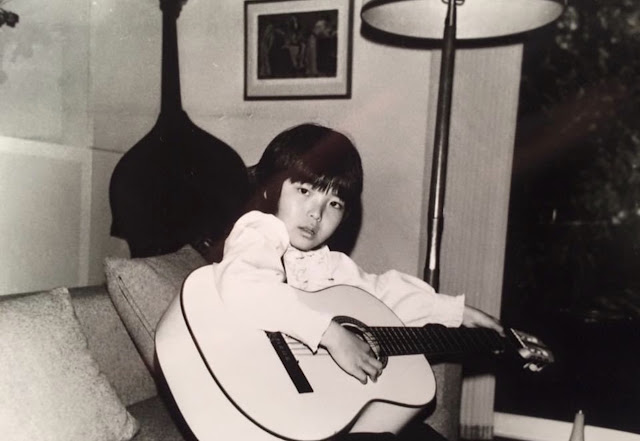
Reiko: My love for music began when I was just four years old in Tokyo, and I owe so much of who I am today to a remarkable young Japanese piano teacher who was incredibly progressive for her time!
Believe it or not, I actually got so frustrated with my piano lessons that I yelled at her and told her NEVER to come back. But instead of giving up on me, she recognized something in me that I didn’t even understand myself. She realized that I had a natural gift for hearing music and expressing emotions through sound.
So she did something extraordinary. She threw out the traditional approach, put away all the sheet music and textbooks, and began teaching me entirely by ear.
 |
| Photo Credit: Courtesy of Reiko Takahashi |
She would have me turn my back to the piano, listen carefully, and memorise what I heard. After doing this for a while, she finally invited me back to the piano, but this time, instead of asking me to play someone else’s music, she encouraged me to compose my own music based on how I felt about things.
By the age of five, I had composed my very first full-length song, and it was about my mother!
Looking back, I realise how profoundly that experience shaped my entire life. She taught me that music wasn’t just about reading notes or playing an instrument correctly. It was about translating emotions into sound.
I think that’s why I’ve never been afraid to explore different musical genres. Whether I’m singing City Pop, performing rock and metal, or composing for film and television, it all comes from the same place: my emotions.
That wonderful teacher didn’t just teach me how to play music. She taught me how to express who I am through music. And that gift has stayed with me my entire life.
Going to America on your own is incredibly brave. What made you so determined? To not only go out there but also insist that you were going to make it? Especially back then, networking must have felt much harder compared to today. Did you have a plan, or what did you find most effective that perhaps can’t be replicated today in a tech world?
Reiko: I think I was a little crazy! But sometimes you need a little craziness to chase an impossible dream.
I came to America because I wanted to challenge myself beyond the boundaries of what I already knew. I dreamed of building an international music career, and I wasn’t going to let fear stop me.
But I also believed that making it in America wasn’t just about learning the language or embracing Western fashion and trends. It was about actually living and breathing the culture, walking on its soil, experiencing everyday life, and truly understanding the people and the world that shaped the music I loved. I felt that I couldn’t fully absorb that culture from thousands of miles away in Japan. So I made the big move!
Did I have a perfect plan? Absolutely not. But I had determination, a willingness to work incredibly hard, and the courage to approach people who might otherwise never have heard my music.
Those two backpacks full of demo cassettes became my calling cards. What I learned is that human connection is irreplaceable. Technology today is amazing, and I’m grateful for it, but there’s something incredibly powerful about looking someone in the eye, sharing your passion, and making a genuine personal connection.
I still believe that matters just as much today as it did back then.
Besides the above, you’re a multifaceted artist and have even trained your voice between operatic singing and death-metal screams. Do you find that was your way of not being confined to one specific box? Even today people still want to label Asian artists in particular genres.
Reiko Absolutely! I’ve never understood why an artist should have to fit into one particular box.
My musical journey has taken me through everything from delicate, melodic City Pop to punk, hard rock, symphonic rock (Lolita Dark), progressive rap rock (Dig Jelly), operatic vocals, and even metal screams!
To me, they’re all different forms of artistic expression. Each style allows me to explore a different part of my voice and personality.
As a Japanese woman working in the American music industry, I’ve certainly been aware of the expectations and stereotypes that can come with being an Asian artist. But I’ve never wanted my ethnicity or appearance to dictate what kind of music I’m allowed to create. I also use that as an advantage/niche.
 |
| Photo Credit: Courtesy of Reiko Takahashi |
I’ve performed in rock bands, worked as a session vocalist, composed and produced music for television, film, and other media, and explored genres that couldn’t be further apart.
I love being Asian, and I’m proud of my heritage, but I’m also an artist who refuses to be defined by just one genre.
Music has no boundaries, and neither should creativity.
Today Asian music is easily accessible and now on a global scale recognised. Why do you think it’s now so loved by audiences?
Reiko: I think the world is finally realising something I’ve always believed: great music doesn’t need a common language to connect people!
The global success of K-pop, J-pop, City Pop, and so many other Asian musical styles has opened doors that were much harder to walk through when I first started my career.
Streaming platforms and social media have made it possible for someone in Los Angeles, London, or São Paulo to discover a Japanese song recorded decades ago and fall completely in love with it.
I also think Asian music offers such a beautiful combination of musical sophistication, emotion, creativity, and distinctive cultural influences.
What excites me most is seeing younger generations embrace music without worrying about where it comes from or what language it’s sung in.
That kind of openness is something truly worth celebrating!
The above is reflected in the attendance for your “Sunset Road 2.0” vinyl release party at Hello Stranger in Little Tokyo. How did it feel to have such a great attendance? And have you found people are embracing physicals and want to own actual pieces of media?
Reiko: Oh my goodness, it was absolutely overwhelming in the most beautiful way!
After all these years, seeing people come together to celebrate a song felt like a dream! And the “Reiko” chant! Will forever be engraved in my memory
And YES, physical music, especially vinyl, is making a wonderful comeback.
View this post on Instagram
There’s something magical about holding a vinyl record in your hands, admiring the artwork, reading the liner notes, and experiencing music as something tangible rather than just another digital file.
That’s one of the reasons I wanted “Sunset Road 2.0” to be released on a limited-edition translucent magenta 7-inch vinyl. Pink has become such an important part of my artistic identity, and I wanted this release to be something special that fans could treasure.
For me, vinyl isn’t just about nostalgia. It’s about creating a lasting connection between the artist, the music, and the listener.
And knowing that people want to own a little piece of my musical history is incredibly touching!
The track itself is not just a remake of a beloved Japanese city pop recording but follows your reclaiming your own story of immigration, perseverance, reinvention, and the remarkable endurance of music. How important is it to you to not only tell your own stories but also to highlight your heritage and culture within those very songs?
Reiko: My Japanese heritage will always be an inseparable part of who I am, no matter where life takes me. I am also an associate professor of Chado Urasenke, the authentic Japanese Tea Ceremony.
I was born and raised in Tokyo, but America became my home, and I’ve spent much of my life navigating between these two beautiful cultures.
I think that experience has shaped not only my music but also the person I’ve become.
When my husband Rain and I reimagined “Sunset Road” nearly 40 years after the original recording, I didn’t want to simply recreate the past. I wanted to celebrate it while bringing everything I’ve learned and experienced as an artist into the present.
“Sunset Road 2.0” represents so much more to me than a new recording. It’s a celebration of my roots, my journey across the Pacific, the challenges I’ve overcome, and the extraordinary way music can transcend time and borders.
I’m incredibly proud of my Japanese heritage, and I hope my story encourages other Asian artists, especially young women, to embrace where they come from while fearlessly pursuing wherever their dreams may take them.
You don’t have to choose between honouring your roots and reinventing yourself. You can do both!
For those who’ve discovered you, what advice would you give to those who look up to you and want to pursue their dreams within the music industry? What’s the key point you would emphasise to them?
Reiko: NEVER give up on your dreams! And please, don’t let anyone tell you what kind of artist you’re supposed to be!
First and foremost, if you’re in it for the love of music, then music is for you! Don’t pursue it just for the money or fame. Follow your passion, stay true to your art, and the rewards will come in their own time.
The music industry can be incredibly challenging, and rejection is something almost every artist will experience. Believe me, I’ve had my share, and I used every single rejection as motivation to push myself even harder!
When I started, we didn’t have social media, streaming platforms, or all the incredible tools available today. It took me much longer to get my music heard. Today’s artists have so many more opportunities to explore, create, connect, and share their music with the world. Take advantage of them!
Don’t wait for someone to give you permission to pursue your dreams. Create your own opportunities, keep learning, keep evolving, and surround yourself with people who genuinely believe in you.
And most importantly, NEVER sell your soul to achieve success. You may be able to fool the world, but deep down, you’ll always know when you’ve compromised who you truly are. No amount of fame or money is worth losing yourself.
Sometimes a song you recorded nearly 40 years ago finds its biggest audience when you least expect it! Who could have predicted that? Certainly not me!
Your journey doesn’t have to look like anyone else’s. Trust your instincts, stay true to yourself, and never lose the joy that made you fall in love with music in the first place.
Make music because you LOVE it. Everything else is a bonus!
Have you found that social media has allowed you to truly showcase your current journey and on your own terms?
Reiko: Absolutely! And that’s one of the things I’m most grateful for about today’s music industry.
When I first started, artists depended so heavily on record labels, radio stations, and industry gatekeepers to reach an audience. Today, I can connect directly with people around the world who genuinely love my music!
What’s especially beautiful is that fans who discovered me through a recording from 1987 can now get to know the artist I’ve become today.
They can discover my work as a composer, producer, vocalist, and musician, including the completely different musical worlds I’ve explored over the years.
I also love being able to share little glimpses of my life, my Japanese heritage, and the creative process behind my music.
Social media has given me the opportunity to tell my own story in my own voice, rather than having someone else define it for me.
And after being called one of City Pop’s biggest mysteries, I think it’s rather funny that people can now find me with just a few clicks!
Finally, what’s next? Do you have specific goals you want to achieve that perhaps have not been achieved or are even brand new ones?
Reiko: First and foremost, please allow me to thank you from the bottom of my heart for this wonderful interview! I’m truly grateful to you and your audience for the opportunity to share my story. I’ve enjoyed every moment of it! Oh, I have SO many dreams left to fulfil!
First of all, 2027 marks the 40th anniversary of “Sunset Road", which is an incredibly special milestone for me. We’re exploring some exciting possibilities to celebrate that anniversary, including a potential special collaboration with Victor Entertainment, my original Japanese label. I’m also continuing to create and release new music, including reimagining some of my earlier Japanese recordings while developing completely new material.
One of my biggest dreams is to bring my music to audiences around the world through live performances and collaborations with artists who inspire me.
And of course, having “Sunset Road 2.0” submitted for GRAMMY® consideration in the Best Asian Pop Music Performance category has already been an incredibly meaningful milestone in this journey.
But beyond awards and recognition, what excites me most is the opportunity to continue growing as an artist and connecting with people through music.
I’ve spent decades exploring so many different musical worlds, and it is my endless desire to create and share!
If there’s one thing this extraordinary rediscovery has taught me, it’s that it’s never too late for a new beginning. Who would have thought that a song from 1987 would open an entirely new chapter of my life nearly 40 years later?
And the best part? I feel like I’m just getting started!
FOLLOW REIKO TAKAHASHI
INSTAGRAM I APPLE MUSIC I SPOTIFY I WEBSITE