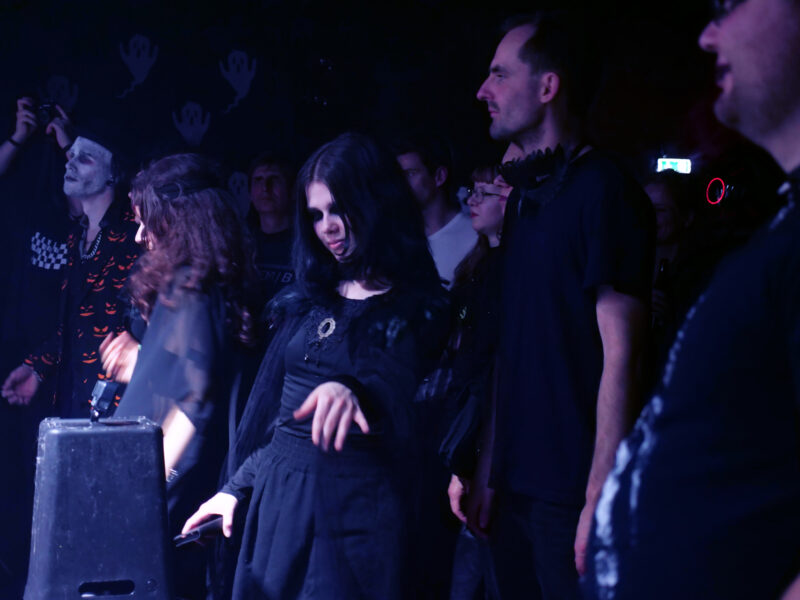
In the Danish city of Odense, where Hans Christian Andersen once populated the imagination with witches, strange creatures, and unfortunate souls who made terrible bargains, a rather different collection of eccentrics has been gathering after dark for the past twenty years. Since 2006, Klub Golem has provided a home for goths, punks, industrial enthusiasts, synth devotees, and assorted cultural misfits whose tastes tend toward the peculiar and whose wardrobes frequently suggest a preference for eternal night. Along the way, the club has become an institution in Denmark’s alternative music community, proving that good company, strange music, and a healthy disregard for convention can sustain a cultural enterprise for two decades.
Founded by Danish musician Ras Bolding, Klub Golem takes its name from a particularly ghastly local cake invention, a confection whose continued appearance at the club’s annual midnight anniversary celebrations suggests that some traditions are simply too terrible to abandon. What began as a gathering devoted to goth, synth, post-punk, wave, and industrial music has developed into an unusually welcoming cultural crossroads, drawing everyone from metalheads and folk enthusiasts to steampunks, cyberpunks, and people who have yet to find a satisfactory name for whatever they happen to be.
Over the years, Klub Golem has hosted an extraordinary assortment of musicians, including Karl Bartos, Midge Ure, members of Einstürzende Neubauten, The Tiger Lillies, Covenant, The Frozen Autumn, Agent Side Grinder, Ash Code, Zanias, Martin Hall, and Leæther Strip. These performances have helped establish the club as a destination for adventurous audiences while allowing Odense to participate in an international underground that extends far beyond Denmark.
Beneath the theatrical appearances and fondness for electronic eccentricity lies a serious commitment to accessibility. From its earliest days, Klub Golem has operated according to a deliberately egalitarian philosophy, keeping admission at just 50 Danish kroner, approximately seven euros or US dollars. At a time when attending a concert can require the financial planning of a minor military campaign, Bolding and his fellow organisers have maintained the radical proposition that culture should remain affordable to the people who sustain it.
“We always wanted our club to be a cheap place, cheap entry, cheap bar, primarily out of ideological reasons – and also because we want to attract a crowd,” says Bolding. “However, we genuinely think alternative music and culture shouldn’t just be a rich kids privilege which basically is what has happened to so many dinosaur rock acts resulting, not surprisingly, in concerts that primarily attract those old enough to pay for expensive tickets. We want to also be able to attract young people and we do see ourselves as an alternative to a culture of greed that has most certainly infiltrated music, also alternative music.”
That philosophy extends to the people responsible for keeping Klub Golem alive. Organisers, DJs, photographers, bartenders, and wardrobe attendants all volunteer their time, maintaining an enterprise whose longevity owes considerably more to collective enthusiasm than commercial ambition. The club has also become an active participant in Odense’s wider cultural life, collaborating with local artists, writers, museums, the Odense International Film Festival, and the Hans Christian Andersen Festivals.
On October 31, 2026, Klub Golem will celebrate its twentieth anniversary with an elaborate Halloween gathering, appropriately scheduled for the one evening of the year when its regular clientele may find themselves suspiciously underdressed compared with the general population. Admission will be entirely free, extending the club’s founding principles to a celebration of twenty years spent keeping Odense wonderfully peculiar.
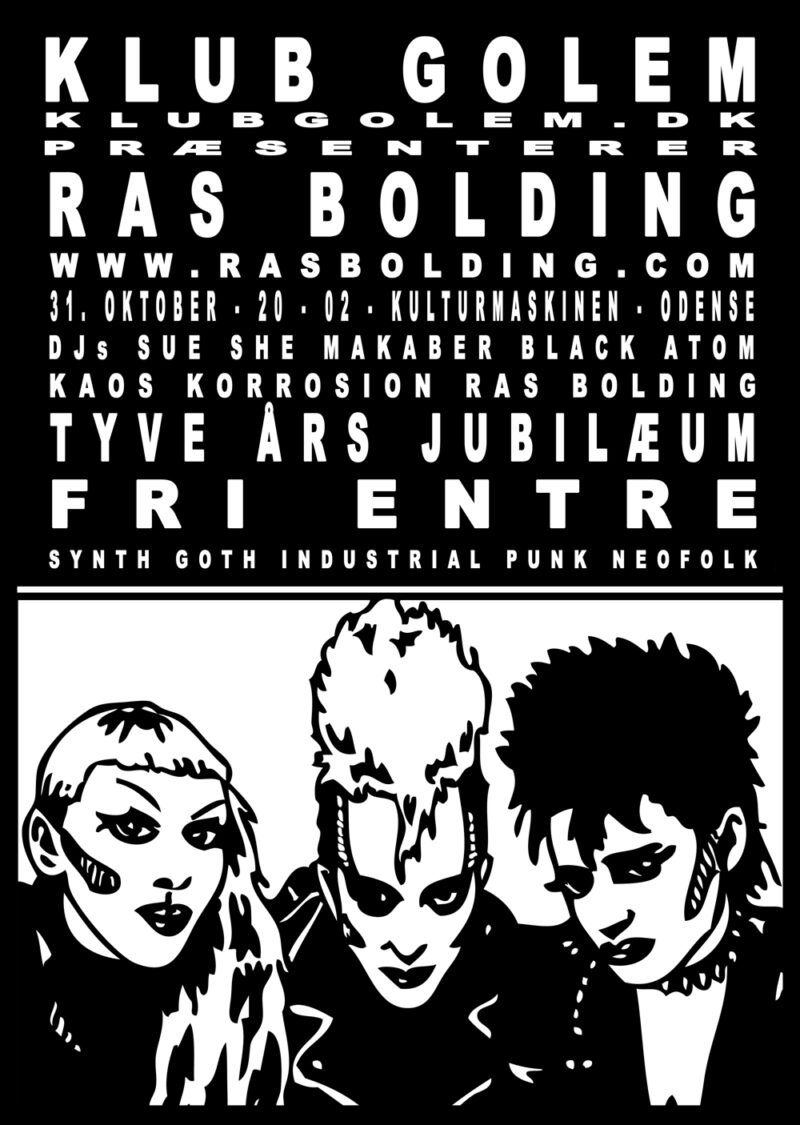
Returning to the stage where he performed on Klub Golem’s inaugural evening, Ras Bolding will headline the festivities alongside a live band featuring fellow organisers Alex Anarki and Kaos Korrosion. A multicoloured laser show will accompany the performance, promising an evening of electronic extravagance worthy of the occasion.
The celebration also coincides with the vinyl release of Bolding’s Digital Deviant album, with every attendee set to receive a complimentary copy upon arrival, provided the records complete their journey from the pressing plant in Poland in time. Even the most meticulously organised underground enterprise remains at the mercy of international vinyl manufacturing, an industry whose relationship with punctuality can occasionally resemble experimental performance art.
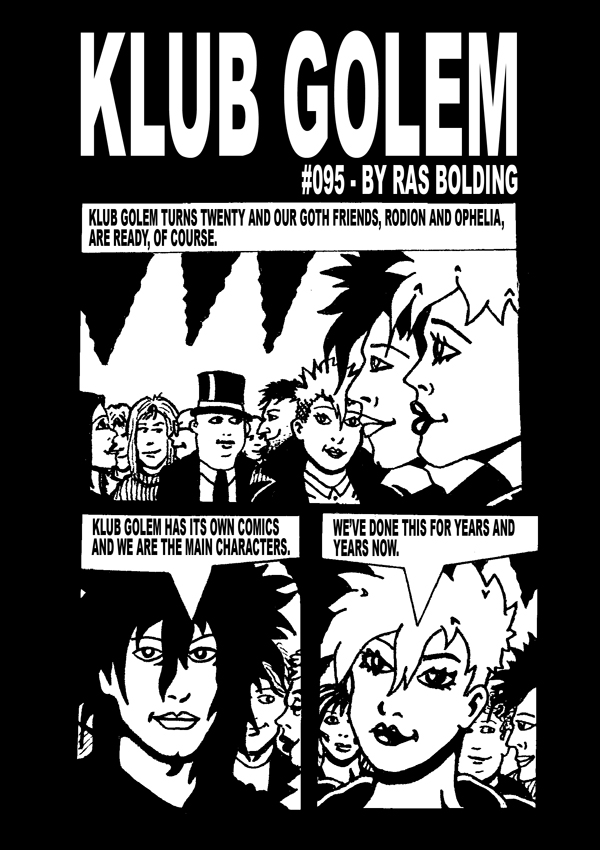
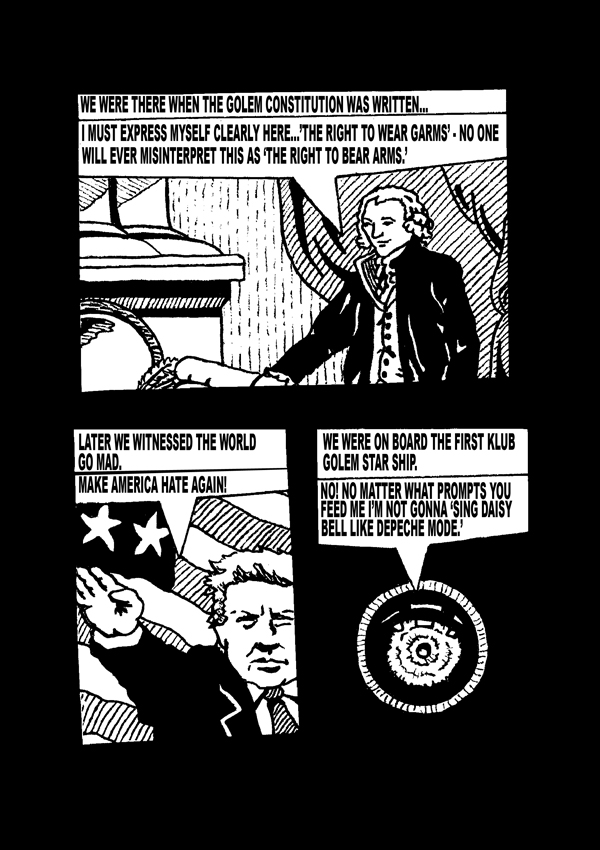
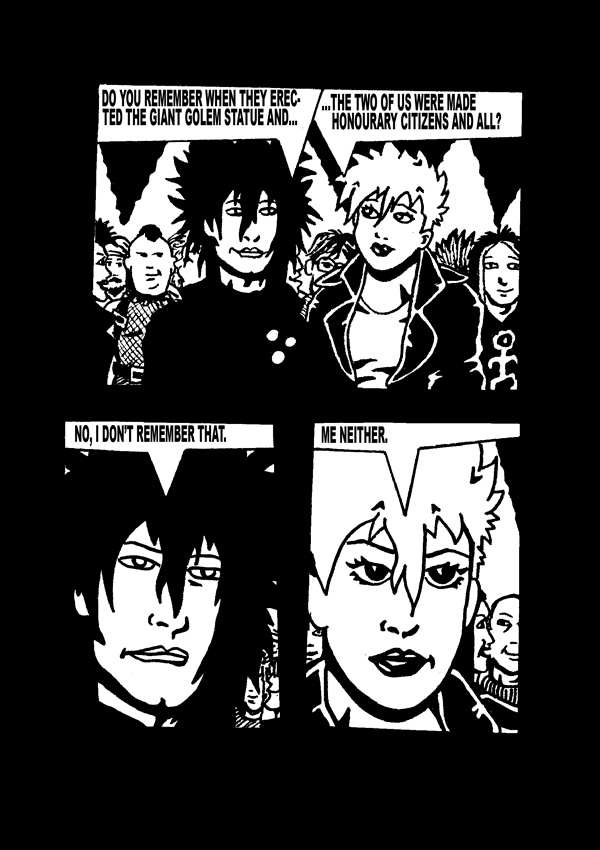
Elsewhere, the festivities will include a bargain-priced Sour Hour bar, a free makeup workshop, and an authentic Eighties Corner featuring a working Commodore 64 loaded with games. Traditional Klub Golem comics will also make an appearance, alongside enough Halloween decorations to satisfy an entire cemetery’s worth of restless spirits.
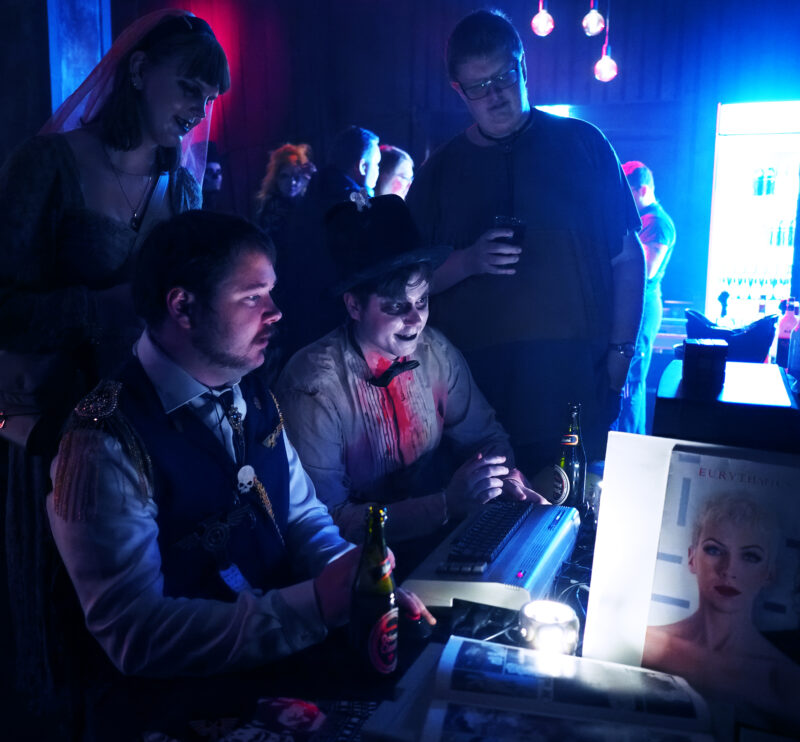
And, precisely at midnight, the notorious Klub Golem cake will return to claim another generation of unsuspecting celebrants.
Twenty years after its founding, Klub Golem continues to demonstrate what an independent cultural community can accomplish through generosity, imagination, and a shared affection for the wonderfully strange. In an era when so much of the music industry appears determined to place a premium price on participation, an underground club offering free admission, affordable drinks, live music, and a complimentary record seems almost suspiciously generous. Naturally, there must be a catch. Perhaps it’s the cake!
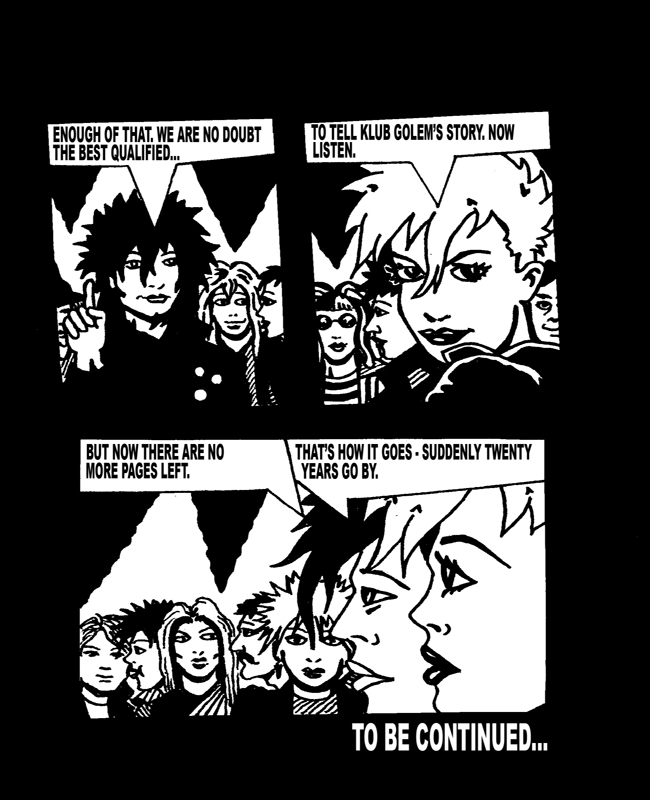
Klub Golem’s twentieth-anniversary comic, by Ras Bolding:
Ras Bolding’s Digital Deviant is a concept album of sorts, dealing thematically with digital culture for better and worse, contemplating the future we were promised and the present we somehow ended up with instead. The ten songs making up the album – technically nine songs and one instrumental – deal with computer game euphoria and hacker culture, with cybersex and revenge porn, with internet communication and loneliness, life in the 21st century.
“I probably see the music on Digital Deviant as a kind of pop songs in that they mostly make use of various types of verse-chorus structures,” says Bolding. “And then most of them are rather upbeat and with a strong emphasis on melodies and themes. To me pop music seemed the right language for addressing and commenting on digital culture since pop music, in the broadest sense of that term, has been the most prevalent musical language the last hundred years or so.
Very much a solo effort Ras Bolding not only composed the album’s music and wrote the lyrics himself, he also provided lead vocals, played and recorded all the analogue and digital synthesizers, handled mix, production and mastering but left room for a few extra vocals and vocoder parts provided by Marie Makaber, Olivia Obskur, Kaos Korrosion and Alex Anarki.
“I wanted to make an album with a theme, I wanted to talk about digital culture,” Bolding continues. “In doing so it was important for me to look at both negative and positive aspects of the digital world. I don’t believe technology is bad or good and while, despite the many synthesizers employed in making this music, I don’t really consider myself that much of a tech-head, I’m interested in how technology affects and to some degree shapes our lives, habits and minds. I grew up on cyberpunk books by William Gibson, the iconic future noir movie Blade Runner and the techno-musings of Laurie Anderson, and I suppose Digital Deviant is somehow a product of all that. And a way for me to steer clear of writing love songs.”
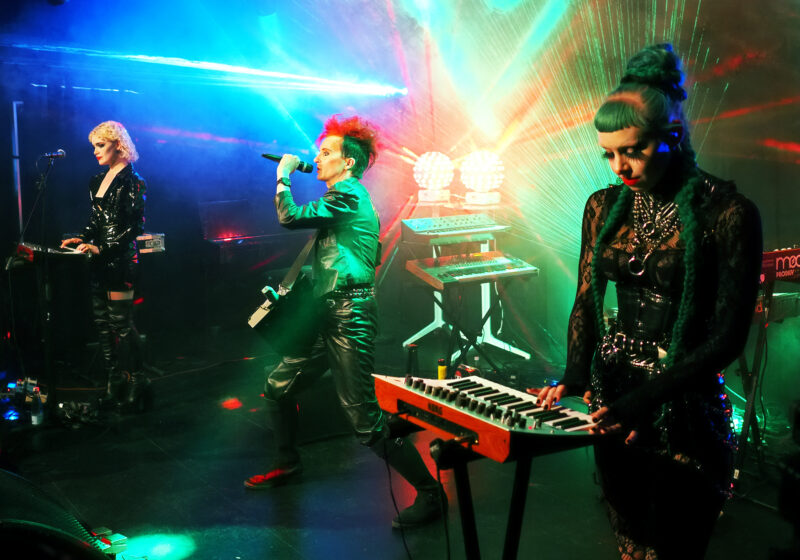
Ras Bolding is an artist from Odense, Denmark, whose music encompasses an eclectic range of stylistic expressions such as synth and wave, goth and postpunk but also occasionally incorporating elements of 8-bit computer game antics as well as hints of folk and classical composition. His songs often center around digital culture for better and worse, notably with the Digital Deviant album, but he has also put the darker fairy tales of Hans Christian Andersen to music, staging repeated performances of the suite in his hometown of Odense where the famous writer also grew up. His concerts are visual affairs featuring laser and light show and he is surrounded on stage by synthesizers both analogue and digital, even playing classic eighties home computer Commodore 64 as keytar, and he is flanked by young co-musicians Alex Anarki on synthesizer and Kaos Korrosion on synthesizer and extra vocals.
Listen to Digital Deviant below:
Follow Klub Golem:
Follow Ras Bolding:
The post Denmark’s Klub Golem Celebrates 20 Years of Goth, Synth, and Post-Punk with Free Halloween Party and Ras Bolding Live! appeared first on Post-Punk.com.