 |
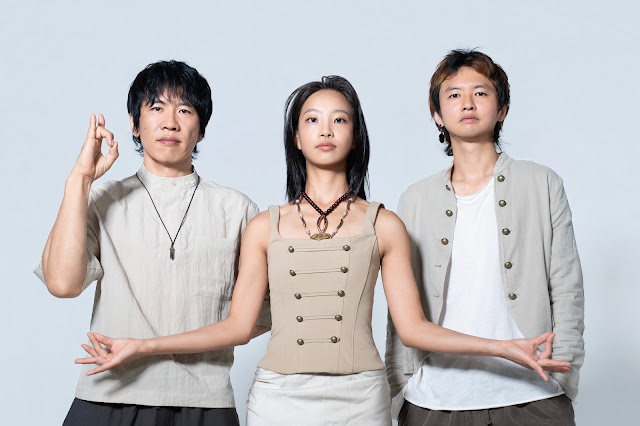
| Photo courtesy of 64ksana |
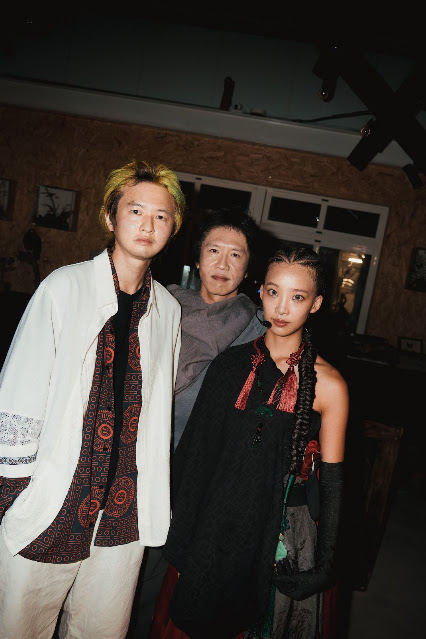
MU:CON 2026 brought industry professionals from around the world to connect both in Seoul and online across three days. Among many artists showcased, one group caught my eye: 64ksana.
Made up of members·JUNDO, RYO, and JAEYEON the trio create music that has a beautiful way of blending tradition with modernity. Yet as Jundo explains it wasn't something intentional: “I didn't set out thinking, "I'm going to mix tradition and modernity." At the time I was working more as a DJ than as a producer, and I think it started with questions like: how can I bring the many sides of dance music that I was feeling up to the surface? What would it take to make music that carries that kind of message?”
That very message has clearly resonated with listeners with their very first track “Subusa” reaching 1.25m views and being named Electronic track of the year by OnEum.
Since their debut in 2024, 64ksana have gone on to make quite the impact performing to international audiences including Ireland, Australia, and Italy. Sitting at the crossroads of rave culture, spirituality, and philosophy their music weaves Buddhist chants through electronic beats.
Childhood memories of watching their parents play traditional instruments led them towards their own musical path. Those backgrounds have led them to make stellar tracks like “Subusa” and “Chogamje” where main dance rhythms give way to haunting transfixing vocals.
I caught up with the trio about that very mix of influence that has caught the attention of audiences worldwide. We touch on the origins of the group along with childhood influences, traditions, and more!
Where did you all begin your musical journeys? Had you always wanted to be musicians, and what brought you together to start 64ksana?
JUNDO (준도): I slowly started wanting to become a musician while experiencing clubs, parties and raves at university. In high school, I thought that once I got into university, I'd stop studying and just have fun. But when I actually got there, I had to study even more. My only goal had been getting into a highly ranked university, so it felt like getting punched out of nowhere. I'd thought everything would be fun once I got to university, and it wasn't. So then, would I be happy all the time once I got a job? Once I got married? Thinking it through like that, I came to the conclusion that I should do what makes me happy now. So I took a year off school and spent it doing all sorts of things I wanted to do — I learned paragliding, studied philosophy, and meditated. Out of all of them, music is the one I kept doing.
저는 대학교때 클럽, 파티, 레이브를 경험하면서 서서히 음악가가 되고 싶어졌어요. 고등학교 때는 대학만가면 공부안하고 노는줄 알았어요. 근데 막상 대학을 가보니 공부는 더욱 많이 했어야했고. 그냥 랭킹이 높은 대학교에 가는게 목표였던 제게는 뭔가 한방 얻어 맞은듯한 경험이였죠. 아 대학가면 다 즐거울줄 알았는데 아니구나. 그러면 취업하고 직장이 생기면 항상 즐겁게 살수 있을까? 결혼을 하면 즐겁게 살수 있을까? 이렇게 생각하다보니 지금 즐거운걸 해야겠구나 라는 결론에 이르렀어요. 당시에는 페러글라이딩도 배우고, 철학, 명상 등 잠시 학교를 휴학하고 여러가지 하고싶은것들을 하면서 1 년정도를 보냈어요. 그중에 계속 하게 된것이 음악이에요.
RYO (료): My aunt is a visual artist. When I visited her as a child, the smell of paint in her atelier, its mysterious atmosphere, and the kind of freedom she had, unlike a typical grown-up, seemed so cool to me that I felt drawn to the idea of being an artist. Then in middle school, when I was thinking about my future, I decided I would become an artist.
I went to an arts high school and was exposed to many different fields of art, and among them I fell for Japanese traditional performing arts. That's where I started learning dance and music. I was very interested in things expressed through the body. At the same time, I was very drawn to avant-garde, experimental expression, and contemporary creation rooted in tradition, which is still one of my biggest interests today. I was also interested in folk music from around the world, and I felt something special in Korean traditional music, so I started learning it and moved to Korea. While I was working here, JUNDO asked me to do 64ksana together, and that's how we got here :)
저희 이모는 시각 예술가입니다. 어렸을 때 집에 놀러가면 아뜰리에의 물감 냄새와 신기한 분위기, 그리고 이모가 가진 어른답지 않는 자유로움이 멋이 있어서 예술가라는 것에 어떤 끌림이 있었던 것 같아요. 그러면서 중학교 때 진로를 생각하면서 예술가가 되어야겠다고 생각했어요.
예술 고등학교에 진학해서 다양한 분야의 에술을 접했는데 그 중에 일본 전통 예능에 빠지게 되었어요. 거기서 춤과 음악을 배우기 시작했어요. 신체를 통해서 이루어지는 것에 관심이 많았어요. 동시에 아방가르드하고 실험적인 표현에 관심이많았는데, 지금도 전통의 컨템포러리적인 표현의 창작은 저의 큰 관심사에요. 세계의 민속음악에도 관심이 많았는데 한국의 전통음악에 특별한 느낌을 받아서 배우기 시작했고 한국에 건너 왔어요. 그렇게 활동하다 JUNDO 가 64ksana 를 같이 하자 해서 지금이 되었지요.ㅎ
JAEYEON (재연): Ever since I was little, I followed my mother into a Korean folk tradition called geobuk-nori (the "turtle play"). Back then I didn't think of it as doing music.
Of course, in geobuk-nori a pungmul (percussion) band follows along and plays. But the main part is that you make a turtle figure out of sorghum leaves, and two grown men go inside it. The purpose is to go from house to house in the village, performing gut and offering blessings at each home's jowang (kitchen), teoju (the spot where the household jars are kept), front gate, and so on.
So I came to feel that music wasn't something separate, it was an element contained within the whole. After that I studied traditional music and yeonhui (traditional performing arts) through formal training, and now I'm drawn to many kinds of music, including world folk music and electronic music.
어렸을 적 부터 어머니를 따라서 거북놀이라는 한국 민속놀이를 시작했다. 그때는 내가 음악을 한다고 생각하지 못했다.
거북놀이에는 물론 풍물패가 따라다니며 풍악을 울린다. 하지만 주된 것은 거북이라는 수숫잎을 따서 모형을 만들고 그 안에 성인 남성 두명이 들어간다.
마을의 집집마다를 돌면서 그 집의 조왕(부엌)과 터주(항마리를 모아둔 곳), 대문 등 굿을 하면서 기원해주는 것이 목적이다.
그래서 음악이 따라 동떨어지있다기보다는 포함되어있는 요소라고 생각이 들었다. 이후에는 전문적인 교육을 통해 전통음악, 연희를 공부했고 지금은 세계 민속음악과 전자음악 등 다양한 음악에 관심이간다.
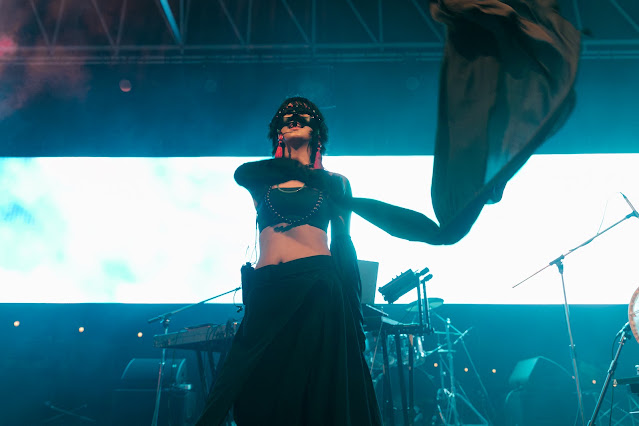
Your performances are known to be immersive and reinterpret elements of shamanic rituals. Have you been influenced by any artists or art growing up that made you want to blend tradition with modernity?
JUNDO (준도): I didn't set out thinking, "I'm going to mix tradition and modernity." At the time I was working more as a DJ than as a producer, and I think it started with questions like, 'How can I bring the many sides of dance music that I was feeling up to the surface?' What would it take to make music that carries that kind of message?
Back then, going to raves, I had a lot on my mind. I loved dance music, and dancing gave me an enormous sense of release and connection with people, but at the same time I was carrying a lot of real-life worries about school and finding a job. And as a DJ, the person playing the music people dance to, I kept wondering what the essence of all this was. At big festivals, tens or even hundreds of thousands of people gather in front of a massive stage and dance together, and there's something incredibly moving about that. But as someone worried about the future, I was curious: this has nothing to do with making money or the practical business of getting by, so why can so many people come together like this, and what role is it actually playing?
Questions like, 'Where does the release I feel on the dance floor come from, and how does it affect my life?' I think that's where it started. Some days I'd run off to the club as if escaping, leaving work and homework unfinished; other days I'd go out happy to celebrate after doing well on an exam.
Gradually I realised that the experience of the night changed depending on the state of mind I brought to the floor that something was at work in my mind that wasn't just about the music but connected to my life. On days full of worries, you forget them for a while and clear your head; on days when everything is perfect, it becomes a day to celebrate life itself. Then one day it hit me: this is no different from a primitive tribe dancing around a bonfire after a successful wild boar hunt. Maybe the DJ is like a navigator holding the helm so everyone can share that moment. Like a shaman channelling something invisible so people can feel and experience it together.
I think that was the beginning. I wanted to communicate this role of the DJ and this role of music more clearly to people. I wanted my dancefloor to be filled with those experiences.
Whether the music is traditional or modern doesn't matter. And going forward, 64ksana won't use traditional elements with some goal like "combining tradition and modernity" either. I just thought certain traditional elements were useful for delivering the message I have. And the music keeps taking whatever form can deliver that best.
처음부터 전통과 현대를 섞어야지 라고 생각한것은 아니였어요. 저는 당시에 프로듀서보다는 좀더 디제이로서 활동을 하고 있었는데, 어떻게 내가 느끼고 있는 댄스음악의 다양한 측면을 수면위로 끌어올릴수 있을까. 그런 메시지를 담은 음악을 만들려면 어떻게 해야할까 라는 질문으로 시작했던것 같아요.
저는 당시 레이브를 다니면서 다양한 고민이 많았어요. 댄스음악 너무 좋고 춤을 추면서 엄청난 해방감과 사람들과의 연결을 경험하면서도 동시에 학업과 취업 등 현실적인 고민을 많이 가지고 있었어요. 동시에 디제이로서 춤을 추는 음악을 트는 입장에서도 과연이 모든것의 본질이 무엇일까 라는 생각을 많이 했던것 같아요. 큰 페스티벌에 가면 수만명명에서 수십만명이 모여 엄청나게 커다란 스테이지를 앞에두고 함께 춤을 추는 모습에서 엄청난 감동이 존재하지만, 한편으로 앞으로의 미래를 걱정하는 입장에서 이모든게 돈을 벌고 먹고사는 실제적인 문제와 전혀 연관이 전혀 없는데도 불구하고 이렇게 많은 사람이 모일 수 있는 이유가 무엇일지 그리고 그것이 과연 어떤 역할을 하고 있는건지가 궁금했어요.
내가 댄스플로에서 느끼는 해방감의 근원은 무엇이고 이것이 나의 삶에 어떻게 영향을 주는것일까와 같은 질문인거죠. 거기서 부터 출발 했던것 같아요. 어떤날은 해야될 일들과 학교 숙제를 끝내지 못하고 도망치듯 클럽으로 향하기도 하고 어떤날은 시험을 잘 보고 기쁜마음으로 하루를 축하하러 놀러나가기도 했어요. 그러면서 서서히 알게 된것은 내가 어떤 마음으로 플로어에 왔는지에 따라 그날의 경험이 달라지고 이것은 단순히 음악만이 아닌 내 삶과 연결되는 무언가가 나의 마음에 작동하는 방식이 존재한다는걸 알게 되었어요. 걱정이 많은날은 그것을 잠시 잊고 환기를 시키고, 모든것이 완벽한 날은 그자체로 삶을 celebrate 하는 날이 되는거죠. 그러다가 어느날 드는 생각은 이거 마치 멧되지 사냥에 성공한 원시부족이 모닥불 피워놓고 춤추는것과 다르지 않네. 디제이는 그런 순간을 함께 경험할수 있게 키를 잡은 항해사 같은것이 아닐까. 눈에 보이지 않는 무언가를 함께 느끼고 경험할수 있도록 채널링을 하는 주술사 같은 거죠.
거기서 부터 시작이었던것 같아요. 이런 디제이의 역할, 음악의 역할을 사람들에게 더 명확히 전달하고 싶다. 나의 댄스플로어에는 그러한 경험들로 가득 채워야 겠다.
음악이 전통인지 현대인지 이런건 중요하지 않아요. 앞으로의 64 크사나의 음악에서도 전통적 요소를 전통과 현대의 결합이라는 목표따위를 가지고 사용하지도 않을거구요. 다만 어떤 전통의 요소가 제가 가진 메시지를 전달하는데 용이하다고 생각했을 뿐이에요. 그리고 그것을 가장 잘 전달할 수 있는 형태로 음악이 계속해서 만들어지고 있는것 같아요.
JAEYEON (재연): Watching teachers of traditional music gradually start collaborating with more contemporary music, I slowly grew the idea myself. No particular artist's name comes to mind, but seeing all kinds of work naturally grew my curiosity about other worlds.
전통음악을 하던 선생님들이 조금씩 현대적인 음악과 콜라보 하는 작업을 보며 나도 조금씩 생각을 키워왔다. 딱히 생각나는 아티스트의 이름은 생각나지 않지만 다양한 작업들을 보면서 자연스럽게 다른 세계에 대한 호기심을 키웠다.
How important was it to you to infuse the shamanic rituals with modern sounds like EDM? What was an important part of your band's identity when you began?
JUNDO (준도): For the same reason, bringing in modern sound was very important to me. Actually, it was less about putting modern sound on top of tradition and more about this question: how can I bring elements that carry a message from a traditional context into music with a modern sound, keeping that message alive while still preserving what people today feel in dance music? And I think that ended up being the identity we cared about most when we started the band. I wanted to show something that blends rave culture and Korean gut (shamanic ritual) under the name 64ksana.
같은 이유로 현대적인 사운드를 입히는 작업은 제게 매우 중요한 일이였어요. 사실 현대적 사운드를 입힌다기보다는 현대적 사운드의 음악에 어떻게 전통적 맥락의 메시지를 전달할수 있는 요소를 넣어서 메시지는 살리되 현대인이 댄스음악에서 느낄수 있는 감각은 여전히 유효하게 가져갈 수 있느냐 였던거 같아요. - 그리고 그것이 결국 밴드를 처음 시작하면서 가장 중요하게 생각했던 정체성인것 같아요. 레이브 문화, 그리고 한국의 굿 그것을 64ksana 라는 이름안에서 섞어내는 무언가를 잘 보여주고 싶었어요.
RYO (료): Gut has a form. And there are reasons why the gut has that form. But when I ask myself what the core of it is, I think it's the state of mind, the state of consciousness, the spirit, things like that. Something like a wish, a prayer. So although we borrowed the form from the gut, I feel we must never lose that core.
굿에는 형식이 있습니다. 그리고 굿에 그런 형식이 있는 이유도 있죠. 그런데 여기서, 그 알맹이는 무엇인가 생각 했을 때, 그것은 마음의 상태나 의식의 상태, 정신. 이런 것들이 핵심이라 생각해요. 바램 같은 것. 그래서 굿에서 형태를 빌려왔지만 이러한 핵심을 놓치지 않아야겠다 생각합니다.
JAEYEON (재연): If anything, I think electronic music holds more of the centre. And the fact that it's dance music I think that's deeply connected to shamanic ritual as well. The music makes the mudang (shaman) dance, and her dance carries everyone's hopes and prayers up to the heavens as an offering, and that in turn heals us. In that fundamental sense, that's what I wanted to capture.
오히례 전자음악이 좀 더 큰 중심성을 가지고 가는 것같다. 그리고 댄스 음악이라는 것, 그것이 무속의례에도 깊게 연관되어 있는 것 같다.
무녀를 춤 추게 만들고 무녀가 추는 춤이 모든 이들의 염원 기원등을 담아서 하늘에 올리고, 제를 드리고 그것이 다시 우리를 치유하게 만드는 근본적인 의미에서는 그런것들을 담고 싶었다.
Your band name comes from Sanskrit and refers to "instant" or "moment", the shortest possible span of time. Do you find that this allows you to just do what you want and live in the moment?
JUNDO (준도): I don't think doing what you want and living fully is something you achieve once, at a single moment. Like meditation, like enlightenment, it's about keeping a certain attitude toward life. As artists who draw inspiration from moments when we felt truly fulfilled and tell those stories, we try to hold on to that attitude every moment, and our name helps remind us of all of that.
하고 싶은걸 하고 충실하게 사는건 어느 한순간에 딱 성취 되는 것은 아닌것 같아요. 명상처럼, 깨달음 처럼 어떤 삶의 태도를 유지하는것 인것 같아요. 다만 충만한 순간들을 느꼈던 경험에서 영감을 받고 그런 이야기를 해나가는 아티스트로서 매순간 그런 태도를 유지하려고 노력하고 저희이 이름이 그 모든것을 상기 시키는데 도움을 주는것 같아요.
RYO (료): I think the idea of "ksana" does help. When you think about the essence of the world, there's no answer unless you start from "here and now".
I think the essence of the world lies somewhere hazy and cloud-like, a realm you can't put into words. What am I feeling right now? Billowing like clouds (laughs)
'찰나'라는 개념이 도움이 된다고 생각해요. 세상의 본질을 생각 했을 때 '지금 여기'서 출발하지 않는다면 답이 없으니까요. 세상의 본질은 뭉게뭉게 말로 못하는 영역에 있다고 생각해요. 지금 뭘 느끼고 있지?
뭉게 뭉게,,ㅎㅎ
JAEYEON (재연): When performing with Ksana, I always try to focus on the moment and be present in it. Of course a show is a big event and something special, but through the experience of that moment and the time we share, I hope we can all grow the senses that let us live in the moment in our everyday lives too.
크사나 공연을 하면서는 순간에 늘 집중하고 그 순간에 존재하려고자 한다. 물론 공연이라는 것이 큰 이벤트이고, 특별하지만, 그 순간의 경험과 함께 나누는 그 시간을 통해 우리의 삶속에서도 그 순간을 살게 하는 감각들을 키워나가면 좋겠다.
What advice would you give to those that want to adapt that kind of mantra? Has there been something you've learned through creating your own music that you would encourage to others?
JUNDO (준도): I think living each moment fully takes a holistic kind of intuition. Instead of being dragged around by whatever urge comes up in the moment, you have to be able to really feel what you truly want, and sometimes, or often, that might not be something that's simply fun right now. Accepting all of that as a whole and practising living those many moments as the present – that's what matters. I think what I've learned through music is to feel things through the senses, to act when courage is needed, and to act right away when I sense something intuitively. Those are things I learned on the dance floor.
매순간을 충실하게 사는것은 총체적인 직관이 필요한 일이라고 생각해요. 순간적으로 일어나는 어떤 욕구에 끌려다니는것이 아닌 내가 진짜로 원하는 무언가를 제대로 느낄줄 알아야하고 그건 때때로, 혹은 많은순간 지금 당장 즐겁기만한 일이 아닐수도 있다고 생각해요. 그 모든것은 총체적으로 받아들이는것 그리고 그 많은 순간을 현재로서 살아가는 연습이 중요하다고 생각해요. 음악을 통해 배운 것은 무언가를 감각적으로 느끼는것 그리고 용기가 필요할때 행동으로 옴기는것, 그것을 직관적으로 느꼈을때 바로 행동으로 옴기는것, 이것들은 제가 댄스플로워에서 제가 배운것 인거 같아요.
RYO (료): It's good to have time where you focus purely on the present. There are probably many ways to build a path toward that; for me, I practise it through using my body (exercise), practising my instrument, and meditating through those. Switching off logic and just being simple, like a child. I look at the sky often and try to feel things delicately. I listen closely to sounds, too. I discovered the beautiful things in the world.
현재에 순수하게 집중하는 시간을 가지면 좋을거에요. 거기까지 가는 길을 만들기 위해서 여러 접근들이 있을 것 같은데, 저는 몸 쓰는거(운동), 악기 연습하는거,그리고 그것들을 통해서 명상하는 것으로 실천 하고 있어요. 논리를 죽이고 아이처럼 단순하게 있는 것. 하늘을 자주 보고, 사물을 섬세하게 느끼려고 해요. 소리도 잘 듣고요. 세상의 아름다운 것들을 발견해요.
JAEYEON (재연): I don't think those things exist only in music. In our daily lives there are always things around us that let us live even closer to the present. Music is one of the things that helps with that. If you live in the present fully, you stop needing to want more or to find some bigger happiness. This moment, just as it is, is enough. I think everyone needs a life where we look at things as they are and express them as they are. Music is a frequency, a resonance. When you listen to how far that resonance reaches, where it's heading and how it's resonating, you can go a little deeper into what music really is.
오직 음악에만 그것들이 있다고 생각하지 않는다. 우리의 일상과 오히려 더 가까이 현재를 살 수 있게 만드는 것들이 주변에는 늘 존재한다. 음악도 그것에 도움을 주는 것 중 하나이다. 현재를 충만하게 산다면, 그 이상 바라고 더 큰 행복이 필요하지 않게된다. 오직 이 순간 그대로가 충분하다. 있는 그대로를 바라봐주고, 표현하는 삶이 모두에게 필요해보인다. 음악은 어떤 주파수, 울림이다. 그 울림이 어디까지 닿는지, 어디로 향하는지 어떻게 공명하고 있는지 듣다보면 좀 더 음악이라는 것에 대해 깊게 들어갈 수 있는 것 같다.
Your style of music blends a wide range of sounds and traditional elements in a way that makes you memorable. Do you find this approach has what has made 64ksana stand out?
JUNDO (준도): Of course. Just as I said that living each moment fully has to be holistic, living in the present has to embrace both the past and the future. I think that's where living in the present differs from being pushed around by momentary urges. The past me, the present me, and the present me will come together and make the future me. Sensing all of that as a whole and living as who I am now – that's what matters. I hope Ksana's music can be music of the now that runs through something of the past and something of the future. I think that way of thinking and working is what became 64ksana's colour.
그럼요. 매순간을 충실하게 사는것이 총체적이여야 한다고 말하는 것 처럼, 현재를 사는것은 과거와 미래를 총체적으로 포괄해야해요. 현재를 사는것이 순간의 욕구에 휘둘리는것과 다른 지점이 그런것 같아요. 과거의 나는 지금의 나를 만들고 지금에 나는 결국 미래의 나를 만들어요. 그것을 총체적으로 감각하고 지금의 나로 살아가는것이 중요한것 같아요. 크사나의 음악도 과거의 무언가 미래의 무언가를 관통하는 지금의 음악이 었으면 좋겠어요. 그런 생각과 작업들이 64ksana 의 색이 되지 않았을까 생각해요.
JAEYEON (재연): I think so. It's a really unusual band lineup where every one of us plays a percussive role. And Ryo's and Jaeyeon's instruments pull the music further toward folk. Techno as a genre can be rather rigid, but Ryo's and Jaeyeon's instruments help it feel more human. They also add folk and ritual gestures. Because of that, I think it carries the ritual meaning of actually performing a gut, rather than being just music.
그런 것 같다. 되게 흔치 않는 밴드 구성이다. 모두가 다 타악기 역할들을 하고 있다. 그리고 료와 재연의 악기가 좀 더 민속적으로 갈 수 있게 만든다. 테크노라는 장르는 오히려 좀 더 딱딱할 수 있지만 료와 재연의 악기가 좀 더 사람 냄새 나도록 도와주는 것 같다. 그리고 민속적이고 의식적인 행위들을 추가해준다. 이로써 단순히 음악이 아닌 어떠한 굿을 한다는 의례적인 의미를 담고 있는 것 같다.
"Subusa" highlights the above incredibly well and is almost hypnotising as a listener. What do you hope people take away from songs like that? Is it a form of emotional release or a sense of feeling lighter?
JUNDO (준도): I want listeners to lose themselves in the music. To disappear inside it, swept along like a single ripple in a wave called music. And then to notice that the people around them are riding the same wave and realise they're all feeling something huge together. That's the experience I want to give people at our shows. Emotional release, or feeling lighter, that's probably something you experience at some point along the way.
I want listeners to lose themselves in the music. 음악안에 스스로가 사라지고 음악이라는 파도 속에 하나의 물결처럼 막 휩쓸려 가는거죠. 그러다가 주변에 있는 사람들이 함께 같은 파도를 타고 있다는걸 느끼고 어떤 커다란 무언가를 같이 느끼고 있음을 알아채는. 그런 경험을 공연장에서 선사하고 싶어요. 감정의 해방도, feeling lighter 도 그 과정중에 어느순간 경험하는 무언가 일것 같아요.
RYO (료): Even when hard things happen, I hope people get through them well and find strength. I wish for all suffering in the world to disappear. I wish for the whole world to be filled with love and compassion.
힘든 일이 있어도 잘 넘겼으면 좋겠고, 힘내시길. 세상에 일체의 고통이 없어지길 바래요. 온 세상이 사랑과 자비로 가득 해지길 바래요.
JAEYEON (재연): Both. Through the moment of release, you feel lighter. It pours out, it gets passed on, and it bursts out from somewhere deep inside or from wherever. It frees me from what's been holding me down, and I feel like I return to a lighter, more instinctive version of myself.
둘 다 이다. 해방되는 순간을 통해서 좀 더 가벼워짐을 느낀다. 발산하고 그것이 전달되고, 터져나오고 깊은 곳에서든 어디서든 표출된다. 그리고 그것이 억압들로 부터 해방시키고 나는 좀 더 가벼워진 조금 더 본능적인 나로 돌아가는 것 같다.
Additionally, what do you get from the process of putting together these types of tracks? Do you get a sense of fulfilment when you see an audience connect to your music?
JUNDO (준도): It's similar when I'm making tracks. Can I get swept up in this wave? That's the feeling I make music with. At a show, I'm a kind of captain. We're all aboard a big ship together, sailing across a wave called music. The playing happens on stage, but the people on the dance dancefloor are rowing with us. Performers feel the audience's energy and respond to it. And when we give a cue in time with the audience's breathing, honestly, that's often harder than you'd think; I believe only trained artists can really do it, that's when we ride up onto the wave.
곡을 만들때도 비슷해요. 내가 이 파도에 휩슬릴수 있는가. 그런 감각으로 만들어요. 공연장에서 저는 일종의 선장같은거에요. 다같이 큰배를 타고 음악이라는 파도위를 항해하는 거에요. 연주를 하는건 무대위에서 이뤄지지만 댄스플로어의 사람들도 함께 노를 저어가는거에요. 공연자도 관객의 에너지를 느끼고 반응하죠. 그리고 관객의 호흡에 맞춰 신호를 줄때 -생각보다 이게 쉽지 않을때도 많아요. 훈련된 아티스트만이 이게 가능하다고 생각해요. - 우리는 파도위를 올라타게 되는거에요.
RYO (료): While we work, I learn so much from Jundo and Jaeyeon, sometimes without even realising it. I'm grateful for that, and through that process I gain a bond, a feeling that we've become one. When we're playing, there are moments when I feel the audience resonating with us, and I feel grateful, and it's deeply rewarding.
작업 하면서 우리 준도, 재연이에게 알게모르게 많이 배워요. 그래서 고맙고, 그런 과정에서 하나가 된 것 같은 유대감을 얻습니다. 연주할 때 관객들이 같이 공명 하고 있다고 느낄 때가 있는데, 고맙고 보람차요.
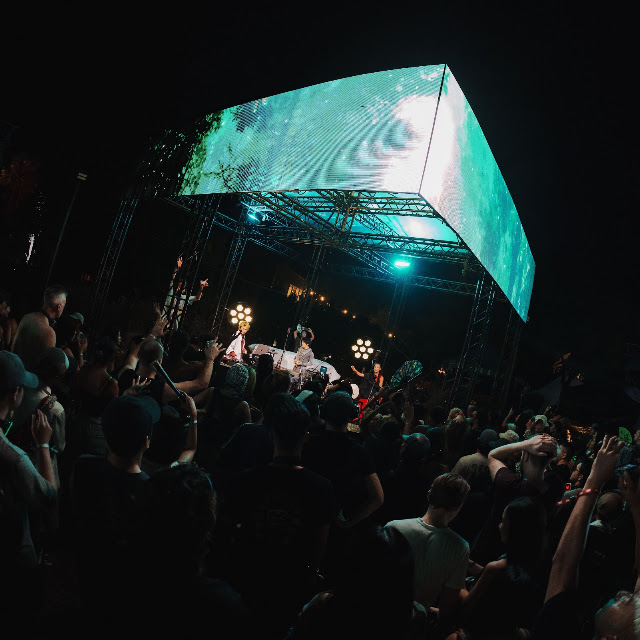
JAEYEON (재연): There are moments when I feel people are playing along with me and dancing with me, a sense that we're doing this together. At those times I feel connected, and it also feels like we're setting off on a journey together. It feels like we're travelling together into a moment, a world that the music creates.
함께 연주하고 나와 춤을 추고 있다고 느낄 때, 함께 하고 있다는 감각이 들때가 있다. 그럴때는 함께 연결되어지는 느낌 그리고 함께 여행을 떠나는 느낌이기도 하다. 음악적으로 만드는 어떠한 순간, 세계로 함께 가는 것 처럼 느껴진다.
In 2024, you made your international debut at CINARS in Montreal. What did that international response mean to you, and did you see the potential of what you can do as a band?
JUNDO (준도): It was my first time going abroad to perform, so I was really excited and had high hopes. But rather than CINARS being the moment I confirmed our potential as a band, I'd already developed my own sense of it through playing shows and preparing the music, a sense of the potential 64ksana has. And I feel like that's slowly starting to become visible now.
처음 공연으로 해외를 가는 경험이라 매우 설레고 기대가 많이 되었었어요. Cinars 를 통해서 밴드로서의 가능성을 딱 확인했다으 느낌보다는 오히려 여러 공연을 하면서 그리고 음악을 준비하면서 나름대로의 느낌이 있었어요. 64ksana 가 가지고 있는 가능성에 대한 느낌이요. 그리고 지금 그것들이 조금씩 눈에 보여지기 시작하고 있는것 같아요.
JAEYEON (재연): It was Ksana's first show abroad, and I remember lots of people telling us that audiences overseas would love us. I had expectations and excitement, and some worries too. The lyrics are muga (shamanic chants), so they're hard to understand anyway, but I worried whether people would connect with songs sung in an unfamiliar language. I had some regrets about that first show, but as we kept performing abroad, I worked harder to express that meaning together with the audience through energy and the body.
크사나 해외 공연은 처음이었는데 모두가 해외에서 다들 좋아해줄 것 같다라는 말을 많이 들었던 것 같다. 어떠한 기대감도 있었고 설렘, 걱정도 있었던 것 같다. 물론 가사가 무가라서 이해하는 것이 어렵지만 그럼에도 낯선 언어로 부르는 노래를 이해하지 못하진 않을까, 라는 걱정이 들었던 것 같다. 첫 공연은 아쉬움이 있었는데 점차 해외공연을 해나가면서 좀 더 에너지와 몸으로 그러한 의미를 함께 표현하려고 노력하게 되었다.
Having gained attention with your first single that later went on to reach over 1.25M views via LE MAG, it also was named "Electronic Track of the Year" by OnEum. Getting accolades like that – do you take it in your stride, or do you want to push higher?
JUNDO (준도): When the LE MAG reel first blew up, it felt surreal. I kept checking Instagram social media, which gives you a kind of dopamine hit, you know? And yes, I do make plans for what's next based on those numbers. But in the end, measuring and scoring musical achievement by metrics is only half the picture, so I work really hard not to get consumed by it. People say "music business", right? Music itself has none of that. Measuring things and planning what's next – that turned out to be the business part. And it turns out you have to do both, at the same time: plan the next step and measure results, while staying fully focused on telling your own story.
처음 LE MAG 릴스가 터졌을때는 신기했어요. 계속해서 인스타그램을 확인하게되고 SNS 가 주는 어떤 도파민? 그런게 있더리구요. 그리고 이런 지표를 기준으로 다음 성과를 생각하면서 계획을 하기는 해요. 그런데 결국에는 이런 음악적 성과를 지표로서 측정하고 채점하지만 그건 결국 반쪽짜리 그림이라서 그것에 매몰 되지 않으려고 또 엄청 나게 노력하는 편이에요. Music business 라고 하잖아요? music 에는 그런게 없어요. 지금 이야기하는 측정하고 그 다음을 계획하고 이건 business 더라구요. 그리고 결국 두개를 다해야 하는것 이더라구요. 그것도 동시에. 다음을 계획하고 성과를 측정하고. 하지만 온전한 나의 이야기에 집중한 채로 말이죠.
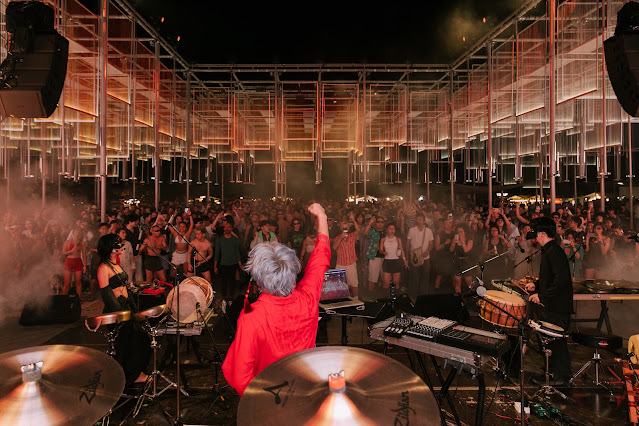
Since then, that international expansion has led you to Sunfest, Pique Festival, SXSW Sydney and Wonderfruit. With each international performance, do you take away new lessons on what works onstage? Do you find it translates easily on stages globally?
JUNDO (준도): I don't really think I learn something new just because it's an international stage. Every show is full of new lessons. That said, when we perform abroad, I build up experience by encountering more diverse programming, artists and audiences. Rather than "what works on stage", I think more about how I sense the stage "oh, this is how I react when I meet this kind of audience on this kind of stage" and about how I want to perform.
특별하게 해외 무대라서 뭔가를 새로 배운다고 생각하지만은 않아요. 매 무대가 새롭게 배우는 경험들로 채워 지는것 같아요. 다만, 해외로 공연을 가면 좀더 다양한 기획, 다양한 아티스트, 관객을 만나면서 경험을 채워 나가는것 같아요. 무대에서 무엇이 통한다 보다는 내가 무대를 어떻게 감각하고 어떤 관객과 무대를 만났을때 나는 이렇게 반응하는구나. 그리고 어떻게 공연을 하고 싶은지 그런걸 더 많이 생각하는것 같아요.
 |
| Photo credit: aalexx.193 |
JAEYEON (재연): Still, I feel people look at our music with open minds and welcome it. Everyone is open to the language of music, and they see the distinct character of Korean traditional music as all the more fascinating and special. Even when languages and ethnicities differ, I think the way people connect and communicate is the same everywhere.
그래도 사람들이 열린 마음으로 우리 음악을 바라봐주고 환영해주는 것 같다. 음악이라는 언어에 대해서는 모두가 열려있고, 우리의 한국 전통음악의 특색을 더 신기하고 특별하게 바라봐주는 것 같다. 언어와 인종이 다르더라도 사람이 연결되고 소통하는 방식은 모두 같은 것 같다.
Having recently performed in Ireland, France, and Italy, are there any particular differences in the way people in Europe have reacted to the traditional Korean elements? Does the audience differ compared to home crowds?
JUNDO (준도): The European audiences at our shows felt like they'd arrived ready to take something in. An attitude like, "Whatever you throw at us, we're going to have a good time." And then when they see traditional elements blending with the electronic sounds they're familiar with, you get this "Whoa, this exists?" reaction, which we're incredibly grateful for.
I also think the organisers who invite us play a huge role in us being able to do these shows in Europe. We're a new band that's only just started playing in Europe, right? The very fact that they knew about us and invited us to a festival dug that deep and thought, "We have to get these guys to our festival!" shows how the people behind that festival approach what they do. So every festival like that has gone beyond our expectations. Wherever we go, people recognise an event that's been carefully prepared. Everyone's full of anticipation and ready to take in whatever we show them.
저희 공연에서 느꼈던 유럽의 관객들은 일단 뭔가를 받아 들일 준비가 된 것 처럼 느껴졌어요. 무엇을 던지던 우리는 즐거운 시간을 보내겠다 라는 태도랄까. 그리고 거기서 전통적 요소와 그들이 익숙한 전자음악 사운드가 어우러 지는걸 보면서 우와 이런게 있었어? 라는 반응이 나오는거 같아요. - 엄청나게 감사한 반응이에요. 그리고 우리가 유럽에서 이런 공연을 할수 있는데는 저희를 불러주는 organiser 들이 엄청 나게 큰 역할을 하고 있다고 생각해요. 저희는 유럽에서 이제 공연을 시작한 신생 밴드잖아요? 우리를 알고 불러준다는것 부터가 그 페스티벌이 엄청나게 디깅을 하고 이녀석들 우리 페스티벌에 불러야겠다! 라고 생각한다는것 부터가 그 페스티벌을 만드는 사람들이 어떻게 페스티벌을 대하고 있는지를 보여준다고 생각해요. 그래서 그런 페스티벌을 가보면 모든 페스티벌들이 기대 이상이였어요. 어딜 가든 사람들은 열심히 준비한 이벤트를 알아봐요. 다들 기대감으로 차있고 우리가 무엇을 보여주던 받아들일 준비가 되어있죠.
JAEYEON (재연): They just know how to have fun. They seemed like people who'd shown up fully ready to party. Because they welcome us with open minds first, even when I have worries, it gives me the courage to give even more.
그냥 잘 논다. 놀 준비를 끝내고 온 사람들 같았다. 먼저 열린 마음으로 환영해주어서 걱정이 있더라도 더 크게 힘을 낼 수 있는, 용기를 가질 수 있는 것 같다.
Since you began performing, what has surprised you the most and become a memorable moment?
JUNDO (준도): Personally, the most memorable moment was our show at Wonderfruit, because old friends I've known for more than ten years came to see it. They were the friends who were right beside me when I first started DJing, when I first installed Ableton. They were there, too, when I first said, "I want to do shows like this, I want to be in a band." I was so happy to finally show the friends who'd always supported me and believed in me, right before their eyes, what I'd only ever explained in words.
I think making music creating anything, is the act of pulling something that exists only in your head and nowhere in the world into reality. I have this urge to make something, make it real, and hold it in my hands. And that was a moment of fully manifesting it. That's why it stays with me.
개인적으로 기억에 남는 경험은 원더푸르트의 공연이였어요. 저와 10 년도 넘게 친구였던 오랜 친구들이 공연을 보러 와줬거든요. 그 친구들은 제가 처음 디제잉을 시작했을때. 에이블톤을 깔았을때 옆에 있던 친구들이 였어요. 나는 이런 공연을 하고 밴드를 하고 싶어 라는 이야기를 처음 했을때도 옆에 있었구요. 항상 저를 응원하고 또 기대해줬던 친구들에게 말로 설명 했던것을 눈으로 만들어서 보여줄수 있게 되서 너무 기뻣어요.
음악을 만드는것, 어떤 창작을 한다는것 머리속에만 존재하는 세상에 없는 무언가를 현실로 끄집어 내는 행위 라고 생각해요. 내가 뭔가를 만들어고, 실재하게 만들어서 손에 쥐겠다. 그런 욕구가 있는것 같아요. 그리고 그것을 완전히 manifest 하는 순간이었달까. 그래서 기억에 많이 남아요.
RYO (료): There are times when I feel like I'm sensing everything around me as vibration. I think it happens when I go into a state of really deep focus. As if I've become the billowing clouds themselves...
현장의 모든 것들을 진동으로 느끼고 있다고 느낄 때가 있는데, 정말 깊이 집중하는 상태에 들어갔을 때 일어나는것 같아요. 뭉게뭉게 자체가 된거 같은,,
Finally, as you continue to grow internationally and domestically, what goals would you love to achieve, be it performing or collaborating with any artists?
JUNDO (준도): First of all, Ksana doesn't have a full-length album yet. So, release a great full-length album, and then next year, do a longer, fuller European tour. That's what comes to mind.
일단은 크사나가 아직 정규앨범이 없어요. 정규를 멋지게 내기, 그리고 내년에는 유럽투어를 더 길고 꽉채워서 다녀와보기. 그 정도가 생각이 나요