
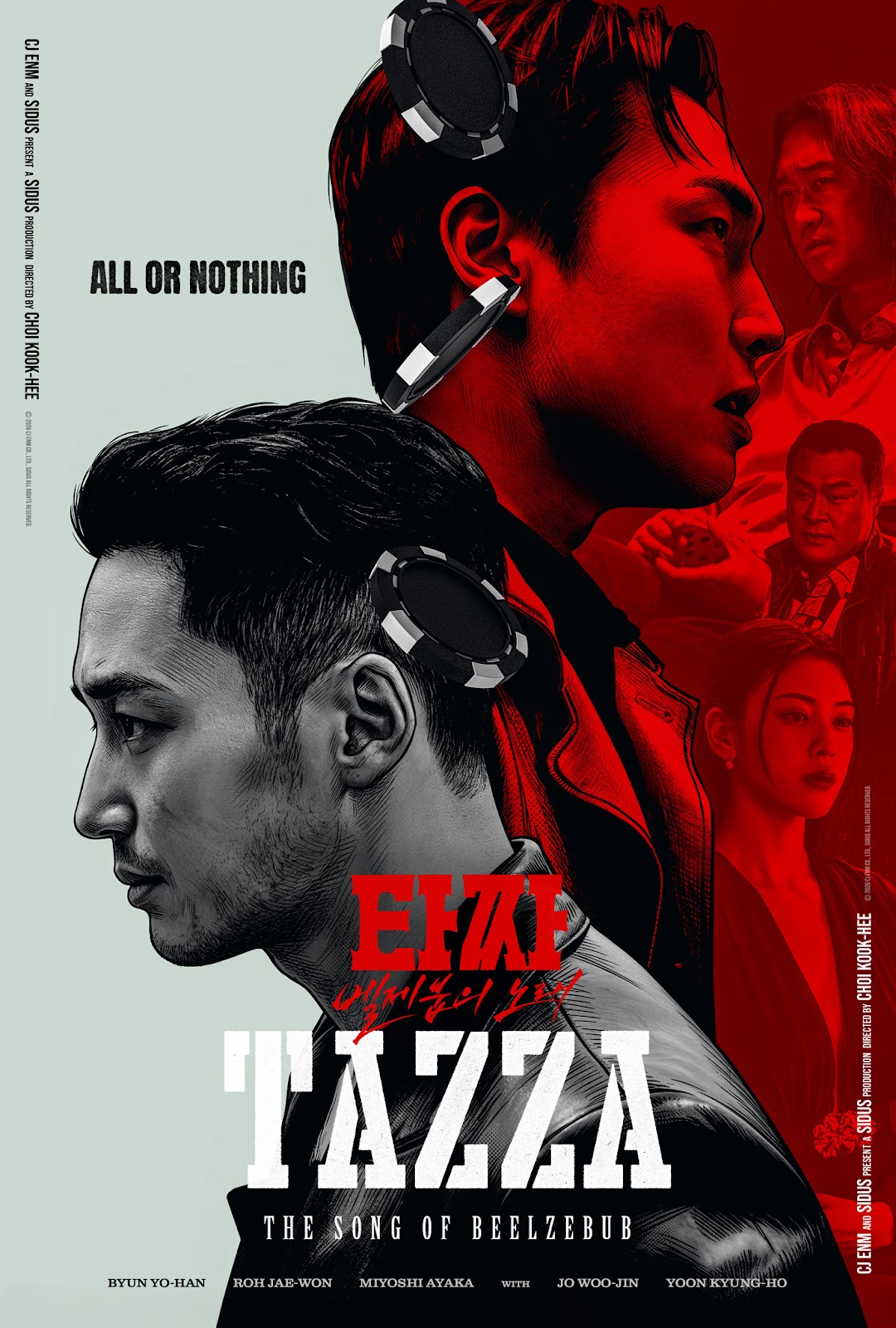
All images Courtesy of Well Go USA Entertainment
If you were to tell someone in 2006 that there would be a 2026 installment in the Tazza film series, chances are they wouldn't have believed you. Sure enough, the great success of the first adaptation of the manhwa could easily warrant several potential sequels, prequels, remakes, and whatnot, but the thought that a franchise could withstand the test of time 20 years later is, in itself, rather impressive. In a world where fatigue from overexposure to films based on pre-existing IP is very much real and tangible, TAZZA: The Song of Beelzebub successfully manages to break away from the conventions of average adaptations that do nothing but add to the long list of open-ended films that leave the door open for cash grabs, bringing back what can only be described as a delicious, action-packed thriller.
Jang Tae-young (Byun Yo-han), a successful online casino owner, finds himself stranded in Vietnam following the betrayal of his former business partner and close friend, Park Tae-young (Roh Jae-won). There, Jang Tae-young seeks shelter and mentorship from former poker champion Kwak Dong-woo (Jo Woo-jin) in the hope of returning to South Korea and seeking revenge for his suffering and humiliation. As he becomes increasingly involved in the intricate and dark world of gambling, he crosses paths with Kaneko (Miyoshi Ayaka), a mysterious figure associated with the Sasaki Group, a Yakuza organization, closely tied to its leader, Sasaki (Ihara Tsuyoshi). As alliances are formed and schemes are set in motion, Jang Tae-young reunites with Park Tae-young in a final face-off involving a high-stakes poker circuit.
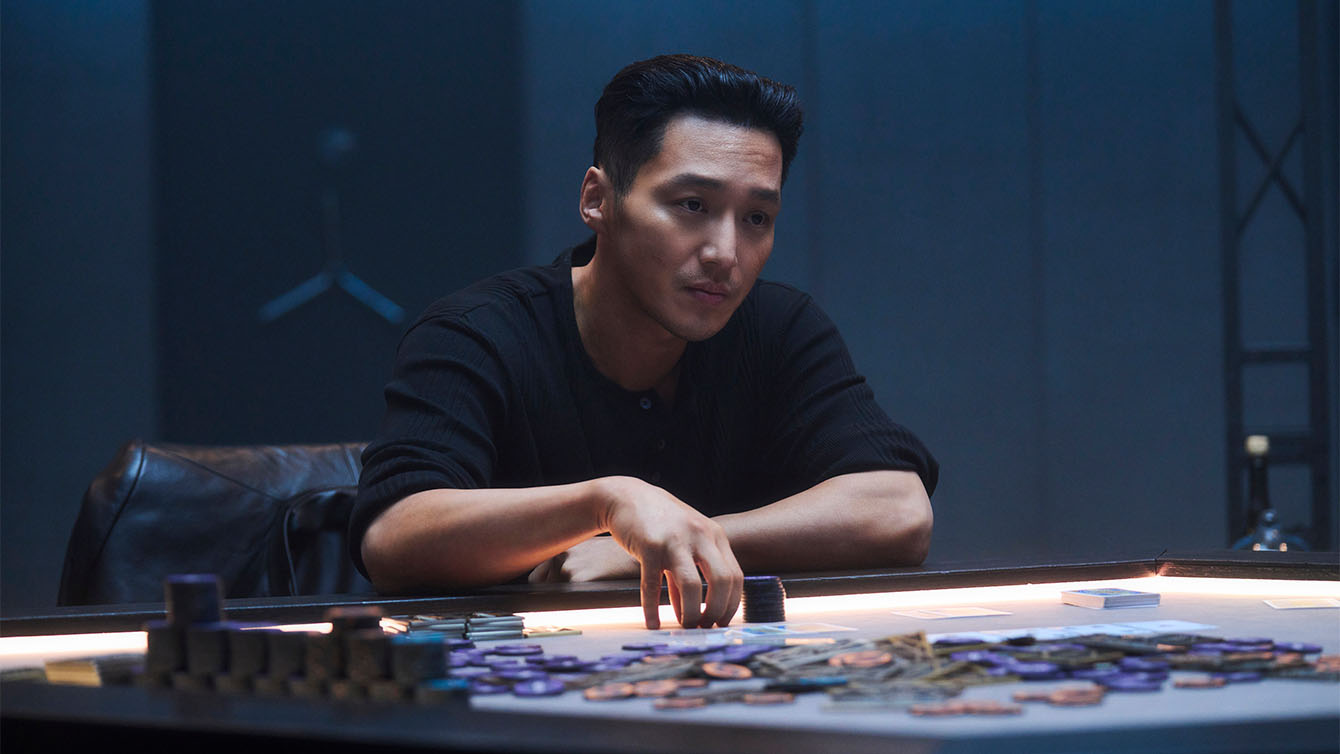
The film, with a cumulative audience of 2 million (despite its R rating, mind you) plays into the conventional elements of the revenge story structure as a modern retelling of The Count of Monte Cristo. In doing so, it manages to come across as extremely entertaining. It is one thing to rely solely on tropes as a safe choice, and another to take full advantage of the cinematic conventions of the genre. There's something delightfully satisfying about witnessing, in real time, your predictions about what is to come next actually unfold before your eyes. That, in fact, is part of the charm of all the Tazza films released so far: their ability to triumphantly deliver a story that is aware of itself and of the traditional elements that constitute an outstanding action crime movie without coming across as trite. The Song of Beelzebub is no exception. To be precise, it is further proof that tropes can be utilized to enhance the viewing experience and add a certain value to pieces of entertainment. In this respect, director Kook-Hee Choi (Split, Life Is Beautiful) continues the Tazza films' long tradition of popularity and impact with great ease and style.
Storywise, it's always admirable how the film pulls you in and keeps you invested, even if you are not particularly familiar with the rules of the games involved. While the previous films focused on the Korean card game hwatu, The Song of Beelzebub, granted a standalone, shifts its attention towards poker, throwing the additional element of online gambling into the mix, even if it remains in the background. It's no secret that some of the rules are presented in an expository manner, but, if anything, this approach introduces the game in comprehensible terms and establishes the stakes. This allows the audience to focus on the nitty-gritty aspects of the film rather than rack their brains trying to figure out the logic of it all. The fact that the climax of the movie takes place in such a sterile and controlled environment does feel a bit too clean, especially if you are familiar with the aesthetics and antics of the previous installments, but, to the film's credit, it also brings a certain opulence to its overall atmosphere.
The characters here don't deviate much from what one would expect from a revenge-driven plot. Byun Yo-han (Socialphobia, Six Flying Dragons, Will You Be There?) portrays your typical macho man, whose softer and more complex side only comes to the surface after he is framed and betrayed. And he does great justice to this character archetype. Similarly, Jo Woo-jin (Steel Rain, Kingmaker) and Ihara Tsuyoshi (The Midnight Party, Letters from Iwo Jima, 13 Assassins) fit the mold of stern, mature figures who play the game all too well, but not necessarily by the rules. The former adopts a more comedic approach to his portrayal of Dong-woo, which is supported by the need for a more personable figure in contrast to the ruthless Sasaki. Unfortunately, his storyline is abandoned somewhat abruptly in the film, but his contribution remains impactful.
It is Roh Jae-won's (Such a Close Traitor, Daily Dose of Sunshine, Squid Game) performance, however, that completely elevates the atmosphere of the film and instantly re-establishes it as a high-end production in the eyes of the beholder. There's something so immediate and detailed about his mannerisms and micro-reactions that makes for a compelling portrayal of a multilayered character. And it's his great attention to detail that makes for emotionally impactful scenes. His constantly on-edge performance highlights the contrasting approach of Byun Yo-han, whose character is, by nature, effortlessly composed and level-headed. On the other hand, Miyoshi Ayaka's (Confessions, Alice in Borderland) addition to the cast works wonders, as her naturally imposing presence is always a breath of fresh air. At the same time, Hong Dao, as the tycoon Tao, is a delight to witness in these stifling spaces, surrounded by all these heavy, self-important characters.

Sung-Jae Lee's (Rampant, Another Way) cinematography underlines the grittiness of this world and the wickedness of these characters while faithfully following the conventions of action blockbusters. The editing is tight, the script is as efficient as a fast-paced mainstream film script should be, and the visual effects, thankfully, only add to the illusion of this intricate underworld. As for the film's soundtrack, it definitely brings the story to life. In particular, the song “Loyalty”, a collaborative effort, takes the visual components to another level.
Tazza: The Song of Beelzebub is nothing more than what it claims to be. Stylized yet unpretentious, it delivers on all its promises. Refined entertainment meets layers of intricacy, proving that a movie can follow the path most traveled without getting swept up in the usual banalities that go along with it. It doesn't need to reinvent the wheel. All it needs to do is offer an unforgettable experience. And that it does to the fullest extent. And if you, too, are wondering what Beelzebub has to do with anything, well, that you'll have to see for yourself.
More details about the film & available screenings here.