 |
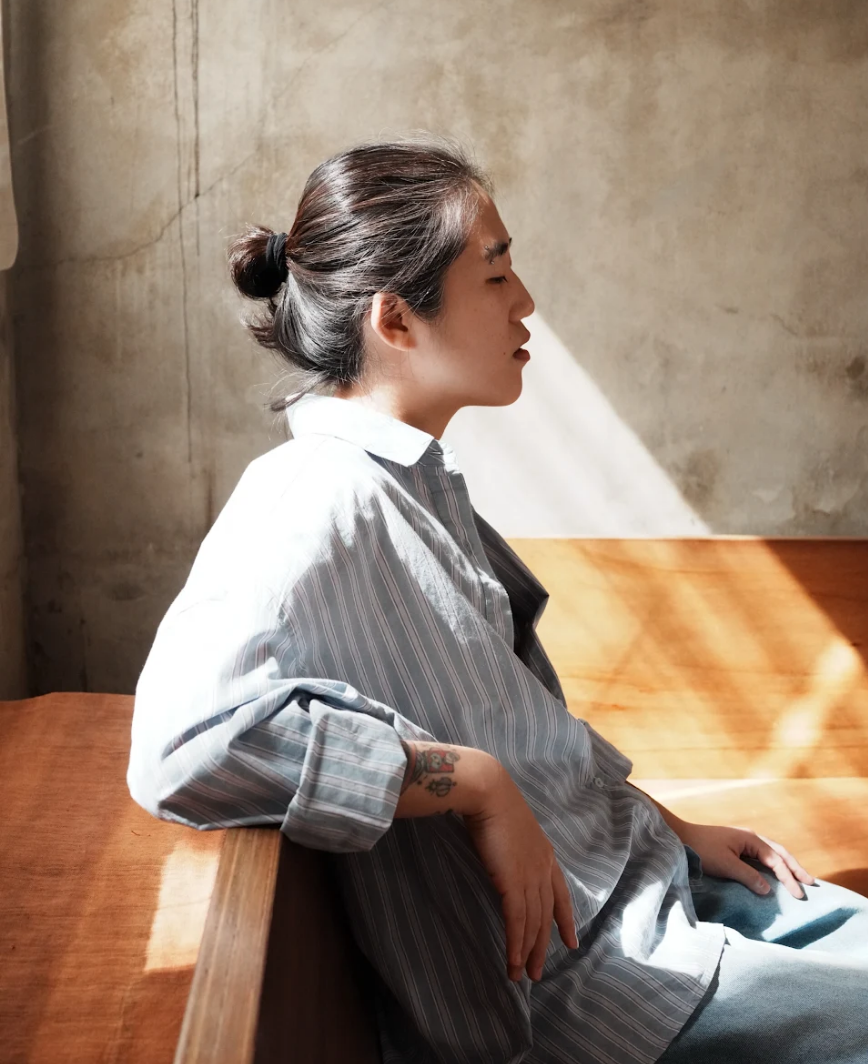
| Photo Cr. SLEEQ // By Son Seunghee |
Rapper and musician SLEEQ has built a body of work that pairs candid storytelling with an outspoken commitment to feminism, identity, and marginalized communities. Following her 2013 debut, releases including COLOSSUS (2016) and LMFIL (2018) established her voice within Korean hip-hop, while her appearance on Mnet’s GOOD GIRL in 2020 introduced her music to a wider audience. Her willingness to challenge social expectations has been central to that journey, alongside a musical approach that leaves room to move beyond the boundaries of rap.
With UNTETHERED, her third full-length album and first in eight years, SLEEQ brings that honesty inward. Released on November 22, the 13-track record explores loss, love, burnout, and the uncertain process of starting again, weaving together memories of unfamiliar places, new connections, and moments of joy.
Taking an active role in beat production and arrangement, she moves between rap and melody, allowing each story to shape its sound—from forceful, layered passages to quieter moments of reflection. In this interview, KpopWise speaks with SLEEQ about the experiences behind UNTETHERED, her evolving creative process, and what it means to find a way forward on her own terms.
"Untethered" Music Video
“UNTETHERED” suggests both freedom and the uncertainty of having nothing holding you in place. What made that word feel right for this album?
The album's original Korean title is 자유낙하, which is also the title of the opening track. I was trying to find an English word that could capture the particular feeling I associate with 자유낙하, and that's how I came across “UNTETHERED.”
“Free fall” is the more direct translation, but it didn't quite feel right to me. To my ears, it suggested a kind of movement toward freedom, whereas I was thinking more about falling away from things, being left behind, or drifting without being connected to anything.
This album begins with me falling away from things I had been holding onto, or things that had been holding onto me. It wasn't a fall I consciously chose. Only after losing some of those things did I realize that the ordinary parts of my life I had taken for granted were actually what had been holding me together. They weren't necessarily big or special things. They were just the simple feelings that come with being alive, the everyday things we don't usually think of as expressions of love.
That's why UNTETHERED felt right to me. It suggests a kind of freedom, but also the uncertainty of no longer being connected to anything.
Your earlier releases often looked outward at society, while this album turns toward your own life. Was there a particular song or moment when you realized you needed to change the direction of your writing?
After releasing my second album, I spent a lot of time making music about social issues and marginalized communities. Through that music, I formed deep emotional bonds with some of the people I met through that work. But while I was so focused on what was happening outside, I wasn't taking good care of my personal relationships, especially the people who loved and supported me as family, not because I was a musician.
Then COVID happened, and I became disconnected from the world for a while. When I returned, I found that the people who had cared for me, and the people I had cared for, no longer seemed to love me in the way they once had. I gradually became more isolated.
One of the things that troubled me most during that period was the thought that I had to make a certain kind of music. I believed people had expectations of me, and that I had to live up to those expectations to maintain my identity as an artist. But the more I thought that way, the harder it became to make music.
I Was In The was one of the songs I made during that time. I wasn't making it for anyone else to hear. I just needed to put into a song how much of a mess my life had become. At the time, I couldn't even imagine releasing something like that.
Later, I happened to travel to Da Nang with a friend. Nobody there knew me, so I didn't have to think about how people saw me or what they expected from me. I wasn't thinking about making an album, either. I just wanted to experiment and make whatever I felt like making. I started enjoying music again, and without really planning to, I found myself writing lyrics and rapping again.
The album follows a process of falling apart and finding a way to begin again. Did you understand that journey while writing, or did it become clear only after you brought the songs together?
I didn't plan the album's overall narrative from the beginning. Each song started with an experience or emotion from my own life.
I made around thirty or forty demos in Da Nang. When I returned to Korea, I went through them with Seunghee, who joined the project as creative director. We selected the songs that had potential to develop further and connected the ones that could form a larger narrative. Some songs were good on their own but didn't fit the story, so we left them out. We also made new songs when we felt something was missing.
As we started putting everything together, I felt that the ending wasn't quite complete. So, nine months after returning from Da Nang, I went back for another two weeks. I was actually planning to take a break because I had been working so hard during those nine months, but instead, I spent much of that time making Saudade.
I learned the word from my Brazilian friend Larissa. I met her through GOOD GIRL, an Mnet show that was broadcast internationally, and we've stayed close ever since. We used to share a lot of conversations, and one day she introduced me to the word “saudade.” She explained it as a feeling that can't be translated exactly into English. It doesn't have a perfect equivalent in Korean, either. I found that quality really beautiful.
I eventually realized that what I wanted to say through this album was that, if you want to move on from something painful, you shouldn't necessarily run away from the experience itself. You have to embrace it, allow yourself to grieve, and perhaps even reach a point where you miss those difficult times.
Only after bringing all the songs together did I begin to see the journey they were telling as a whole.
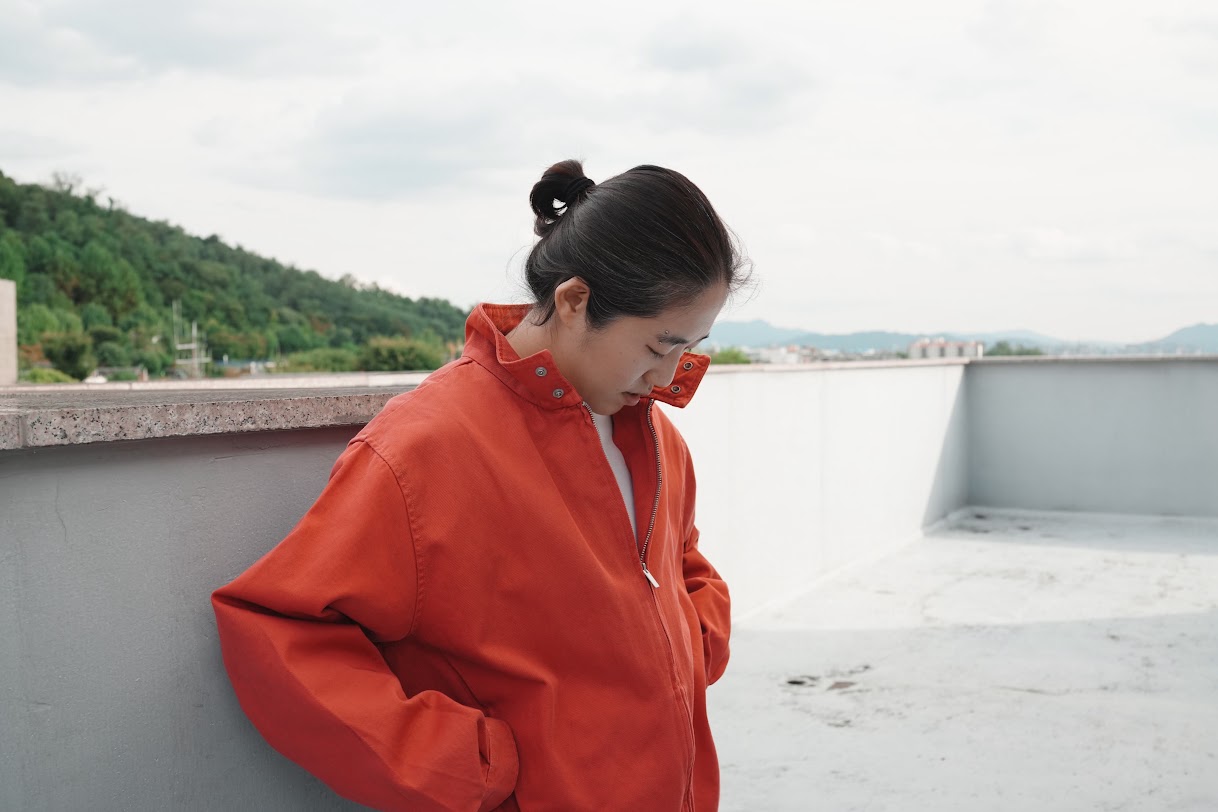 |
| Photo Cr. SLEEQ // By Son Seunghee |
Across these 13 tracks, loss, love, unfamiliar places, and new connections intersect. Can you share an ordinary moment that unexpectedly became important to the album?
Almost every song on this album comes from a specific moment I actually experienced.
There's a big difference between writing, “I came home exhausted after work,” and writing, “I burned my hand while making espresso and cried.” That kind of detail can only come from having actually lived through the moment.
I usually don't write things down immediately. Instead, I revisit those moments in my mind after some time has passed, trying to remember them in as much detail as possible. Then I pick out the images and feelings that have stayed with me.
For example, in "Untethered", there's a lyric about crouching in front of the refrigerator in an empty kitchen, covering my mouth as I try to hold back my tears. At the time, I was beginning to feel that a family member I lived with was avoiding me because my sadness had become difficult for them to deal with. I desperately wanted comfort, but I realized I couldn't get it from them. So I went to the kitchen and cried alone.
Another story involves my friend Jacob, whom I met in Da Nang. He was from Poland, and we became friends through conversations about music and exploring different parts of the city together. I gave him the rap name Mr. Washington because he was absolutely convinced he would become incredibly rich someday, even though he was living in a really rundown motel.
Once, I bought him some clothes, but one day he asked me to take them back because the label said “Made in China.” I thought that was ridiculous, so I wrote a lyric saying, “When we meet again, I'll bring you a suit made in Korea.”
I later learned that Jacob had passed away while I was briefly back in Korea. I made the song much later, after I'd had time to process everything. To me, Jacob was Da Nang itself. He's someone I probably would never have met if I hadn't gone there.
The song feels like a letter to him, but also like a gift he left me. Whenever I miss him, I listen to it and remember all those fun and unusual days we spent together. I don't want people to see him as someone to pity. I want them to remember him as this wonderfully strange person I happened to meet, and as one of those unexpected things that sometimes happen in life.
How do you distinguish your own artistic judgment from the voices you have absorbed from other people?
I used to be incredibly stubborn when making music. I would assume my own ideas were right and insist on doing things my way.
That changed quite a bit during this album. I spent a lot of time exchanging ideas with friends and collaborators, including Cokadood, Seunghee, THEORIA, and Pishu. Through those conversations, I gradually learned to be more open to other people's perspectives.
When I worked on the arrangement of I Was In The with Cokadood, what mattered most wasn't just solving technical problems. We kept looking into the emotional core of the song. I wanted to work with someone who had listened to my music for a long time and understood my musical world, rather than someone who would simply make the arrangement sound more polished.
Seunghee also helped me enormously as creative director. Sometimes I had listened to a lyric or recorded a flow so many times that I couldn't recognize its weaknesses anymore. She would notice things I had missed. At first, I sometimes became defensive when she disagreed with me, but after taking some time and listening again, I often realized how sharp her observations were. Sometimes she would also remind me that something was already good enough, or point out a subtle quality that only I could recognize.
Another important person in my musical life was Jerry.K. He was one of the reasons I fell in love with rap in the first place, and he was also the label head who guided me when I first started rapping and making music. He always respected my opinions, but he wasn't afraid to tell me when something wasn't right. He also shared his knowledge and experience very generously.
I'm incredibly sad that he's no longer with us. It feels like losing a steel shield that used to protect me. I miss him so much.
Through this album, I've learned that listening to other people doesn't mean giving up my own judgment. Sometimes, it helps me hear my own music more clearly.
Your work has spoken to listeners who rarely feel represented in Korean hip-hop. Has your sense of responsibility toward those listeners changed?
I like the idea that the most personal things are also political.
I think there's a difference between making a song that says, “Don't discriminate,” and writing about something that happened to me: walking into a women's restroom and having someone say, “Oh, this is the women's restroom.” One is a direct statement, while the other lets people experience a particular moment through someone else's eyes.
I'm a musician, not a speechmaker. I think one of the abilities, or perhaps privileges, of being a musician is that you can talk about your vulnerabilities and embarrassing experiences, and those stories can resonate with something deeply personal in someone else.
I used to feel that I had to speak on behalf of other people. Now I'm much more cautious about that idea. I sometimes wonder whether I can really represent someone else at all, or whether thinking that I could was a little presumptuous in the first place. I find even my own past self from ten years ago unfamiliar now. Life isn't a photograph; it's a moving image. We keep changing.
I don't think I need to keep telling someone, “I'm just like you.” I believe people can connect with each other even when they're in completely different situations or experiencing different emotions.
With this album, I wanted to be really honest and sincere about my own life. Saying “Let's stay strong” can be meaningful, but I also think there's tremendous power in saying, “I really struggled, and this is how I went through it.”
I hope that when people listen to these songs and read the lyrics, they don't think, “What's the point of this?” but instead, “Wow, this feels like my own story.”
Looking back at COLOSSUS and LMFIL, what would the artist who made those records find most surprising about UNTETHERED?
I think the first thing that would surprise the artist who made those records is that I produced most of the songs myself.
I've wanted to make beats and produce my own music for a long time, but I never really managed to do it the way I wanted. With this album, I finally got to explore that properly. In fact, my favorite song on the album is one that I produced myself.
If you listen carefully, you can also hear some of the sounds that the younger version of me had always wanted to create. Things like huge, layered choir arrangements or rapping over lyrical, melodic passages.
I think I've become much bolder about pursuing the sounds I personally like. I used to spend a lot of time imagining how other people would hear a song or what kind of judgment they would make. I'm much less preoccupied with that now, although I still have my own standards.
I don't think I've abandoned the musical identity I had back then. I've just become more capable of realizing things I've wanted to do for a long time.
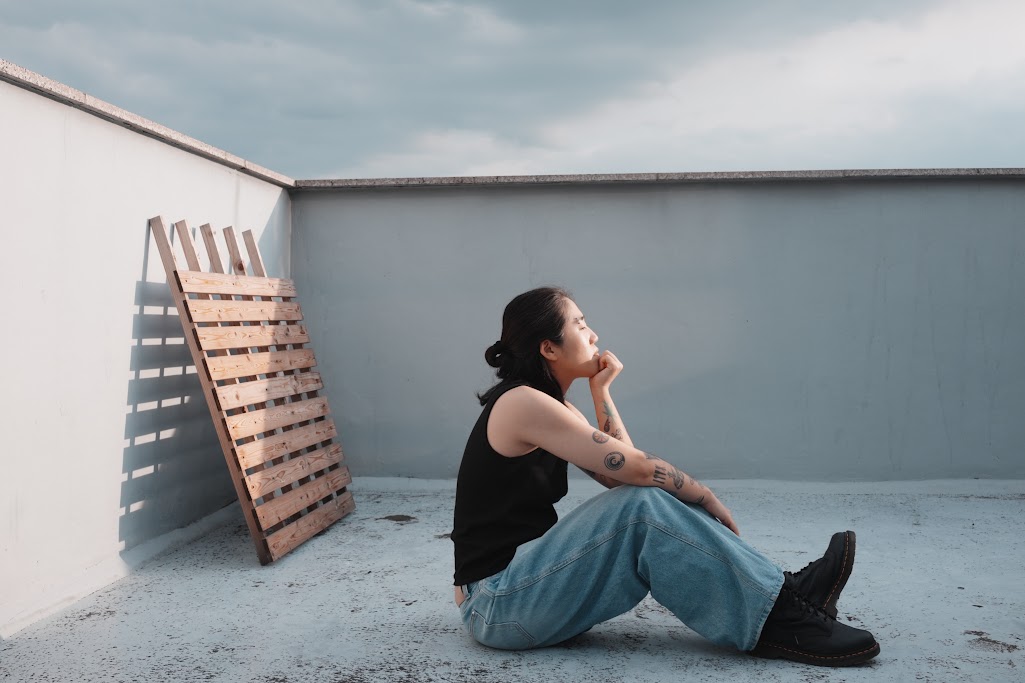 |
| Photo Cr. SLEEQ // By Son Seunghee |
For listeners discovering SLEEQ through this album, which earlier song would you pair with a new track to show how your music has changed?
I would pair AIQ with Saudade.
When I made AIQ, the feeling I wanted to express was “my small, precious, insignificant, and beautiful queer identity.” When I made Saudade, the thought I had in mind was something closer to “I've cried enough. It's time to get up.”
Although they come from different periods of my life, I think they share something fundamental about the kind of music I've always wanted to make. I've always been interested in combining intimate, inward, beautiful, expansive, and lyrical emotions with hip-hop rhythms and rap as a form of expression.
AIQ is about looking at a part of myself with affection. Saudade is about embracing a much larger part of my life, including the painful experiences, lost relationships, and time that I cannot get back.
I wouldn't necessarily say one is a more mature version of the other. They simply express different feelings from different moments in my life.
What brought you joy during the making of this record?
More than half of the songs on the album were made in Da Nang, and one of the most enjoyable parts was building a completely different working environment for myself.
In Korea, I would usually rent a studio with good speakers and equipment. I'd invite friends over to listen to music or visit other people's studios to work together. In Da Nang, I would take my laptop, audio interface, and headphones to a café with a beautiful view and work there. I had fewer resources than I did in a studio, but I felt much less confined. Sometimes I would work in places surrounded by greenery, which made the whole experience feel fresh and refreshing.
At first, I wasn't even thinking about making an album. I would wake up, go swimming, have something to eat, find a café, open my laptop, and experiment with whatever came to mind.
I started making music in genres I had never tried before. I made I Need That partly because I suddenly thought it might be fun to try something aggressive and approach the lyrics in a deliberately silly way. I even experimented with orchestral sounds.
The biggest joy was being able to make music without attaching a purpose or expectation to every song. It reminded me that I could simply enjoy creating things again.
For someone listening while their own life feels unsettled, what advice do you want to leave to them?
I'm a little cautious about giving advice to people in difficult situations. Everyone lives in different circumstances, has a different personality, and experiences a different world. I can't tell someone, “This is what happened to me, so you should do the same thing.”
I wasn't able to recover simply because I made a conscious decision to be strong. I was incredibly depressed and had even abandoned the music I loved. Then, by coincidence, I went to Da Nang with a friend. It wasn't a trip I planned as a way to change my life. But being somewhere nobody knew me, where nobody had any particular expectations of me, gave me a different perspective.
I realized that many of the expectations I thought were controlling me were also things I had created or held onto myself.
Even after returning to Korea, things were still difficult. I still have moments when I struggle. But I understand myself a little better now. I know more about what tends to hurt me and what sometimes helps me feel better.
One thing I've learned is not to ruin a good moment by worrying about when it will happen again. When something beautiful happens, I try to be grateful that I got to experience it at all.
I don't have a universal answer for anyone else. I can only share what happened to me and hope that, somewhere in these songs, someone might recognize a little of their own life.
Follow SLEEQ linktr.ee/squarksleeq