
Felt the coldest embrace
From life’s withering arms
Took a leap off the ledge
And I swallowed the stars
The mind is not a machine to be corrected in isolation, but a living relationship between self, body, community, and world. When suffering is met with care, patience, and companionship, the psyche is given room to breathe and reorganize itself. Alienation does the opposite: it turns pain inward, persuading us that our wounds are private failures rather than human experiences requiring witness and support. We become healthier not by sealing ourselves away, but by remembering our participation in one another. To nurture mental health, then, is to cultivate belonging, attention, and mercy, so no one must suffer alone in silence.
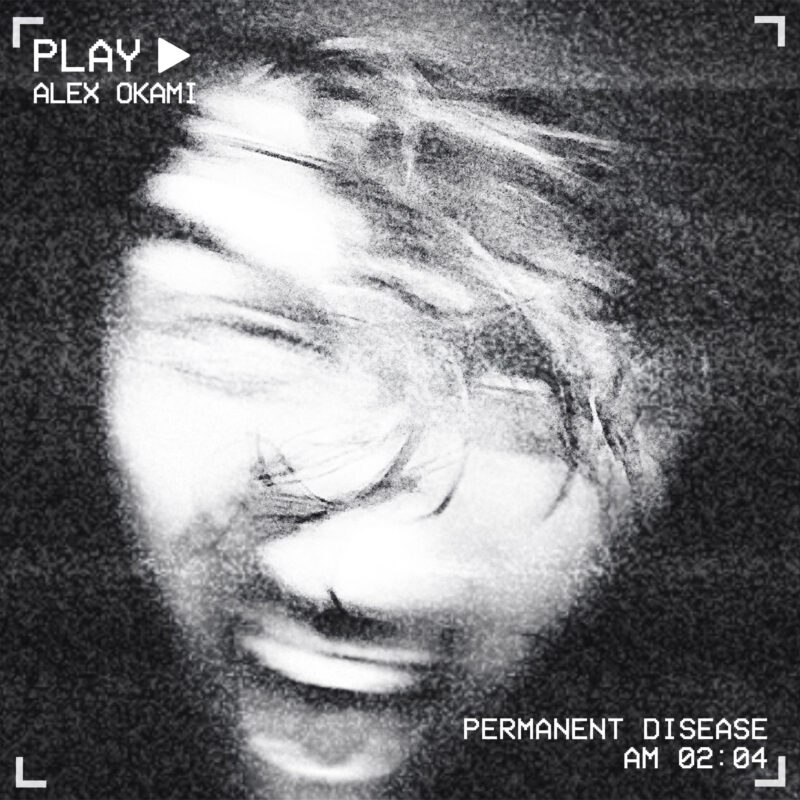
There is a sinister distinction between believing that something is wrong with you and believing that the wrongness is you. Alex Okami’s Permanent Disease lives inside the second proposition, where despair has passed beyond circumstance and settled into identity. Its title suggests permanence as a kind of sentence: an affliction for which the afflicted person has become both host and definition.
Musically, Okami resides in the darkwave realm, resembling acts like Twin Tribes, French Police, and She Past Away, where post-punk minimalism merges with darkwave’s colder structure. It also echoes Depeche Mode’s talent for embedding unsettling emotions within disciplined electronic sounds, and the existential intensity naturally draws in comparisons to Joy Division. These influences give the song a recognizable framework that supports its core psychological issue without overshadowing it.
The song starts with a quest for truth, which seems accessible only after confronting ugliness, chaos, and rooms that open into dreams. Reality seems untrustworthy. Okami gazes at the sky while bracing for a fall, wipes blood from his mouth, and concludes that the self that once inhabited this landscape has almost vanished. Persistence, usually linked to survival, here becomes intertwined with the cause of pain. The lyrics depict this breakdown of identity amidst illness as images of bodily harm, disorientation, and a world that feels already ended. For Okami, this intense language has a very personal root.
“It’s a song about life-long ailments taking hold of your mental and physical health to the point that it feels like your world is permanently over. As a sufferer of negative health conditions, I needed an outlet to express how I was feeling about my situation.”
His explanation grounds “disease” in lived experience, yet keeps its exact nature vague within the song. Depression, regret, dependency, destructive desires, or an undefinable burden can slowly merge into the person’s identity, making the idea of recovery seem eerily like self-erasure. Speech also begins to falter: the figure at the song’s heart calls himself someone who cannot speak but pleads for this unnamed force to carry on through him. Silence then symbolizes permanency.
Toward the end, the imagery broadens markedly: life presents a chilling embrace, a ledge emerges, and even the stars seem to be consumed. The perspective shifts from personal spaces to the universe, yet the ending remains deeply personal. Permanent Disease ultimately explores the fear of growing used to one’s own suffering, where endurance begins to feel like complicity. Okami’s most disturbing insight lies in that confusion: after enduring pain for so long, losing it can start to feel like losing a part of oneself.
Listen to Permanent Disease below and order the single here.
Tour Dates:
Follow Alex Okami:
The post “I Swallowed the Stars” — Phoenix Post-Punk Artist Alex Okami Stands at the Edge of Despair in “Permanent Disease” appeared first on Post-Punk.com.