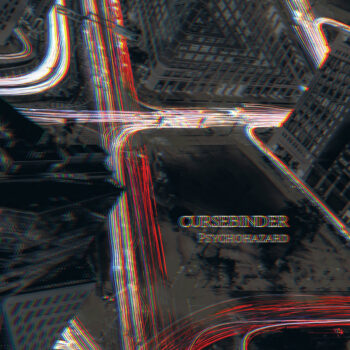
 In the Rush documentary Beyond the Lighted Stage,1 Jack Black describes musicians’ wells of creative juices as ‘rocket sauce.’ He notes that some musicians and bands only muster enough for one BIG album, while others seem to run on an endless supply.2 This description stuck with me through the years, and remains my go-to reference when someone gilds whatever they touch. Kraków vocalist Maciej Proficz is one such individual, and both his active projects Dormant Ordeal and Cursebinder run on vast reserves of rocket sauce while offering multifaceted interpretations of their respective genres. Dormant Ordeal’s Tooth and Nail landed at the #3 spot in last year’s Aggregated List; third album The Grand Scheme of Things received a glowing review from Dr. Wvrm and appeared on several 2021 end-of-year lists despite a late December release, and Cursebinder’s debut Drifting found itself atop Carcharodon’s Top Ten(ish) of 2023. Such accolades can’t guarantee future triumphs, but they can send expectations into the stratosphere—does Cursebinder’s sophomore album Psychohazard harness the rocket sauce to send us there?
Though Cursebinder operates under the black metal umbrella, no single genre encapsulates Psychohazard’s breadth. In his write-up of Drifting, Carcharodon cites doom, death, and post-metal as descriptors for Cursebinder’s chameleonic character. Instead of using camouflage in a way that makes Psychohazard difficult to absorb or engage with, though, this Polish quartet employs it to disguise barriers between genres and inculcate an atmosphere both familiar and unique. Compared to Drifting, Psychohazard submits more direct applications of riffs (“Saturnine Rage,” “Prayers for the Living, Flowers for the Dead”) and synths (“Limits”), and where Drifting’s genre-hopping evinced distinct moods with thoughtful transitions, Psychohazard blurs lines together with subtler craft.3 Psychohazard’s first four tracks flow together in a sublime strand that ricochets between textured aggression (“Death Season”) and gentler grooves (“The Astronaut”), culminating in a rabid fusion that seethes with angst and catharsis (“Saturnine Rage”). Honestly, this track would make a resounding closer, and to use it at Psychohazard’s midpoint illustrates the puissance of Cursebinder’s surrounding material.
Merging these sounds into a unified platter requires keen grace, and to then layer in the emotional depth that Cursebinder achieves is stunning. Cursebinder’s promo materials describe Psychohazard’s theme as a study in the collision of life’s ‘rat race’ and humanity’s inherent desire for love and acceptance. As the demands of my own life continue to creep,4 this idea strikes a chord that thrums with self-renewing relevance every day. “Death Season” bustles with vitriol and vigor as Proficz’s caustic vocals impel the track in a blinding tempest, while “The Astronaut” and “Under the Skin” float upon currents that relax and unwind one moment before boiling over into frenzied bursts the next. But even this is an oversimplification, as each track proves vibrant and diverse, refusing to condense into single emotions. Broadly, the back half of Psychohazard feels lighter than the front, putting more emphasis on dimensions that evoke post-metal’s vagrant dreaminess without losing the threads of riffs or motifs.

Considering Cursebinder’s sprawling ambitions, Psychohazard sounds focused and urgent throughout its runtime. The post-addled haze never drifts too far, the scorching fury never burns too hot, and the tender flashes never linger long enough to caramelize into mawkishness. I credit this purposefulness to the efficient instrumentation that Cursebinder unfurls with nary a wasted flourish. Guitarist Hubert Fudała and bassist Łukasz Sojka wend together in climactic swells and releases that expertly pace the album’s fifty-three minutes,5 and Marek Koszycki drums with nuanced timekeeping that flits between punk-powered d-beats (“Saturnine Rage”), insistent blast beats (“Made to Be Sold”), and delicate rhythms (“The Astronaut”). Proficz’s synth presence penetrates Psychohazard’s compositions, and in totality Cursebinder rewards repeat listens as each musician’s contributions impress individually while coalescing into an assembly greater than its sum.
Although post-related tags usually thwart my interest, something about Cursebinder’s spell called to me from beyond the ether. Psychohazard proves textures and layers can inculcate depth rather than acting as a standalone attraction, and going forward I hope to point to Cursebinder as my entry point into appreciating a wider expanse of metal. Cursebinder’s faults are few, and even if the record is slightly front-loaded or a few songs linger a tad overlong, these nitpicks pale in light of Psychohazard’s utter glory. If you seek an album that synthesizes the aura of post-metal with more conventional metal structures, I doubt you’ll find a better album this year. Barring that, you should listen to Cursebinder anyway, because missing it could be a Psychohazard to your health.
Rating: Great!
DR: 6 | Format Reviewed: 320 kbps mp3
Label: Avantgarde Music
Websites: Bandcamp6 | Facebook | Instagram
Releases Worldwide: October 23rd, 2026
The post Cursebinder – Psychohazard Review appeared first on Angry Metal Guy.