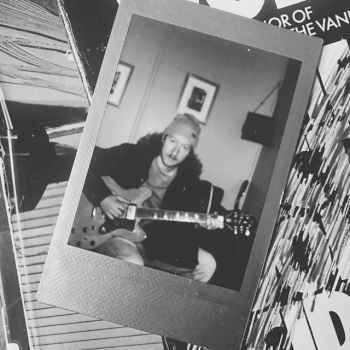
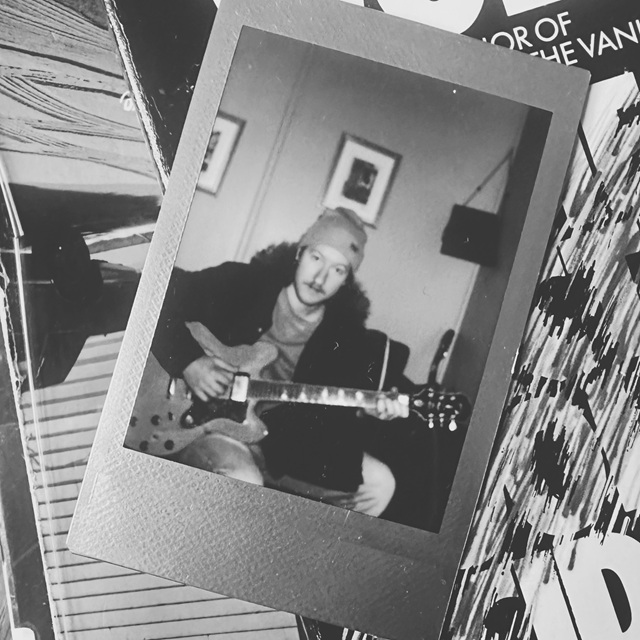
We chat with Brooklyn-based Company Town, the experimental project of sampledelic producer John Gallagher. Following the release of the Wrong Generation EP, the project continues to defy genre boundaries by blending psychedelic textures with hip-hop foundations. At its heart lies a sense of anemoia, where fragments of imagined memory and obscure archival samples are woven together to create a profound emotional resonance.
With your newly released Wrong Generation EP, what core ideas or emotions did you want it to establish about Company Town as a project?
I think the whole project is rooted in nostalgia in some sense, but I don’t think that really means it’s a throwback or a pastiche. The nostalgia comes from my obsession with the history of the music I’m sampling and being influenced by. I’ve always been a really obsessive student of the music I love. Even from a young age, whenever I heard something that I thought was interesting, I wanted to learn everything I could about it and who made it, and how, and why. And this project has given me an outlet for that curiosity to a much greater degree than anything else I’ve done musically, which is really exciting. So while nostalgia is definitely there, I also think of this music as a kind of historical reckoning with a lot of music and art I discovered at different points in my life. That’s something I think is really important, and something I hope people pick up on.
Nostalgia, and specifically anemoia (nostalgia for something never lived), is central to your sound. How do you personally experience that feeling, and how does it shape the way you choose and manipulate samples?
Yeah, it’s central to the sound, of course. I’ve long been fascinated by the distinct sonic characters of music from different places and times, even before I really understood any of the mechanics of that. I’ve never quite been satisfied with my attempts to channel the sounds I love – they kind of exist in my head but I could never fully get them onto a record the way I wanted to. With this project, I worked hard to choose sounds that are really interesting to me, then play with them and ultimately put them down in a way that maintains a lot of that original life and the character that I find most compelling. That’s why I’m drawn to sample-based music that does this. I’m less interested in music that uses samples but pushes them in a very modern or polished direction. If that polish is part of the original source, that’s one thing, but I’m more drawn to music that really respects the character of the initial sound. I think that’s something a lot of the hip-hop made in the ’90s did incredibly well.
The opening track, “In Your Imagination,” sets a striking tone with lush woodwinds and magnetic vocal fragments. The “until the wheels come off” moment feels stirringly perseverant. What story or mindset were you hoping to introduce listeners to right from the start?
Lyrically – if that’s the right word – it’s a really important song to me, which is why I chose it as the first track on the first release. All the different vocal bits in that song tell a lot of the story that I’d like to tell with this project. And in particular, that final monologue that closes the song is deeply meaningful to me. It’s a great expression of many of the feelings I’ve had as a musical artist who stubbornly refuses to compromise on any piece of what I do. To me, that monologue is about knowing I need to make my music in a certain way or else I’ll never be happy with the result, and I’d never see the point if I compromised what’s important to me musically and sonically. There are a lot of emotions that come with that – there’s self-doubt at times, and there’s a lot of rejection when you refuse to do things that might make your music more easily “marketable” or accessible. But at the same time, there’s an incredible feeling of joy and personal fulfillment when I make something that makes sense to me, even if it doesn’t make sense to most other people. That’s ultimately what that section means to me, and why it’s such a poignant song lyrically.
“Obscura Six” has a sweeping, cinematic quality that feels especially transportive, almost like a montage from a film that doesn’t exist. Were there specific cinematic or musical influences behind that track? It has a distinctly Avalanches-esque emotional pull.
That song does have a montage-like quality, and I think that comes from the way I put it together. It’s one of the ways I’ve been approaching these songs, which is basically to come up with a collection of different interesting samples that may share a drum beat—or sometimes don’t—and then piece different ideas together. It’s a little bit like the Beach Boys’ approach on Smile and some of the other stuff they did in the late ’60s and early ’70s. I think that method is what led to that feeling.
And the other important element of this song is that I’ve been interested in taking vocal samples far out of their original context. It takes a lot of work and patience, but I’ve found ways to grab vocal samples from these very disparate places, where they’re in a totally different tempo and maybe a different key, and place them into a new context that gives them a completely different existence from where they started. That’s what I did with most of the vocals on this song, and it’s something I’ve been doing a lot in my recent work. So I wanted to include that approach on the first EP and highlight that side of this project.
Sampling plays a huge role in how meaning emerges across the EP, especially with interview and archival-sounding vocal clips. How do you decide when a sample is functioning as texture versus when it becomes a narrative or emotional anchor?
Well, my process – even before this project – has always relied heavily on free association. I rarely, if ever, start a song knowing what I want it to say or mean, but I let that emerge as the pieces come together. With this project, I’ve had an incredible amount of freedom to work that way, to free-associate and interpret different clips, vocals, and interviews in a way that creates a cohesive meaning for me. Sometimes I just hear something or layer some pieces together in a way that I think is musically interesting, so sometimes a sample is just serving that purpose. But a lot of the time, as I’m building the song, I’m discovering how these pieces fit together to create that meaning. That approach just makes the most sense for me, and it allows me to make music that’s experimental and musically interesting, but that also has a deep meaning to me – and hopefully some listeners as well.
The finale, “Some Daze,” feels like a release, feeling colorful, bouncy, and playful. It includes the line “rock music in the ’60s was extremely powerful” amongst other samples. What does the track mean thematically?
Really, the reason I wanted this song to close the EP was because of its themes. Where a lot of the EP is reflecting on the past – looking back at my influences and at my experiences as a musician and artist – this song is a little bit more focused on looking forward. It’s asking what I can take from that reflection to move forward in a more positive or productive direction.
I always believe listeners should interpret music in whatever way makes sense to them, but for me, the ‘rock music in the ’60s’ line is an examination of a period that I see as one of the most – if not the most – dynamic and socially important periods in pop music. And this could potentially apply to a couple other periods as well – hip-hop in the late 80s and early 90s, for example. It’s a little bit of a contemplation of whether we could ever do that again – can we bring back some of that power that music once had? At times, it feels to me like music no longer carries that kind of cultural weight or sense of limitless innovation. Could we find another musical movement like that, and maybe even do it better and make it more meaningful and lasting?
Oftentimes, a lyric has an extremely clear meaning in my head but it’s hard to fully articulate it, and this is one of those times. I tried my best.
If you could collaborate with any artist, alive or dead, who would it be?
It might not be immediately obvious from the music, but two of the artists who have inspired me most on this project – and in everything I’ve done – are Brian Wilson of the Beach Boys and Mark Hollis of Talk Talk. There are obviously many differences between their music and what I’m making, and I understand why this might not make a lot of sense on the surface. But I see those differences as largely superficial, whereas the underlying heart and the mechanisms for creating the music feel very similar to what those guys did. I’ve always drawn from a wide range of influences, and I don’t think much about the surface-level differences – one song might feature a lot of guitar while another song features a sampler or synth or whatever. I’m much more interested in the method and thinking behind the creativity of different artists. So I think it would be fascinating to work with either of them – both dead, sadly.
In probably a more easily recognizable way, the album Deltron 3030 – which was Dan the Automator, Kid Koala, and Del the Funky Homosapien – is just an incredible achievement. I’d love to work with someone like Del on a project that takes hip-hop in a cinematic and experimental direction. There aren’t many albums that really just blow me away like that one, so that type of collaboration would be high on my wish list too.
What’s on the horizon next for the project?
I’ve been working on this music for almost a year now, pretty much every day, so I have a ton of music and a ton of ideas that I’m eager to share. I tend to struggle with that phase of closing the book on something and fully finishing it, because I love the process of creating and discovering new ideas so much. It takes a lot more energy and dedication for me to do that last sort of 10% and finalize a song and put it out. But I’ve got a lot of music that I’m really excited to get out there, so I’m pushing myself to evolve and get better about that part of it.
On a very practical level, I’ll probably put out a few more EPs or some singles in the next few months, similar to what I’ve done here. I’m also working on a full-length album, which is mostly put together already and is extremely important to me. It still needs that final step of being shaped into exactly what I want it to be, but I’m very excited about what’s ahead.
—
We discovered this release via MusoSoup.
The post Interview with Company Town appeared first on Obscure Sound: Indie Music Blog.